Imago
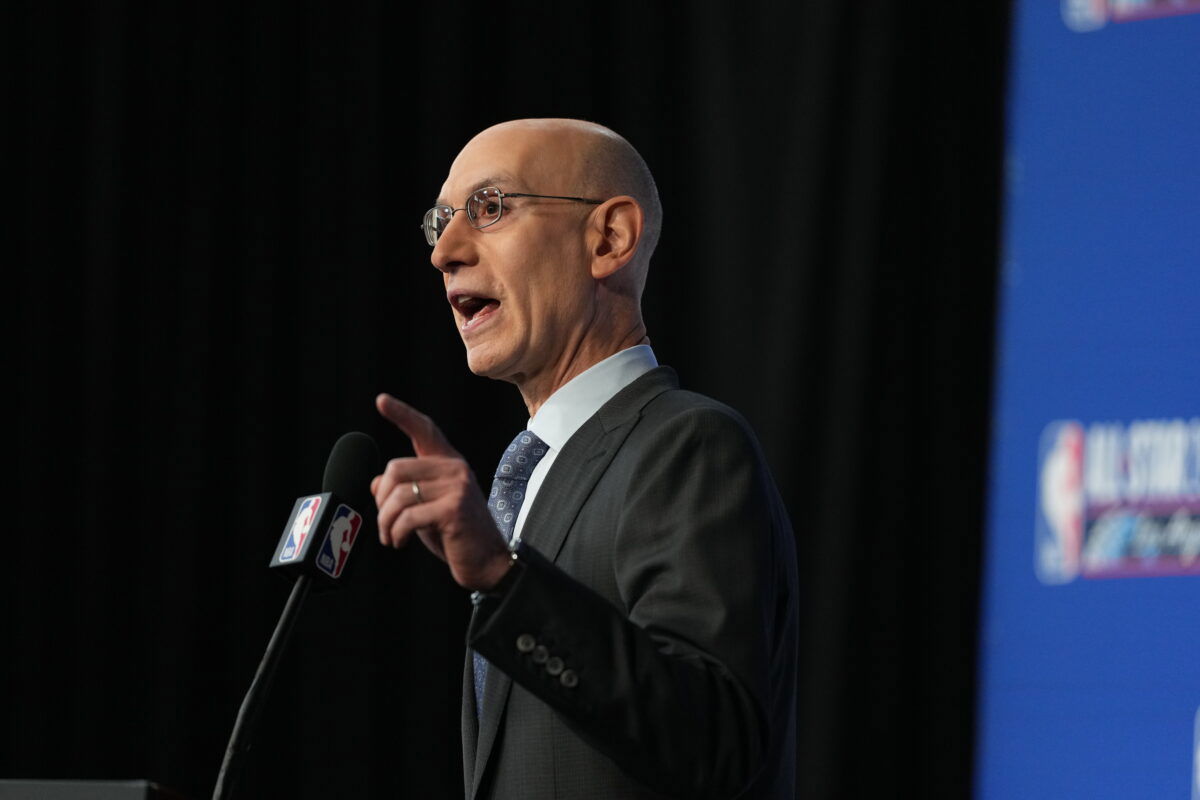
Feb 14, 2026; Los Angeles, CA, USA; NBA commissioner Adam Silver speaks to the media during a press conference before 2026 NBA All Star Saturday Night at Intuit Dome. Mandatory Credit: Kirby Lee-Imagn Images
Imago
Feb 14, 2026; Los Angeles, CA, USA; NBA commissioner Adam Silver speaks to the media during a press conference before 2026 NBA All Star Saturday Night at Intuit Dome. Mandatory Credit: Kirby Lee-Imagn Images
Tanking has plagued the NBA in ways that make it feel unwatchable at times. Imagine tuning into a game and feeling that the teams are not playing their best. Losing on purpose? Seems like it. And all because they want to have an edge in the draft odds. Well, not anymore. Why?


Because the NBA presented three anti-tanking proposals to its Board of Governors in New York. The league will revise the proposals and hold a formal vote in May. According to Shams Charania, all three proposals would significantly alter the current system. They share a core idea: adding more teams to the lottery. Beyond that, each model takes a very different path.
Watch What’s Trending Now!
The NBA’s anti-tanking ideas
Let’s see what the league has in store for teams like the Utah Jazz, Brooklyn Nets, Washington Wizards, and others.
- 18 teams would enter the draft lottery—10 that miss the play-in and the eight that qualify for it.
According to the first proposal outlined by Shams Charania, the bottom 10 teams would each have an identical 8% chance of climbing the lottery ladder. Meanwhile, the NBA would distribute the remaining 20% among the eight play-in teams, with the percentage sliding from 11th to 18th. Then the lottery would decide all 18 positions, turning the entire order into a high-stakes, unpredictable shuffle. This means the league no longer gives the absolute worst team a huge edge, and even weaker mid-tier teams now have a real shot. As a result, there’s far less incentive to fully tank, keeping competition alive.
- Under this model, 22 teams enter the lottery pool. That includes the 10 teams that miss the play-in, the eight that reach it, and the four that exit in the first round of the playoffs. The league would rank them based on a two-year record. That approach mirrors the WNBA’s lottery weighting.
Now, according to the second proposal, each team would need to hit a minimum win cap each season to curb extreme losing. For instance, if the minimum is 20 wins, a 14-68 team would be 20-62 for lottery purposes. Performance would average over two seasons, so a 40-win season followed by a 20-win season becomes 30 wins. The lottery would still determine the top four picks, keeping the high-stakes excitement alive.
The lottery pool expands to 22 teams: the same 18 non-playoff squads (7–15 seeds) plus four first-round playoff losers. Odds now reward consistent performance, and falling below the minimum could still count as hitting it. Teams can’t tank for a single season, and mediocre playoff teams get a subtle nudge into the lottery, making the entire system smarter, fairer, and far harder to game.
- Meanwhile, the NBA is also looking into a “5-by-5” model. Under this format, the same 18 teams from the first concept, the 10 that miss the play-in, and the eight that qualify, would enter the lottery. Next, the five worst teams would receive equal odds, with the remaining teams having probabilities that gradually decrease. The league would conduct separate drawings for each of the top five draft picks.
According to the third proposal, the spotlight falls on the bottom five teams. Each of these squads gets identical odds for the No. 1 pick, leveling the playing field. The lottery only decides picks 1-5, while the remaining 13 teams enter a separate drawing. A minimum floor, such as 10 wins, prevents extremely poor teams from gaining an unfair advantage, keeping the competition meaningful.
The NBA presented three comprehensive anti-tanking concepts to its Board of Governors on Wednesday, with modifications expected to each before a formal vote in May, per ESPN sources.
1. 18 teams in draft lottery (seeds 7-15 in each conference) – flattened odds, with bottom 10…
— Shams Charania (@ShamsCharania) March 27, 2026
This means being the absolute worst team offers no extra perk over being fifth-worst. Even if last season’s lowest teams like the Utah Jazz, Washington Wizards, and New Orleans Pelicans missed a top-five pick, they couldn’t fall below 10th. The system rewards competitiveness and discourages full-scale tanking, making every game count while keeping the lottery thrilling.
How was tanking affecting the NBA draft odds previously?
The NBA Draft Lottery decides the top 14 picks for non-playoff teams to maintain competitive balance and limit tanking. Before 2019, the worst teams gained massive advantages, with the three lowest-ranked squads holding a 25% chance at the No. 1 pick and a 75% chance at a top-four selection. This made losing deliberately highly rewarding and encouraged teams to intentionally drop games for better draft positioning.
Since 2019, the league has flattened the odds. Now, the three worst teams each have a 14% shot at No. 1, and their top-four chances cap at 52.1%. The 10th-worst team owns only a 3% chance. Officials randomly draw picks 1-4, while picks 5-14 are drawn in inverse order of record, preventing extreme losses from dominating the lottery.
The lottery uses 14 ping-pong balls numbered 1–14, with officials drawing 4 balls to create over 1,000 combinations. Officials assign each team a chance, and no team can move up more than 10 spots. This system keeps uncertainty high while curbing full-scale tanking.
| Team | Odds for the No. 1 pick |
| 1st | 14% |
| 2nd | 14% |
| 3rd | 14% |
| 4th | 12.5% |
| 5th | 10.5% |
| 10th | 3% |
| 14th | 0.5% |
What has the NBA recently done to punish tanking teams?
The NBA fined the Utah Jazz $100,000 for keeping Lauri Markkanen out of the lineup against the Washington Wizards on March 5 and in other recent games. Similarly, the Atlanta Hawks faced a $100,000 penalty after Trae Young missed an NBA Cup game, even though an independent physician confirmed he could have played. Now, at Wednesday’s press conference in Manhattan, NBA Commissioner Adam Silver announced changes are coming.
After heavy criticism of teams chasing top spots in the 2026 draft class, he confirmed the incentive structure will clearly shift next season to curb tanking and promote fair competition. “I do think ultimately this is a decision that needs to be made at the ownership level,” Silver stated. “It has business implications, has basketball implications, has integrity, integrity, implications for the league. So it’s one that we take very seriously, and we are going to fix it. Full stop.”
Imago
Credits: Imagn
Silver also explained that a true rebuild is one done with integrity, but today it’s hard to tell rebuilding apart from tanking. Misaligned incentives, lineup decisions, player injuries, and medical input blur the distinction. Silver further emphasized that incremental tweaks haven’t worked, signaling the league plans more significant changes to ensure fairness and curb strategic losing.
Therefore, the NBA is taking a hard line on tanking. Teams can no longer exploit the system or blur the line between losing and rebuilding. With new lottery structures, stricter participation rules, and revised incentives, every game will matter. The league is demanding integrity, accountability, and fairness, ensuring competition remains genuine and that strategic losing faces real consequences.