
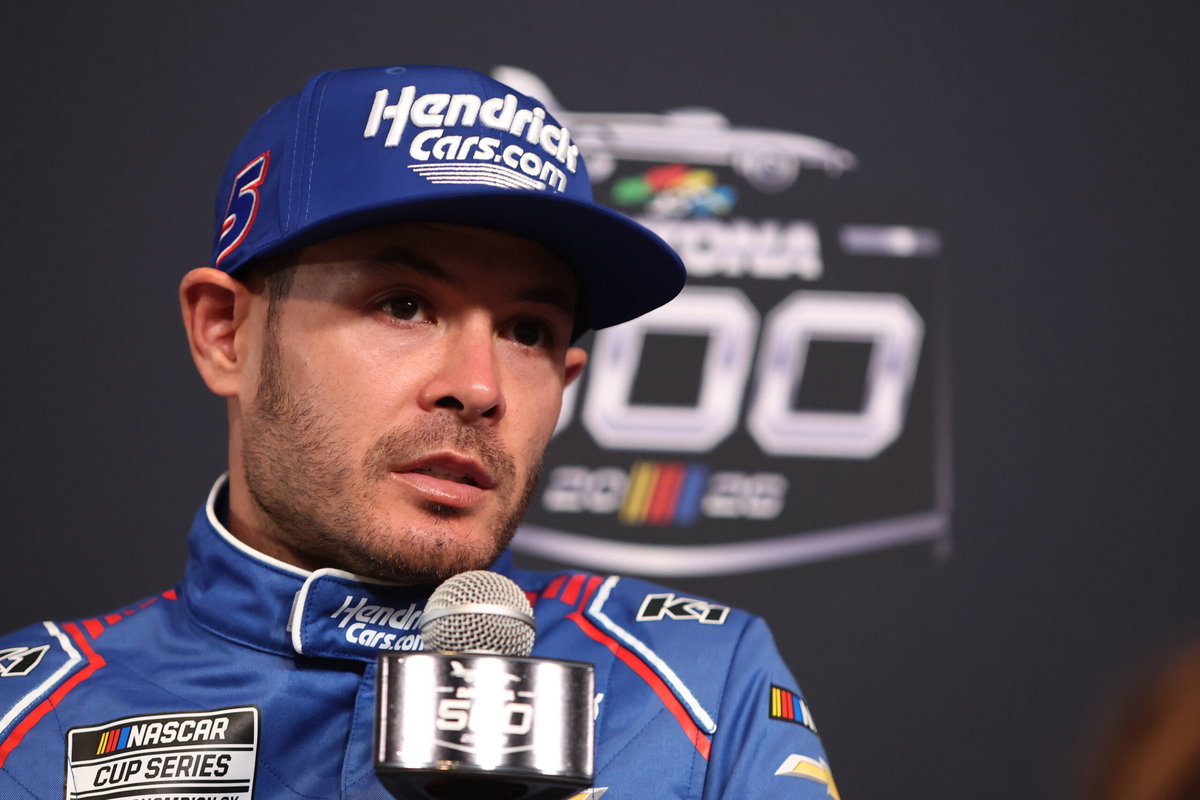
NASCAR is finally preparing to give its Cup cars more horsepower, but Kyle Larson believes the sport may still be thinking too narrowly about how to improve the racing. While the push for more power has gained support across the garage, the Hendrick Motorsports driver also wants more downforce, a combination that challenges the conventional argument for stripping aerodynamic grip from the cars. Larson knows the suggestion will not win over every traditionalist, but his experience behind the wheel gives him a different perspective on the debate.
Watch What’s Trending Now!
“I’m sure all the purists and even my competitors are probably like, ‘You’re an idiot.’ But I actually think we need even more horsepower than we’re going to get and more downforce because I think you need the grip to go find some air and actually like make a difference with it,” Kyle Larson said on the SPEED with Harvick and Buxton podcast.
For years, NASCAR fans have argued that the Cup cars need less downforce, not more. The conventional thinking is that reducing aerodynamic grip makes cars less dependent on clean air, allowing drivers to follow one another more closely and attempt passes without losing as much control. Larson is challenging that philosophy at a time when many traditionalists want NASCAR to move further away from the high-downforce cars of previous generations.
The criticism is rooted in the sport’s experience with aerodynamic dependence. When a car runs behind another, turbulent air can reduce the aerodynamic performance of the trailing vehicle. That makes it harder to maintain speed, particularly through the corners. Drivers can lose grip, struggle to stay close, and end up waiting for an opportunity rather than making an aggressive move. For purists, reducing downforce is one way to address that problem and put more of the responsibility back on the driver’s hands.
Larson’s suggestion sounds like the opposite of that solution. He wants NASCAR to increase downforce while also adding horsepower, potentially giving the cars more grip and speed. He recalled his rookie Cup Series season in 2014, when, by his estimate, the cars had around 900 horsepower and considerably more downforce than today’s Next Gen machines. Rather than viewing that combination as something NASCAR should leave behind, he believes the sport could benefit from returning to it.
His argument is that drivers need enough grip to search for clean air and make a difference with their cars. More downforce could give them the confidence to carry speed through different parts of the track, while additional horsepower would make throttle control and acceleration more important. Larson is not simply asking NASCAR to make the cars faster. He wants a package that gives drivers more opportunities to use their ability.
He also has experience outside stock car racing to support his view. Larson pointed to sprint cars, where efforts to reduce downforce by cutting wicker bills have, in his experience, made the racing more single-file and spread out. That is the opposite of what fans generally expect from lower-downforce racing. While sprint cars and Cup cars have different aerodynamic characteristics, Larson’s example highlights why he does not believe taking away grip automatically creates better competition.
He is not alone in questioning NASCAR’s approach. William Byron expressed a similar view during a discussion about the intermediate-track package, suggesting the sport could increase horsepower while maintaining the current downforce or even adding more. Byron also mentioned discussing the idea with Kyle Busch.
Christopher Bell and Ryan Blaney have likewise supported giving the Cup cars more horsepower, showing that Larson’s demand for additional power has backing among his peers. However, support for more horsepower does not necessarily mean all those drivers share his position on downforce.
NASCAR’s upcoming changes make the disagreement particularly relevant. Starting with the 2027 Coca-Cola 600 at Charlotte, intermediate-track horsepower will increase from 670 to 750. The All-Star Race at North Wilkesboro will also feature an experimental 800-horsepower package, paired with a low-downforce aerodynamic configuration. NASCAR plans to evaluate the results before considering a wider rollout to short tracks and road courses.
That direction addresses the demand for more power but remains closer to the traditional low-downforce approach than Larson’s proposal. His idea raises a different question: could adding aerodynamic grip alongside horsepower give drivers more ways to race, rather than simply making it easier to follow another car?
Kevin Harvick also raised a practical challenge during the conversation. He suggested NASCAR may be approaching the limits of what current engine components can handle, meaning further horsepower increases could require stronger parts capable of supporting higher RPM and output. That makes the proposal more complicated from an engineering and cost perspective.
Still, Larson’s comments challenge a belief that has shaped much of the Next Gen debate. Purists may see more downforce as a return to the aerodynamic dependence they want NASCAR to escape. Larson sees it as a way to give drivers more grip, speed, and control. The sport is already preparing to turn up the horsepower. Whether it should also reconsider how much downforce its cars need is the bigger question he has put back on the table.