
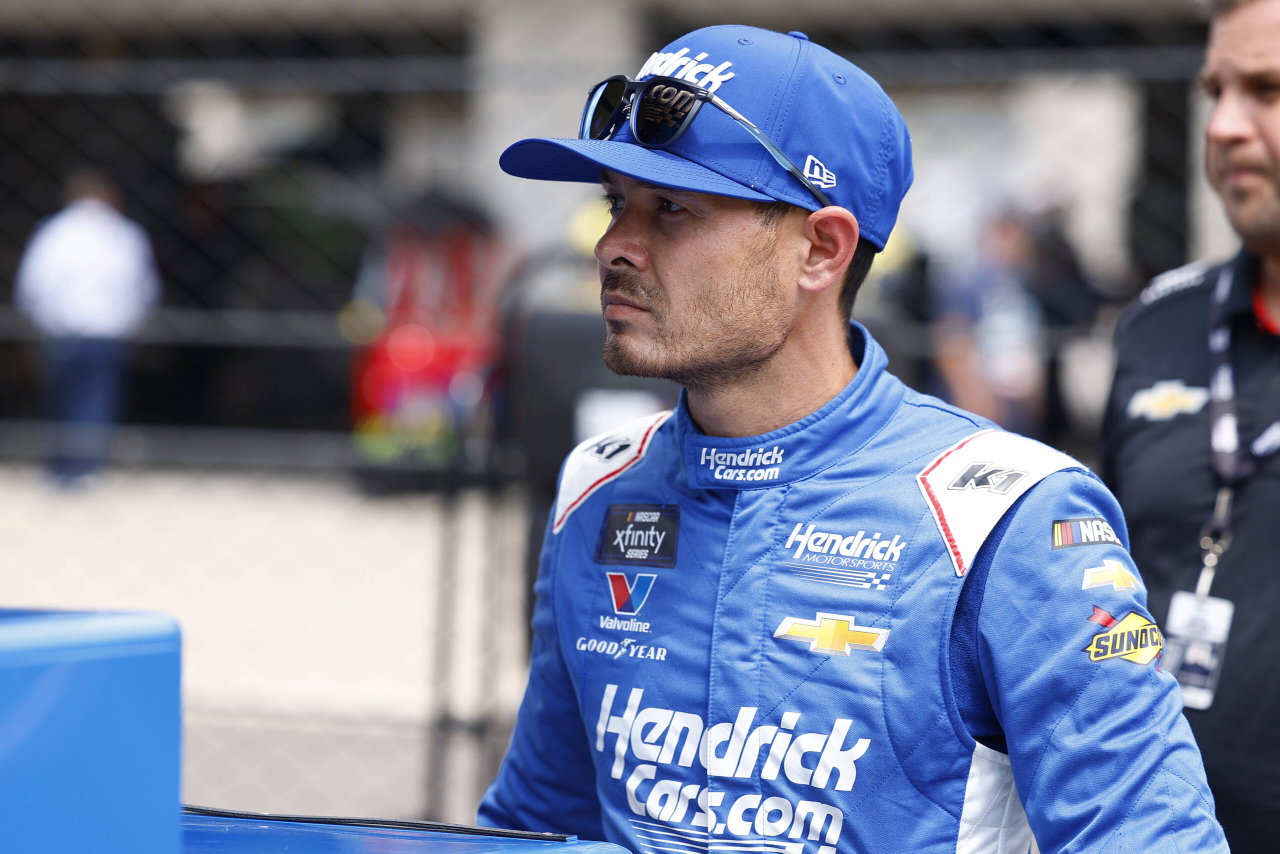
For decades, the World of Outlaws has been the defining name in American sprint car racing. But the arrival of High Limit Racing has challenged that position, opening a new debate over how the sport should grow and who should shape its future. Backed by NASCAR champion Kyle Larson and led by his brother-in-law Brad Sweet, the series was built around ambitions that went beyond adding another championship to the calendar. And Sweet’s latest comments suggest tensions that extend past the track.
Watch What’s Trending Now!
“Look at the results. Why is it my job to save his business? That’s what I’m saying. I’m fine either way. High Limit is on a path to, you know, I see the trajectory that we’re on as in the next 10 years of being, you know, at a completely different level,” Brad Sweet said recently on The Chaz podcast.
Sweet’s comments perfectly capture the frustration behind his criticism of World of Outlaws leadership. The five-time champion spent years competing at the highest level of sprint car racing, giving him a firsthand understanding of what drivers and teams need to survive.
However, he believes the people running the sport failed to recognize those needs. His decision to help launch High Limit Racing with Kyle Larson was about more than creating another series. Sweet wanted to challenge an established structure that he felt was limiting the sport’s potential.
One of his biggest concerns was the money drivers could earn. Sweet explained that he wanted competitors to have more opportunities to make a living from sprint car racing. He was even willing to support a Wednesday night event paying $20,000 to win if it meant creating another source of income.
Racing midweek and streaming the event through Flo was not a problem for him. What he struggled to understand was why World of Outlaws leadership would oppose opportunities that could put more money in drivers’ pockets.
Sweet also questioned whether competitors were receiving a fair share of the sport’s commercial growth. He pointed to Brian Carter, who leads World Racing Group, the organization behind the World of Outlaws. In Sweet’s assessment, Carter’s decisions effectively placed a ceiling on drivers’ earning potential.
He argued that competitors could not properly judge whether they were receiving their market value when the person leading the sport had such a significant influence over what they could earn. Sweet also recalled raising concerns in meetings but felt leadership was unwilling to listen or consider a different direction.
That frustration helped motivate Sweet and Larson to establish High Limit Racing. The series began with a limited schedule in 2022 before expanding into a national tour in 2024. It also acquired the All Star Circuit of Champions, giving it an established platform and a larger schedule.
Its arrival challenged the World of Outlaws’ position as the leading national touring sprint car series, raising concerns about whether two major tours could divide the sport’s drivers, teams, tracks and fans. Sweet, however, believed competition could create a stronger environment rather than simply weaken the discipline.
High Limit’s charter system offered a tangible example of the alternative Sweet wanted to build. The plan called for 10 team charters, with five awarded after the 2024 season and another five after the 2025 season. Beginning in 2026, chartered teams would receive 50% of the series’ digital streaming revenue.
Payments would be distributed monthly, with allocations influenced by performance. Sweet wanted team owners, who shoulder substantial operating expenses, to have a financial stake in the series’ growth rather than simply spend money competing without building long-term value.
Carter, meanwhile, defended the World of Outlaws’ established position. In 2024, he argued that the organization had strong tracks, a competitive roster, broadcast partnerships and decades of brand loyalty. He also questioned whether the sport had enough resources to support two national tours without one affecting the other.
His concern was that dividing the available talent and audience could ultimately hurt sprint car racing. Carter later described competition as something that could sharpen decision-making and create opportunities, while stressing the importance of protecting the health of dirt racing.
Sweet has since moved away from full-time driving to concentrate on the business he helped build. He announced his retirement from full-time competition in October 2025, following a career that included five consecutive World of Outlaws championships from 2019 to 2023 and the 2024 High Limit title. He now devotes more attention to High Limit’s management, with ambitions to improve facilities, purses, broadcast reach and the overall fan experience.
Sweet believes High Limit is heading toward another level over the next decade. For him, waiting for the established leadership to embrace his ideas was never the answer. As he explained, “You can talk and talk and talk … or you can just do. And that’s what I do. I just do.”