Imago
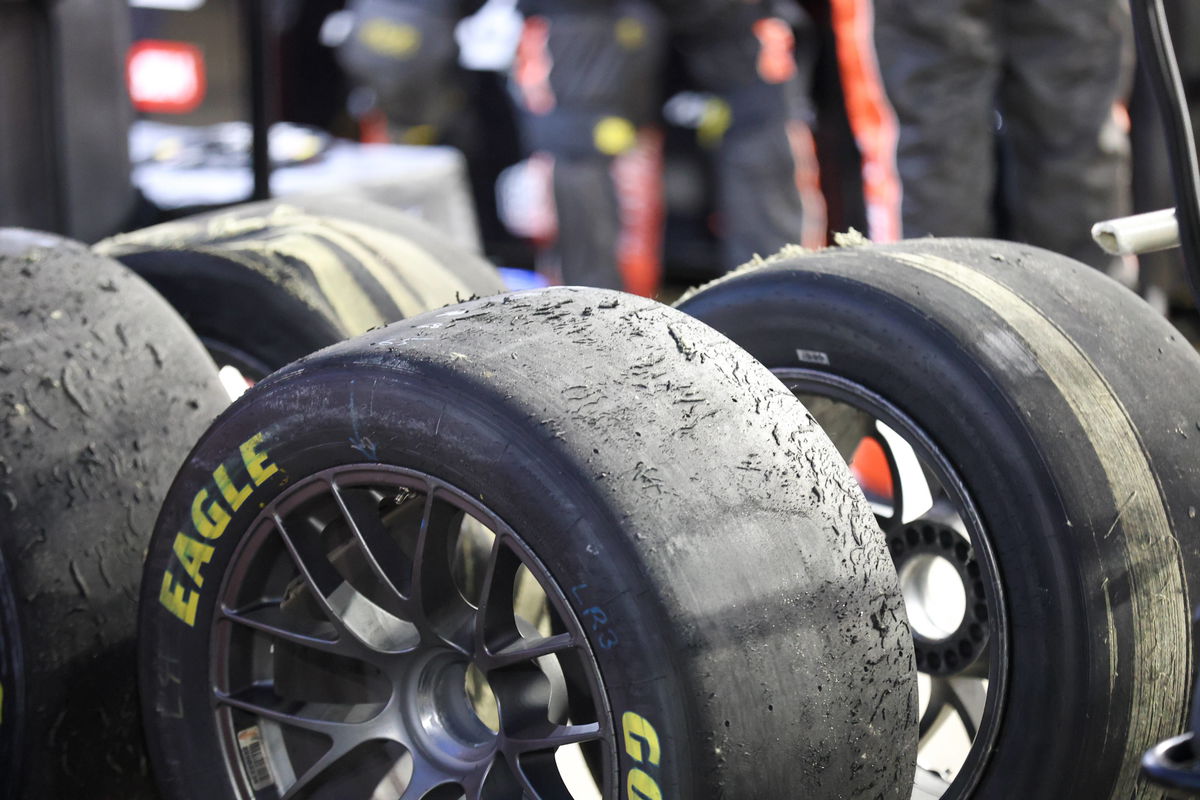
NASCAR, Motorsport, USA Bass Pro Shops Night Race Sep 13, 2025 Bristol, Tennessee, USA Goodyear tires after a run at Bristol Motor Speedway. Bristol Bristol Motor Speedway Tennessee USA, EDITORIAL USE ONLY PUBLICATIONxINxGERxSUIxAUTxONLY Copyright: xRandyxSartinx 20250913_kdn_bs1_037
Imago
NASCAR, Motorsport, USA Bass Pro Shops Night Race Sep 13, 2025 Bristol, Tennessee, USA Goodyear tires after a run at Bristol Motor Speedway. Bristol Bristol Motor Speedway Tennessee USA, EDITORIAL USE ONLY PUBLICATIONxINxGERxSUIxAUTxONLY Copyright: xRandyxSartinx 20250913_kdn_bs1_037
The warning was already there, and the drivers couldn’t escape it. In fact, Goodyear Racing practically spelled it out before cars even rolled onto the track at Phoenix Raceway. “The recommended tire pressures weren’t guesses,” the manufacturer posted, along with a detailed chart showing the exact setups teams were expected to follow. Yet once the race unfolded, chaos followed.
Watch What’s Trending Now!
Multiple drivers suddenly reported flats during the same caution period. Michael McDowell believed his issue likely came from debris after the No.4 car brushed outside the wall, suggesting that debris on the track might have been responsible for several of the flat tires seen under yellow.
Around the same time, William Byron described feeling something unusual with the tire before it finally gave out a lap later. Meanwhile, Cole Custer was pushed to the garage after debris reportedly punched through his radiator.
For the Phoenix weekend, Goodyear’s data listed minimum cold pressures of 14 psi on the left-side tires, 30 psi on the right front, and 26 psi on the right rear.
Teams were also limited to 10 total tire sets for the weekend, one for practice, one for qualifying, and eight for the race. The numbers weren’t random either, and the engineers had already simulated the loads, the heat, and the wear expected on the 1-mile desert oval.
However, the list of drivers dealing with flats grew. Slowly, Noah Gragson, Byron, and Connor Zilisch were all in the middle of dealing with flats. Part of the problem may have been the new power package, too. Teams began reporting brake rotors scattered across the track, raising concerns that several drivers may have run over the day before.
One of the rotors went straight through Cole Custer’s grille, forcing major damage to his car, while Noah Gragson is believed to have exploded a rotor on Lap 159, leaving pieces of debris spread across the surface and bringing out the caution.
Noah Gragson. William Byron. Connor Zilisch. Tire trouble. pic.twitter.com/7Od8txKoZv
— FOX: NASCAR (@NASCARONFOX) March 8, 2026
The scattered parts may have played a role in the sudden wave of tire issues drivers experienced during the caution. But Kyle Busch suffered the worst of it.
The veteran driver was in line to receive the free pass, which would have allowed him to get one of his laps back and rejoin the lap. However, just as the opportunity opened up, the Richard Childress Racing driver suffered a flat tire, forcing the No.8 team to bring the car down pit road immediately.
Because of the unscheduled stop, he had to give up the free pass, turning what could’ve been a lucky break into yet another setback in an already chaotic race.
The moment of frustration did not go unnoticed at home either. Busch’s wife, Samantha Busch, reacted to the situation on X, capturing the mood of the day in a short but telling post.
“Welp had the free pass but now another flat so have to pit. It’s been a day 🫠,” she wrote. The comment summed up the rollercoaster afternoon as tire issues continued to pile up across the field.
“It was a lot of fun,” said Chase Briscoe, who saw himself out in Stage 2, running third, alongside Shane van Gisbergen. “We were slipping and sliding. It was only 80 more horsepower, but it felt like a lot more. Darlington is gonna be out of control.”
Add the scorching Arizona sun and extra horsepower in teams pushing limits on pressure and grip, and the tire failure suddenly makes a lot more sense.
Can the tire situation be improved at Phoenix Raceway?
Fixing the tire chaos at Phoenix Raceway isn’t impossible, but it likely requires a mix of team discipline, tire development, and rule enforcement. One of the simplest solutions is ensuring the team strictly follows the guidelines set by Goodyear.
Many tire failures at Phoenix have been linked to teams running air pressures below the recommended minimum and using aggressive camber settings to gain more grip.
Those setups can make the car faster for a few laps, but put extreme stress on the tire sidewall, increasing heat and the risk of sudden blowouts. Enforcing minimum pressure rules more strictly, or even checking them on pit road, could dramatically reduce failures.
Another potential fix lies in setting up adjustments by the teams themselves. Phoenix’s unique layout, with its dogleg front stretch and asymmetrical corners for teams to compromise on suspension settings. Many crew chiefs push their setups to the limit, trying to maximize speed on both ends of the track.
That aggressive approach can overstress tires, especially when combined with higher horsepower and breaking loads. Simply backing off those extreme setups could help keep their tires alive over a long run.
In other words, the solution isn’t just better tires; it’s a balance between smarter setups, stricter rules, and smarter race management. If all three aligned, Phoenix’s tire drama would return from a safety concern into the kind of strategic challenge teams actually enjoy.
Related Newsletters