
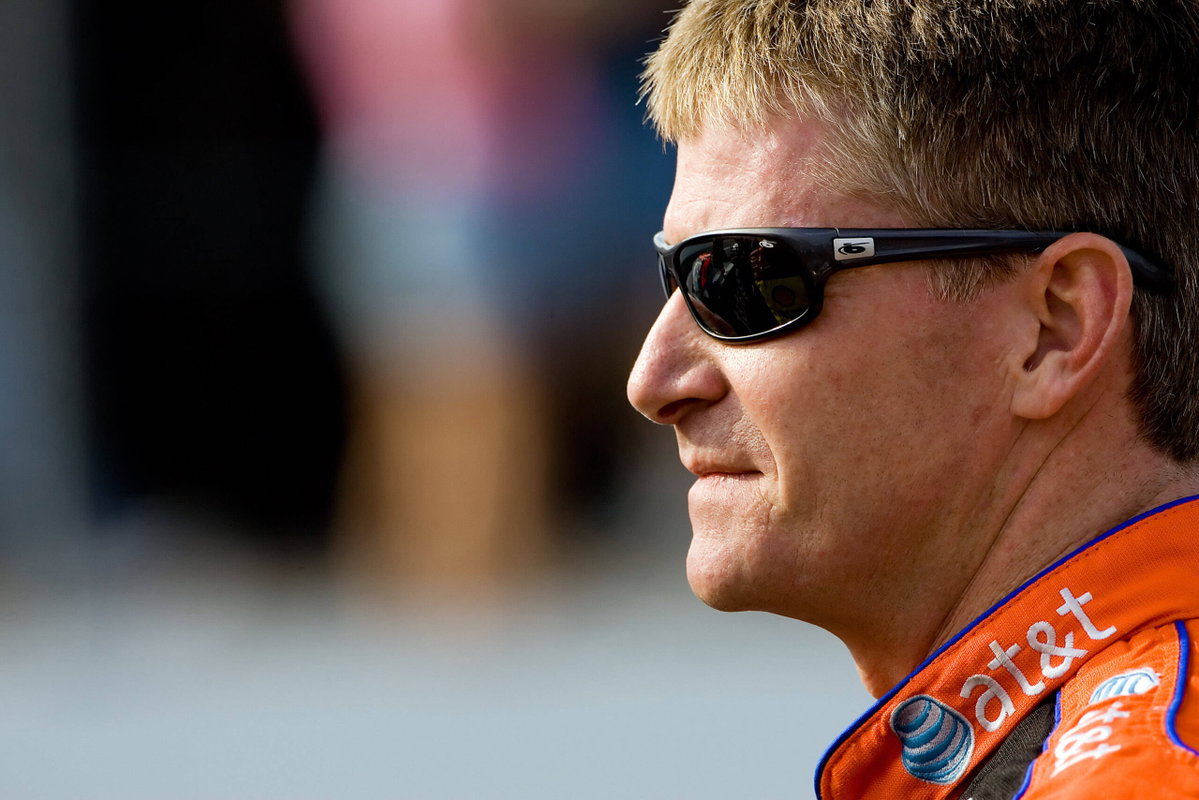
Since the Hall opened in 2010, NASCAR has filled its nominee list with a wide sweep of talent from the sport’s early grind to its modern shine. 15 nominees are trimmed down, a voting panel chooses only three, and even then, proven names can miss the cut. For instance, last year, Jeff Burton finished third on the Modern Era ballot, while Greg Biffle stayed on the outside and Harry Hyde kept his place in the conversation. That is what makes the Hall’s exclusivity both its strength and its problem, continuing to raise debate today.
Watch What’s Trending Now!
Speaking on the matter, NASCAR insider Jordan Bianchi sat down in a conversation for the Door Bumper Clear podcast on May 23. He called out the gatekeeping exercise in the Hall of Fame that unfairly punishes these deserving icons. Starting with the driver without whom the Hendrick Motorsports dynasty would be very different, Harry Hyde.
“He built that organization up and was so so instrumental. By the way, they, you know, they copied him for Days of Thunder, and this guy is not in the Hall of Fame. like that guy should be in the Hall of Fame years ago,” Jordan Bianchi expressed his annoyance.
There is a road inside the Hendrick Motorsports campus known as Hyde’s Way. It was named after Harry, the crew chief who convinced a young Charlotte car dealer, Rick Hendrick, to take a chance on him in 1984, guaranteeing results in writing and promising to walk away without pay if the cars didn’t hit target speeds at Daytona and Talladega. Before anything else, it is important to say that Hyde kept his word. And without him, there might have been no Hendrick Motorsports dynasty. Yet, as of 2026, Harry Hyde is not in the NASCAR Hall of Fame.
This year, Hyde made an appearance on the five-person Pioneer Ballot, a category designated for the pioneers of NASCAR. The official selection panel finally selected Larry Phillips from the Pioneer Ballot for induction despite Hyde’s resounding victory in the online fan poll.

Imago
Feb 7, 2025; Charlotte, NC, USA; Former NASCAR HOF Inductee’s Bobby Allison and Fred Lorenzen are honored by Winston Kelly, Executive Director of the NASCAR Hall of Fame, at Charlotte Convention Center Crown Ballroom. Mandatory Credit: Scott Kinser-Imagn Images
That outcome only served to heighten criticism of the present Hall of Fame procedure, because it is nearly impossible to overlook Hyde’s resume.
Hyde, who is widely recognized as one of the most brilliant mechanical brains NASCAR has ever seen, contributed to the development of modern stock car racing strategy and car setup philosophy. After winning Cup Series titles alongside David Pearson, he went on to play a key role in Hendrick Motorsports’ ascent in the 1980s.
He guided Geoff Bodine to three wins in that debut season, including the team’s landmark first victory at Martinsville. He then moved to the No. 25 car and helped Tim Richmond to seven wins in 1986, one of the most electric single-season performances of that era.
His influence extended so far beyond racing garages that Hollywood even borrowed directly from him. Hyde served as the real-life inspiration for Robert Duvall’s famous Harry Hogge character in the 1990 racing film Days of Thunder. The old-school, brutally honest crew chief portrayed in the movie was essentially Hyde on the big screen. And yet, despite all of that, he remains outside the Hall.
Then there is Jeff Burton, whose case isn’t similar to Hyde’s but shows the same structural problem from a different angle.
Burton, known in the garage as “The Mayor,” was first nominated for the Class of 2021. He then showed up on the Modern Era ballot every single year from 2021 through 2026, finishing third in voting in both the 2026 and 2027 cycles, before finally being elected to the Class of 2027 in his sixth year.
Even then, he received just 32% of the panel vote, despite the fact that Burton is one of only 10 drivers in NASCAR history to have at least 20 wins in both the Cup Series (21) and what is now the O’Reilly Auto Parts Series (27). He is a named member of NASCAR’s 75 Greatest Drivers. He won two Coca-Cola 600s and a Southern 500.
There is Greg Biffle as well, who was the fans’ preferred choice in the modern ballot. One could say that he never won a Cup championship, but neither did Burton. Even in our newsletter, Lucky Dog on Track’s poll, 44% of 559 readers said they’d pick Greg Biffle over Jeff Burton, while another 38% felt Biffle should have received a special honor at least, which is to say that around 82% believe the panel made the wrong decision.
Still, this isn’t about Burton vs. Biffle, really.
A 22-member Nomination Committee selects 10 Modern Era nominees. A separate Honors Committee, largely composed of existing Hall of Famers, selects 5 Pioneer nominees. A 65-member voting panel, which includes media, industry members, Hall of Famers, and one fan vote, then determines just three inductees annually: two Modern Era candidates and one Pioneer candidate.
According to critics, that structure naturally creates logjams and forces voters into impossible choices between equally deserving legends. Instead of simply honoring great careers, the process becomes strategic. Voters begin “saving” candidates for future years, prioritizing one candidate over another, or gaming ballots based on perceived voting trends.
That, Bianchi argues, is exactly why respected figures like Jeff Burton end up with deceptively low vote percentages despite widespread Hall of Fame support. On the other hand, the issue has long been overdue for attention, especially with several legends still left off the ballot.
Names that did not make it into the NASCAR Hall of Fame
Names like Smokey Yunick, Jimmy Makar, Mike Trower, and Sam Ard continue to surface in Hall of Fame conversations, but only as reminders of how many influential NASCAR figures remain outside the sport’s highest honor.
Starting with Yunick, who stood out as a garage legend that NASCAR can never quite replace. For decades, stories have followed him about bending the Rule Book, from longer fuel lines to bold chassis changes and oil-line experiments that made him seem part engineer, part magician.
As Ray Evernham said in a 2016 documentary, “If you’re an innovator, and you’re a smart guy like Smokey was, and there is no rule, is there really a gray area? He made (NASCAR) write rules.”
He won Cup titles for Herb Thomas in 1951 and 1953, claimed the 1961 Daytona 500 with Marvin Panch and the 1962 race with Fireball Roberts and Jim Stephens, and also won the Southern 500 in 1951 and 1955. Still, decades later, his Hall case still sparks debate.
Then, Jimmy Makar built Joe Gibbs Racing from the ground up, guiding it from before the 1992 season through 2022 as Senior Vice President of Racing Operations, and the results were massive: 200 Cup wins, 194 O’Reilly Auto Parts Series wins, five Cup titles, four drivers’ championships in the O’Reilly Series, and signature victories in races like the Daytona 500, Coca-Cola 600, Brickyard 400, and Southern 500.
Additionally, Mike Trower gives the Hall another angle, because his legacy sits on pit road rather than behind a wheel or on a pit box. He helped produce 73 Cup wins as a tire changer, including nine with Dale Jarrett, 15 with Jimmie Johnson, and 49 with Jeff Gordon. As Evernham put it in a 2024 interview, “Mike was, in his day, one of the best, if not certainly the best, on pit road,” and that alone makes his name stand out in any serious Hall discussion.
Sam Ard and John Holman add another layer to the argument. Ard has already appeared on the ballot, but not in the past two years, even though his run in the early O’Reilly Auto Parts Series was historic. He won 22 races in just 92 starts, plus 67 top fives, 79 top 10s, and 24 poles, and his 10 wins in 1983 stood as a single-season benchmark until Kyle Busch matched and then passed it.
Meanwhile, Holman helped build Holman-Moody Racing into a NASCAR force, with 96 wins, Daytona 500 victories with Fred Lorenzen in 1965 and Mario Andretti in 1967, and 30 of David Pearson’s 105 career wins coming in Holman-Moody Fords.
Last but not least, there is Kyle Busch, whose case has taken on a different urgency since his passing on May 21 at age 41. He finished with a NASCAR-record 234 wins across the sport’s three national series, and under normal Hall rules, he would have waited two to three years after retirement for eligibility. But that moment never came.
Now, more questions remain, and the real test will be whether the NASCAR Hall of Fame listens to those concerns and adjusts the process to give deserving names a fairer shot. Only time will tell if these questions will be addressed anytime soon.