
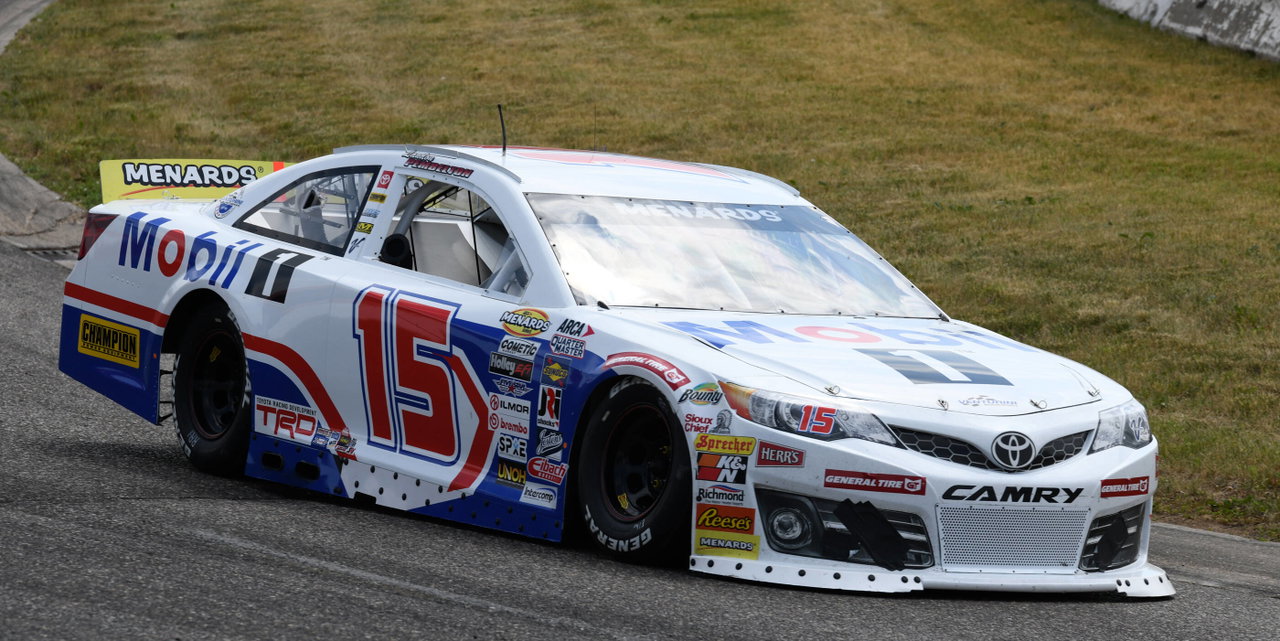
Last fall, Landon Pembelton stood in Victory Lane at Martinsville holding one of Late Model racing’s most coveted trophies after winning the ValleyStar Credit Union 300 for the second time. That victory came after a photo finish against former winner Lee Pulliam, one that cemented the Amelia, Virginia native as one of the discipline’s rising stars. Months later, he carried that momentum into South Boston Speedway, where the championship battle had only grown tighter. Trevor Ward led the standings, while eight-time track champion Peyton Sellers was once again in the hunt. Right behind them, Pembelton knew one strong weekend could reshape his title campaign.
Watch What’s Trending Now!
Saturday night seemed to prove him right. Two 75-lap races. Two checkered flags. A clean sweep against two of the division’s biggest contenders. Everything pointed toward the kind of night that can define a title run. Except the celebrations didn’t survive the post-race review…
Following that review, speedway officials discovered evidence of race manipulation. Pembelton, driving the No. 0 Dodge for R&S Race Cars, was found guilty of intentionally triggering a caution during the first race. As a result, he was forced to forfeit both of his wins.
To understand what led to this, look at how intense the competition had become at South Boston.
Pembelton entered 2026 coming off the strongest South Boston campaign of his career. In his first full-time season at the track, he finished third in the championship, only 13 points behind Peyton Sellers and 11 behind Trevor Ward after recording two wins, five runner-up finishes and 10 podiums in 18 starts. That momentum carried into this season, where he quickly found himself locked in another tight championship fight with Ward and Sellers.
Just a few months ago in May, Pembelton and Sellers were already butting heads and making hard contact on the track. Sellers had used the bumper to move Pembelton aside on the final lap to win one race, while another clash in June left Sellers’ car heavily damaged after contact between the two. Although Pembelton later said they had spoken privately and “cleared some things up,” both knew they would continue racing each other aggressively in the title fight. Now, that battle for every point had reached a whole new level.
With only 30 laps remaining in the opening feature, Pembelton was running fifth. He trailed Ward and Sellers, who were battling for the lead with more than a three-second advantage over the rest of the field. According to officials, Pembelton then discarded a pipe from his car onto the racing surface, bringing out an immediate caution. The yellow erased the sizeable gap Ward and Sellers had built and reset the race. The caution changed everything.
On the restart, Sellers made contact with Ward while battling into Turn 1, spinning the points leader. Sellers was penalized for the incident, and the championship’s top two contenders suddenly found themselves out of contention.
Andrew Grady inherited the lead on Lap 54, but Pembelton quickly worked past him and drove away to what appeared to be victory.
The momentum carried into the second 75-lap feature as well. Starting from the inverted top-eight lineup, Pembelton worked his way through the field. He grabbed the lead on the Lap 25 restart and paced the final 50 laps to complete what looked like a perfect sweep of the evening.
That was until the investigation concluded on August 5. Pembelton was penalized three laps in the first feature. Because the outcome of Race 1 determined the inversion for Race 2, officials also placed him at the rear of the second feature’s results, stripping him of both victories, forcing him to forfeit all prize money and placing him on probation for the remainder of the 2026 season. The incident also drew comparisons to one of NASCAR’s most well-known caution-manipulation controversies.
At New Hampshire Motor Speedway in 1999, former Cup Series driver Jeremy Mayfield attempted to bring out a caution by throwing a piece of roll-bar padding wrapped in silver duct tape from his car after struggling with performance.
He was caught by pace car driver Buster Auton before the tactic could influence the race and received only a reprimand.
The stakes at South Boston were different, but the principle remained the same. Whether on NASCAR’s biggest stage or at the grassroots level, intentionally creating a caution is viewed as race manipulation. In Pembelton’s case, officials concluded that the caution directly altered the complexion of the race, resulting in one of the most significant penalties handed down at South Boston Speedway in recent years.