
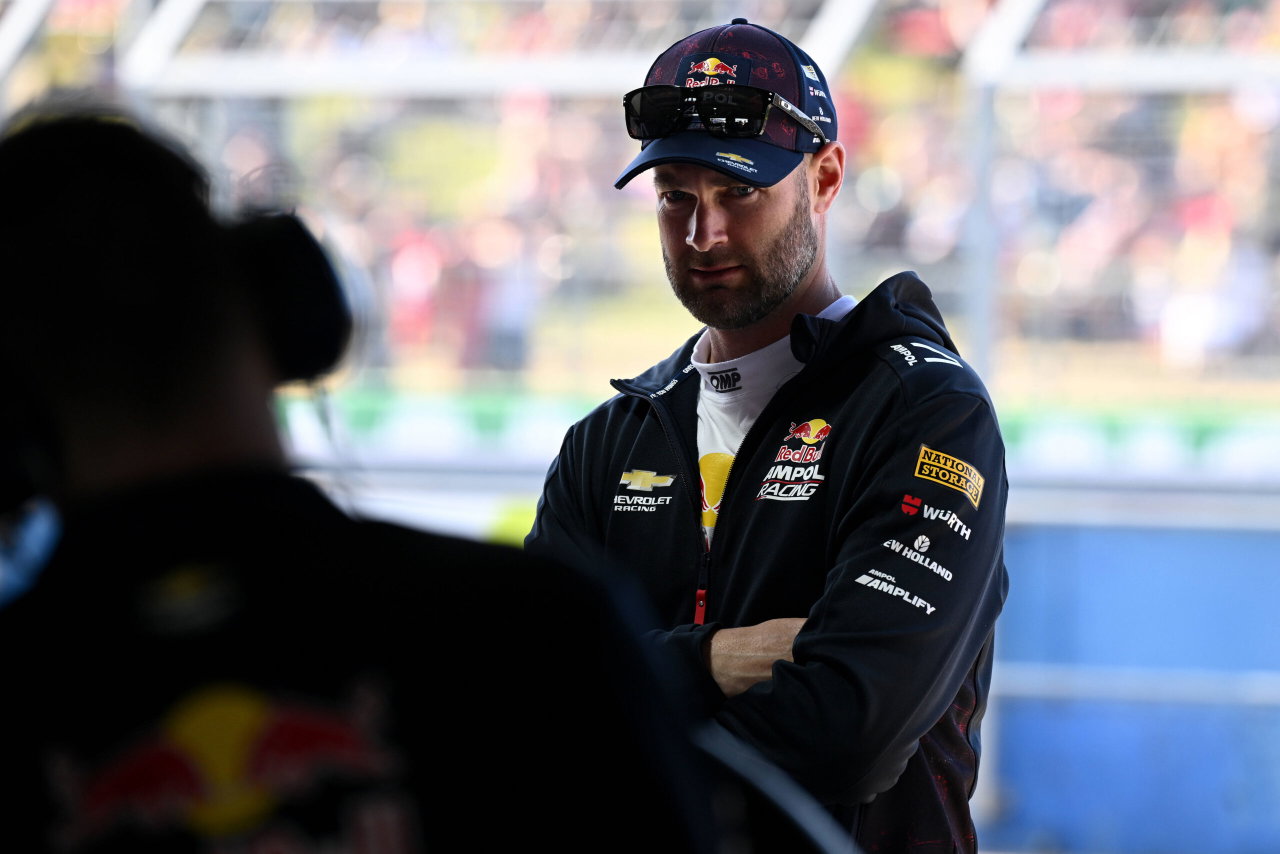
Shane Van Gisbergen won his first Cup Series start. That was Chicago in 2023, and Trackhouse Racing had found a road-course ace. Turning that into a championship-calibre career was the next challenge. Three years later, he has five wins from his first full Cup season and is making progress on ovals. Now a report about his contract raises a question for the rest of the garage: what happens if Trackhouse cannot keep him?
Watch What’s Trending Now!
“I will tell you what, next year, his contract- there’s options and everything, but he’s basically free agent after 2027,” said The Athletic‘s Jordan Bianchi, in comments shared by Daniele Kriete on X. “Okay. I’m telling you right now, we’re looking ahead a little bit to 2028.
Trackhouse Racing signed SVG to a multi-year extension in August 2025, securing his NASCAR Cup Series future through at least 2027. Still, if SvG ends up being a free agent, he would certainly strike up a bidding war with what he brings to the table.
“SVG is somebody to watch,” the post also noted. “There are teams out there that are looking at this guy going, big teams are looking at him going, ‘Man, we get him in one of our cars. Like we’re better than Trackhouse. We’re going to win some road course races. And you know what he can do on an oval, like he’s good now on ovals. Like, he’s going to have options and he’s going to be”
The important detail is not simply that Shane Van Gisbergen could become available. It is why rival teams might want him. He has already shown he can win in Cup, and his progress beyond road courses could make him an even more attractive signing. If that improvement continues, Trackhouse may have competition for a driver it helped bring into NASCAR.
Shane Van Gisbergen arrived from Supercars, Australia’s premier touring car series, where he won three championships. His Chicago victory announced his talent, but it did not prove he could handle an entire NASCAR season. Stock cars behave differently, and Cup drivers spend much of their year racing on ovals.
Trackhouse gave him time to learn. He ran a full season in the Xfinity series in 2024 before moving into the Cup Series full-time in 2025. He won five races that year. Those victories established him as one of the field’s most dangerous road-course drivers, but they also exposed the limit of his early progress.
His average finish on road courses from 2023 through 2025 was 7.6, compared with 25.0 on other tracks, according to NASCAR.com’s July 2026 analysis. That gap mattered. Cup teams cannot build a championship campaign around a handful of favourable weekends. They need drivers who can collect results throughout the schedule.
Van Gisbergen has been working to close that gap. His oval performances have improved, making him less dependent on road courses for strong finishes. That is the development rival teams will be watching most closely. A driver who can win on road courses is valuable. One who can also compete on ovals becomes much harder to replace.
For Trackhouse, that progress presents a familiar problem in professional sport. The organisation took the chance on Shane Van Gisbergen and helped him adapt to a new discipline. If he becomes a more complete Cup driver, other teams could benefit from the work Trackhouse has already done.
There is a reason teams are already looking toward 2028. Hendrick Motorsports announced in August that Connor Zilisch would join its No. 48 Chevrolet, replacing Alex Bowman after his planned departure from full-time competition. Zilisch is set to remain with Trackhouse through 2027 before making the move.
That announcement shows how early teams can settle major seats. It also illustrates how one driver decision can affect the wider market. With Hendrick’s No. 48 lineup set, attention could turn to other openings and drivers whose contracts may soon give them choices.
Van Gisbergen would bring something different to that market. He is not an untested prospect waiting for a first opportunity. He has already won at Cup level, and teams know what he can do on road courses. The question is how much more he could deliver with different equipment and resources.
Bianchi’s comments suggest larger teams believe they could get more out of him than Trackhouse does. That is a claim, not proof that negotiations have begun. No rival team has been confirmed as a suitor, and there is no indication that Shane van Gisbergen has decided to leave.
Trackhouse has reasons to fight to keep him, too. The team knows his strengths, understands the areas he is still developing, and has already seen the results of its investment. Leaving a winning environment would be a major decision for Van Gisbergen, even if another organisation offered a more attractive package.
The next two seasons could therefore shape more than his contract negotiations. Continued oval progress would strengthen his case for a bigger deal and give rival teams a stronger reason to pursue him. A slowdown, meanwhile, could make his road-course advantage the main selling point.
Van Gisbergen has already proved he can win with Trackhouse. The challenge now is proving that those wins can become part of a broader championship push. If he does, the question facing the team will be difficult to avoid: can it keep the driver it developed when bigger rivals believe they can take him to another level?