
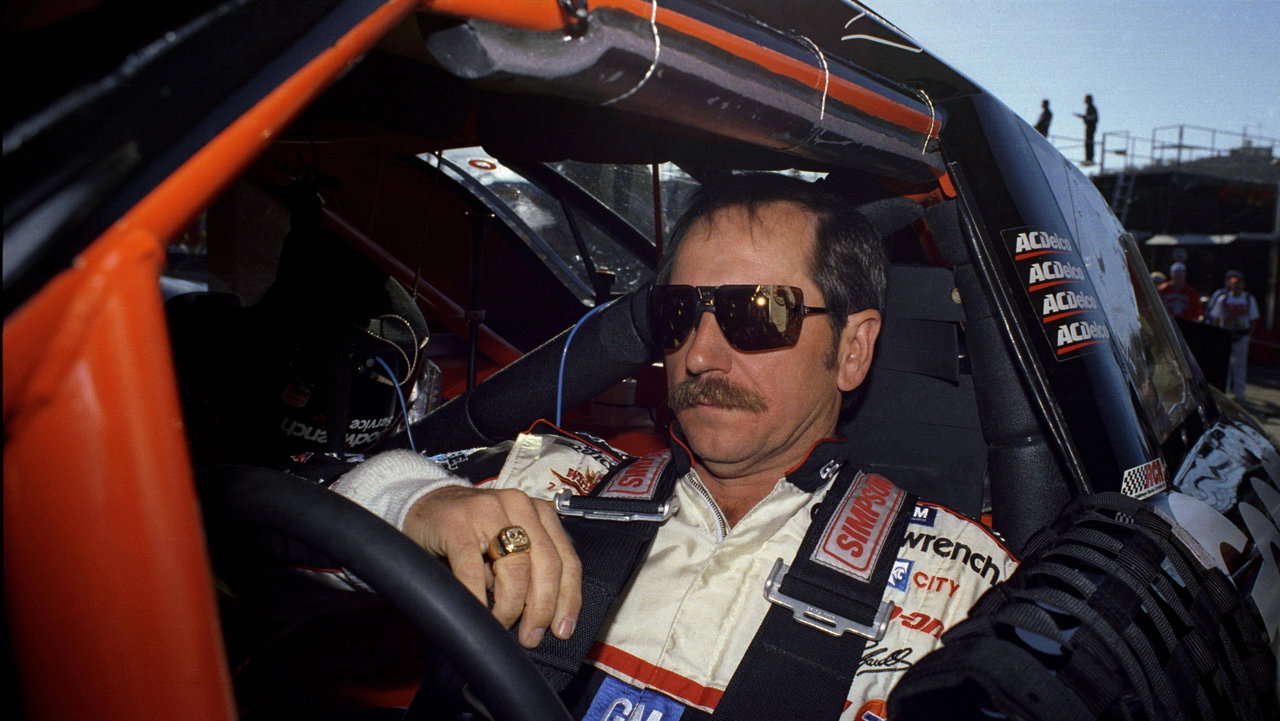
Carson Hocevar’s heated Bristol weekend with Ryan Blaney exposed more than just the tension between two drivers. Their late-race contact sent Blaney into the wall before the disagreement spilled onto pit road, where the two exchanged punches after the checkered flag. The aftermath also highlighted the growing friction surrounding Hocevar, with Kenny Wallace pointing to other drivers who appear to have little patience for the Spire Motorsports star. Wallace then turned to Dale Earnhardt Sr. to explain what Hocevar may be missing.
Watch What’s Trending Now!
“I was thinking overnight, you know, back in my day, Dale Earnhardt Senior, he trained us. Senior was smart. He would wreck us, and then after he got done wrecking, he would make friends with us. And this is where I think Carson Hocevar is missing it just a little bit. I know how Carson can quit making all the drivers mad at him,” Kenny Wallace said on the latest episode of Coffee with Kenny.
Wallace’s comments came after Hocevar’s turbulent night at Bristol, where his on-track clash with Ryan Blaney eventually spilled onto pit road. But Wallace’s argument went beyond the incident itself. He believes Hocevar has yet to learn the part of aggressive racing that Earnhardt understood particularly well: knowing how to repair relationships after the confrontation is over.
And there are several instances to show just that. One example came at Richmond in 1991, when Earnhardt entered Turn 3 too aggressively, hit the flat section of the track and shot directly into Rick Mast. The contact spun Mast and badly damaged his car, leaving Mast privately furious and prepared for a confrontation.
Instead, Earnhardt sought Mast out the following week at Rockingham before the cars even went onto the track. Rather than offering a carefully worded apology, the Intimidator turned the situation into a joke. He walked up to Mast, turned around, bent over, patted his own backside, and told Mast to kick right there.
“He says, ‘Go ahead and kick it. I know you want to,’” Mast had revealed in an episode of the Dale Jr. Download podcast.
Earnhardt also admitted that he had simply “screwed up,” adding that Mast was the last driver he wanted to hit. The unexpected gesture defused the tension almost immediately, and Mast accepted Earnhardt’s explanation.
The same balance between aggression and personality appeared in one of the most famous finishes in NASCAR history. During the 1999 Night Race at Bristol, Terry Labonte passed Earnhardt for the lead on fresh tires.
On the final lap, Earnhardt drove hard into Turn 2 and sent Labonte spinning, taking the checkered flag as the Bristol crowd erupted in boos. Earnhardt did not apologize for the way he raced for the victory. However, he framed the incident as an attempt to unsettle Labonte rather than deliberately wreck him, giving us the famous line:
“I didn’t mean to really turn him around, I meant to rattle his cage, though”
That ability to create tension without allowing it to permanently define a relationship extended beyond the racetrack. Earnhardt and Jeff Gordon were presented to fans as bitter rivals, representing the established Intimidator against NASCAR’s emerging young superstar.
Away from competition, however, Earnhardt took Gordon under his wing, and the pair even worked together on business ventures, including Action Performance, which helped capitalize on NASCAR merchandise and collectibles.
His relationship with Darrell Waltrip followed a similarly complicated path. The two battled fiercely during the 1980s and traded plenty of verbal jabs, but their rivalry eventually developed into a close “frenemies” relationship.
One of their traditions was Earnhardt calling Waltrip on Christmas Eve every year. Waltrip had become so accustomed to receiving the call that when Earnhardt missed it one year, he immediately wondered whether he had somehow missed the usual conversation.
“One year he didn’t call me. I thought, well, maybe I missed the call. So we get to Daytona, and I go up to him and say, ‘Hey buddy, did you call me Christmas Eve or did I miss the call?’” Waltrip revealed in a podcast. This showed Earnhardt’s ability to turn aggressive on-track battles into respect and genuine friendship off the track.
That is the distinction Wallace believes Hocevar still needs to understand. Aggressive driving can establish a reputation on-track. However, the relationships built afterward can determine whether that reputation becomes respect or resentment.
Earnhardt could rattle cages on Sunday and still make friends afterward. Wallace’s message is that Hocevar needs to learn that second part before more rivalries follow him beyond the racetrack.