
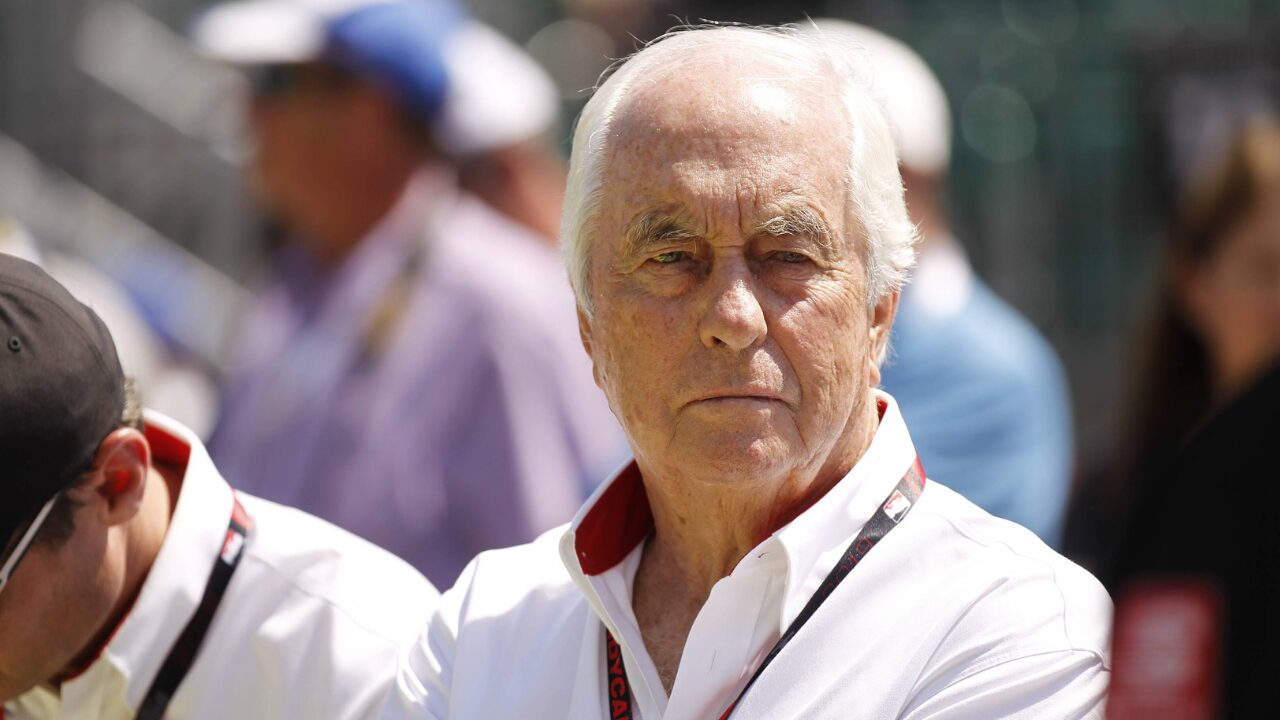
IndyCar is all set to run a race in Washington. The amazing part is that from an organizational point of view, some of America’s most well-known streets were turned into a racetrack. Naturally, it means a lot more elements of the locale will also surround it. The race in discussion is the Freedom 250 Grand Prix, which will run 147 laps on a 1.7-mile, seven-turn course around the National Mall.
Watch What’s Trending Now!
This puts Indy cars directly in sight of the Washington Monument, National Archives, and Smithsonian museums. This specific aspect of it has raised certain questions: the noise, vibrations, and most importantly, what this race could mean for the local historical artifacts. Roger Penske, however, sees a much bigger opportunity.
“Well, it’s going to give us visibility that we’ve never had before, and it puts us in the same class as the Indy 500 from the standpoint of national presence and worldwide TV audience.” Penske told Bob Pockrass in an interview.
The project came together in just four to five months after President Donald Trump signed an executive order in January tied to the country’s 250th anniversary. Normally, a street race takes far longer to plan. Here, Penske’s group had to work with Washington officials, federal agencies, security teams and several others that control different parts of the route.
The circuit itself passes through a part of the city where almost every road, sidewalk and building comes with its own set of rules. Penske said about 100 people from his racing organizations have worked on the project. He also credited Washington Mayor Muriel Bowser and her administration for helping keep the race moving.
The response from fans has been just as striking. Organizers received 288,000 requests for free tickets, even though the event can handle roughly 100,000 spectators each day. That demand is a big reason Penske sees the race as more than a one-off spectacle.
The track, however, has also led to serious preservation questions. Several museums and preservation advocates have worried about the effects of IndyCars running nearby, especially with historic buildings and artwork close to the circuit.
Several Smithsonian museums sit inside the event’s ticketed access areas, with the National Air and Space Museum, National Museum of the American Indian and National Museum of Natural History all with special access rules during race weekend. The event will also close down major roads, causing bus detours too.
One geosciences professor estimated IndyCar noise at roughly 110 to 130 decibels near the course, with people close to the track potentially needing ear protection.
Bud Denker, president of Penske Corporation, has pushed back hard on the idea that the cars will create dangerous levels of vibration. “There’s no vibration, OK? Our decimal levels are lower than those of a siren.”
In addition to that, the organizers have worked with the institutions along the route on engineering studies covering noise, vibration and peak particle velocity. The National Gallery of Art also had its own vibration study and took precautions around some outdoor sculptures. It was confirmed by the Spokesperson, Chris Abanava.
There is a lot more happening behind the scenes than fans will see on television. Manhole covers have to be secured so the cars’ downforce cannot lift them. Some road sections need to be smoothed out. Race control will work from the Federal Trade Commission building, while spotters will watch the circuit from rooftops.
Denker even drove a low sports car through Washington to inspect the route from a driver’s perspective. That also adds up to what Roger Penske said about the Super Bowl afterwards.
“The Super Bowl obviously is really an event that’s worked for three or four years, while here we’ve been four or five months to get ready.”
Penske was talking about the workload, not claiming the Freedom 250 is on the same sporting level as a Super Bowl. His point is that the compressed schedule made every part of the job harder. The payoff, he believes, could be unlike anything IndyCar has done before.
“It’s iconic. I think it would be something that can’t be demonstrated anywhere else in the world.”
That is what makes the Freedom 250 so important to Penske. The track is temporary, but its exposure could be far-reaching and long-lasting.