Richard Petty’s Son Reveals Stunning Turnaround of Historic Garage Burden That Rewrote Family Fortune

Mar 20, 2026 | 6:30 PM EDT
Richard Petty’s Son Reveals Stunning Turnaround of Historic Garage Burden That Rewrote Family Fortune
Mar 20, 2026 | 6:30 PM EDT
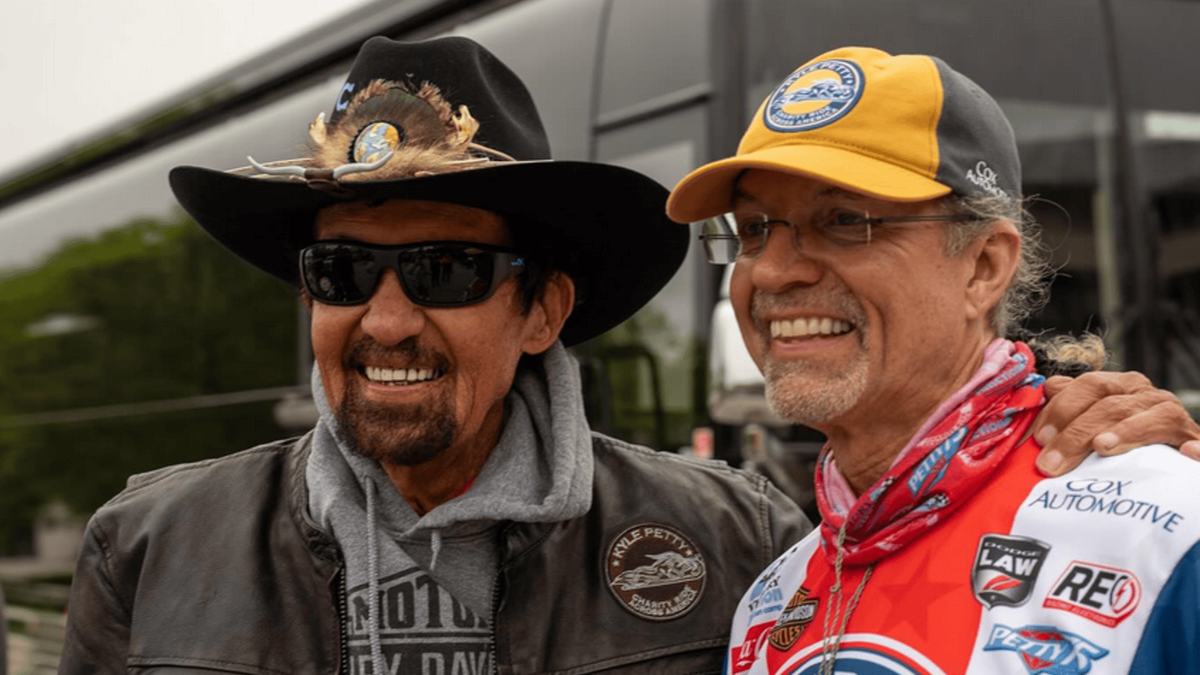
Lotus and Colin Chapman are a love story that defines motorsports. His designs were the peak of human innovation in car racing at that time. And Richard Petty would end up owning one of his legacies later on, owing to his relationship with STP. But not only did the car make his garage look good, but it also gave his family a fortune for a lifetime, as narrated by his son, Kyle Petty.
Watch What’s Trending Now!
Back in the day, Lotus’s Colin Chapman brought a new entry to the 1968 Indianapolis 500. The Pratt and Whitney turbine engine was no longer their best bet. So he and Maurice Philipe made some changes and brought forth the Lotus Type 56. This time, their innovation would focus on suspension design.
Driven by the likes of ‘Triple Crown’ winner Graham Hill, the car would fail to live up to its expectations. The car was later gifted to Richard Petty by STP. Petty would sell it to an unknown gentleman for an undisclosed price, but the story behind it was equally hilarious and stunning.
“So STP sponsored my dad. And we ended up with a lotus, a Mario Andretti lotus. Have you ever had anything in your garage or in your house that every time you needed something, it was behind this one object? And this one object wore your a** out. For 40 years, this thing was in our way. This guy came by one day and he said, ‘Hey, I hear you’ve got this lotus.’
From Andretti to Petty 🏎️@kylepetty shares the legendary story from the time his dad, Richard Petty, owned one of @MarioAndretti‘s cars🎙️
“My dad said it’s not for sale…” pic.twitter.com/RTfVAvGzdb
— PRN (@PRNlive) March 20, 2026
“And we’re like, my dad said, ‘Yeah, we got it.’ And he said, ‘Can I look at it.’ My dad said yeah, and so he goes back in the back, and then he finds it and digs it out, and it is a Lotus. I mean, it is nice. It’s got an engine in it and has everything. And he said, ‘How much you want for it?’ My dad said, ‘It’s not for sale.’”
An abrupt end to the story it isn’t, but here’s where the real story starts. The gentleman did not want to give up on Chapman’s magnum opus so easily. It was a legendary part of IndyCar and motorsports history after all. He would come back to Petty with more determination.
“About a month went by and a guy that bought it, the guy that wanted it, showed up and he said, ‘Can I look at it?’ My dad said, ‘Sure, it’s there in the back.’ And sure enough it’s back there in the back under six foot of dust and they dig around and the guy says, ‘How much you want for it?’
“My dad says, ‘It’s not for sale.’ And the guy says, ‘ I will give you $$ for it.’ And my dad said, ‘I’ll help you load it.’ And my inheritance went up eightyfold because of this one car.”
Kyle Petty isn’t kidding when he talks about the effect of this one sale. The Lotus 56-3 was the pinnacle of open-wheel design during its era. At that time, it was one of the most advanced cars ever run on a track. The iconic wedge-shaped design would go on to inspire the Formula 1 cars and give them a new identity.
For a car that inspired the importance of aerodynamics in racing, any collector would be ready to spend untold amounts. So what happened after Richard Petty sold the car?
The glory of the Lotus 56-3 brought back on track
For a car like the Lotus 56-3, the garage was an insult. So the likes of Clive Chapman (son of Colin Chapman) and Vince Granatelli (son of Mister 500 Andy Granatelli) decided to bring it back to its former glory. In 2014, they supervised a ground-up restoration of the car with its authentic 1968 STP livery.
The car then made an appearance at the Indianapolis Motor Speedway in 2014. It reunited with its other two sister cars and was driven by the likes of Parnelli Jones, Mario Andretti, and Vince Granatelli. The Lotus 56-3 was later presented at the Indianapolis Motor Speedway Hall of Fame Museum.
Jim Clark sits aboard the STP Oil Treatments Lotus 56 Pratt and Whitney Turbine during testing for the Indianapolis 500 in 1968. Built by Colin Chapman it was a four-wheel-drive, rear-engine mount. Photo: ISC Archives. Text and photo via Getty Images. #Indy500 pic.twitter.com/mcQYFJ30XF
— Demetriou Neto (@NetoDemetriou) January 11, 2025
The car would earn more recognition and honor later that year at multiple ceremonies. It would claim the Car of the Year award at the International Historic Motoring Awards. In 2014, the 56-3 also visited the Quail Motorsports Gathering in Carmel Valley, California, where it garnered Octane Magazine’s Editor’s Choice Award.
The Type 56-3 chassis is a well-preserved memoir of the times when motorsports was still growing its wings. The Pratt and Whitney turbines and the aerodynamics of that narrate the open-wheel racing scene as we know it today.
Related Newsletters