
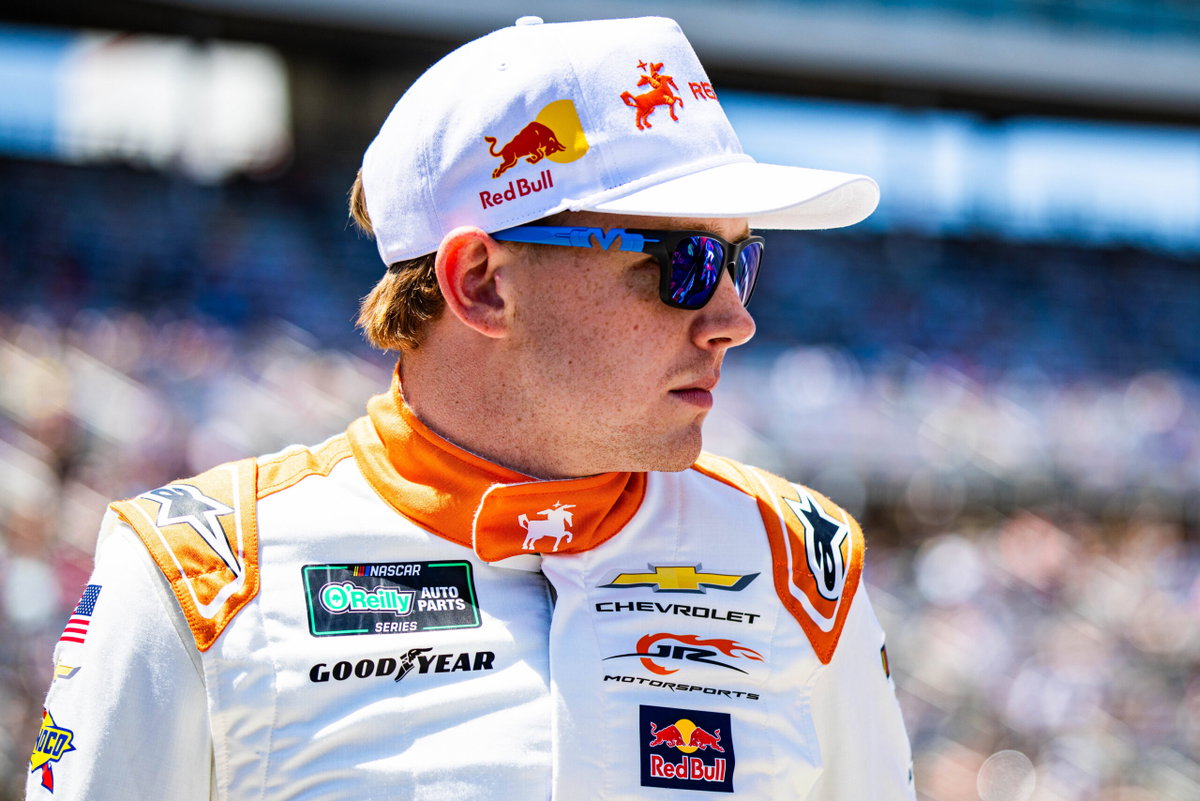
NASCAR’s controversial brake-checking incidents at Martinsville have raised questions about where aggressive short-track racing crosses the line, and whether the drivers involved should face consequences. With the sanctioning body yet to announce any penalties, the clashes involving Carson Hocevar, Austin Cindric, Josh Berry, and Ryan Blaney continue to fuel debate. But while NASCAR reviews the incidents, Cup Series rookie Connor Zilisch has offered a blunt assessment of the behavior on track, taking particular issue with how some drivers handled themselves afterward.
Watch What’s Trending Now!
“You don’t want to see that stuff happen. I feel like it’s pretty cheap to do what those guys did, and especially not owning up to it in post-race interviews,” Connor Zilisch told SiriusXM NASCAR Radio.
Zilisch did not hold back when asked about the brake-checking controversy that overshadowed parts of NASCAR’s Cup Series race at Martinsville. The Trackhouse rookie understands that tempers can flare during short-track racing, but he believes there is a difference between aggressive competition and deliberately putting another driver in a vulnerable position. For Zilisch, refusing to acknowledge what happened afterward only makes the situation worse.
The controversy centered on incidents involving Carson Hocevar, Austin Cindric, Josh Berry, and Ryan Blaney. Hocevar repeatedly slowed in front of Cindric, resulting in contact that severely damaged the front end of the No. 2 Team Penske Ford. Cindric’s race was effectively over, and he eventually finished 36th. Hocevar, meanwhile, finished 21st. The incident drew attention because the contact appeared to be repeated rather than a single exchange during close racing.
Cindric was furious, questioning NASCAR over the radio as his team dealt with the damage. “NASCAR, what are we doing? Like, we’re just weaponizing cars here,” he said. Hocevar later defended the exchange as part of racing at Martinsville, saying, “Sometimes you’re getting it. Sometimes you’re causing it,” before adding that he had fun.
A separate incident involving Berry and Blaney added to the debate. After contact between the two, Berry slowed as he tried to gather his car, and Blaney’s No. 12 Ford sustained significant damage. Blaney accused Berry of brake-checking him. However, Berry denied doing so intentionally and said he was trying to save his car. Blaney finished 35th, ending a difficult afternoon for the Team Penske driver.
Those incidents formed the backdrop to Zilisch’s criticism. The rookie acknowledged that frustration is part of racing and that drivers can make mistakes under pressure. However, he believes competitors still have a responsibility to keep their emotions under control rather than letting anger dictate their actions.
“None of it looked very good on their part, but you can get frustrated, and things can happen. So I get it, but you’ve got to be able to control your emotions and not let stuff like that frustrate you to the point where you’re going to do that to somebody,” he explained.
The host then raised a defense some fans had offered: that this was simply short-track racing. Zilisch has competed in late models and other forms of short-track competition, so he was asked whether brake-checking was something he had encountered regularly.
His answer went back to his childhood in go-karts. Zilisch recalled racing with bumpers that could trigger penalties if another driver pushed them hard enough. When he was 11, he said, competitors would sometimes brake-check others in an attempt to make them hit the bumper and receive a penalty. But he added that he had rarely used the tactic since switching to full-size cars.
That distinction is central to his argument. Zilisch is not suggesting that short-track racing should become contact-free. He understands that drivers will lean on each other, fight for position, and occasionally make mistakes. But deliberately slowing in front of another competitor can put that driver in a vulnerable position, particularly when the cars are susceptible to damage.
NASCAR’s short-track package also adds context to the discussion. The revised front-bumper design removed the Y-brackets and high-density foam, reducing reinforcement at the front of the cars. That change can make the front ends more vulnerable upon contact, increasing the potential consequences of an incident. It does not, however, establish whether a driver deliberately brake-checked another competitor.
Zilisch admitted he was surprised by what unfolded at Martinsville, while recognizing that frustration can lead to poor decisions. His message was ultimately about more than one driver or one incident: aggressive racing is part of NASCAR. But, at the end of the day, competitors must know where to draw the line and be willing to take responsibility for their actions.