
Imago
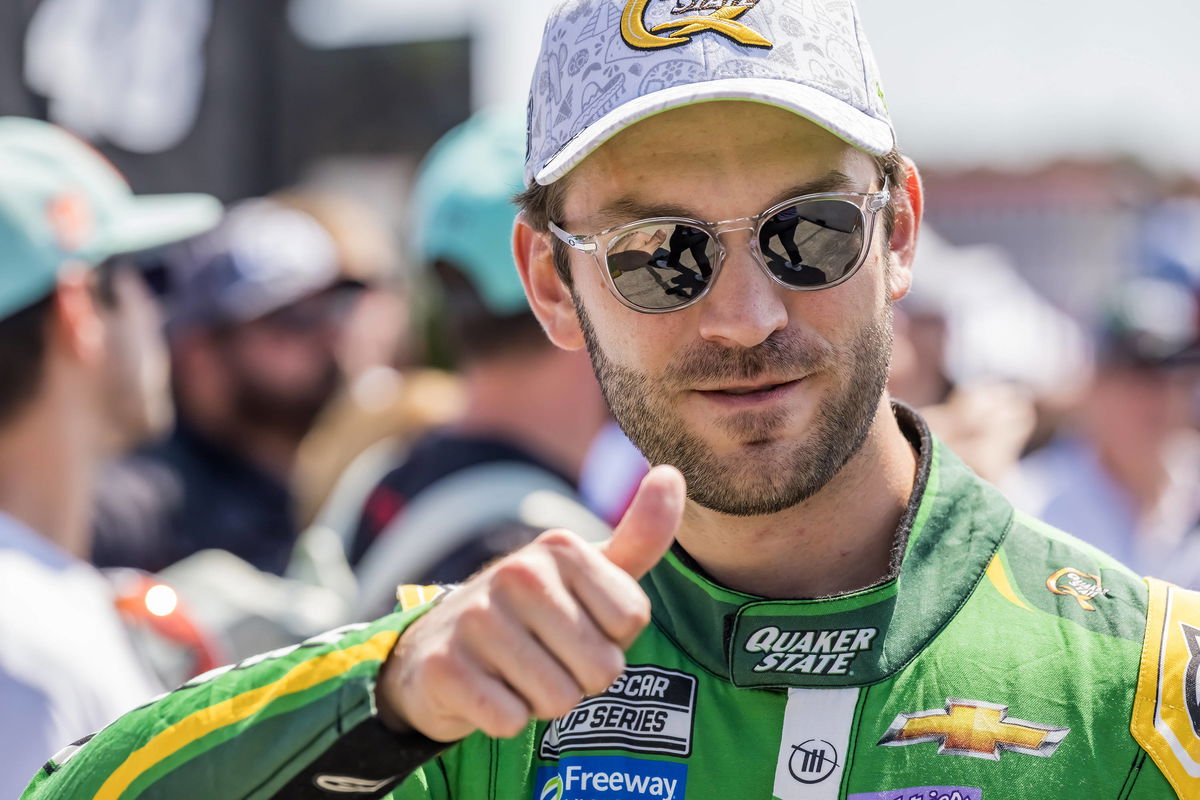
NASCAR, Motorsport, USA September 08 NASCAR Cup Series 2024: Quaker State 400 Available at Walmart NASCAR Cup Series driver, DANIEL SUAREZ 99, is introduced to the fans before the Quaker State 400 Available at Walmart at the Atlanta Motor Speeway in Hampton, GA. LicenseRM 22189430 Copyright: xZoonar.com/GrindstonexMediaxGroup/ASPInc/WalterxGxArcexSrx 22189430
Imago
NASCAR, Motorsport, USA September 08 NASCAR Cup Series 2024: Quaker State 400 Available at Walmart NASCAR Cup Series driver, DANIEL SUAREZ 99, is introduced to the fans before the Quaker State 400 Available at Walmart at the Atlanta Motor Speeway in Hampton, GA. LicenseRM 22189430 Copyright: xZoonar.com/GrindstonexMediaxGroup/ASPInc/WalterxGxArcexSrx 22189430
Daniel Suarez climbed out of his car at the Coca-Cola 600, having just won one of NASCAR’s biggest nights of the year. He’d held off Christopher Bell and Denny Hamlin in a finish the rain cut short, and just like that, he was in the 2026 playoffs with his first crown jewel trophy. Nice moment. But if you want to understand why it mattered so much to him, you have to go back decades, not days. He laid it out himself on the Dos Amigos Talk podcast.
Watch What’s Trending Now!
“All those moments of having a difficult time… life was preparing me for something bigger,” Suárez said. “I was not gonna make it because I wasn’t gonna be tough enough.”
View this post on Instagram
That toughness has deep origins. Suarez grew up in Monterrey, Mexico, hands-deep in his dad’s auto repair shop. At 11, he was just washing race cars for a customer who happened to run go-karts. One thing led to another, and suddenly he was behind the wheel himself.
By 14, his dad asked the question: Did he actually want to do this for a living? The second Suárez realized that real drivers got paid to race every weekend, that was it. No more hobby. This was the plan now.
Somebody had to pay for that plan, though. His father sold the shop, the family’s entire income, and took out a second mortgage just to keep his son on track. A shot at racing open-wheel cars in Europe never got off the ground; no sponsors meant no chance. So stock cars it was.
In 2011, 19-year-old Daniel Suarez drove 26 straight hours from Monterrey to Charlotte with basically nothing in his pocket. He didn’t speak a word of English. He picked it up the only way he could, sitting alone, watching American TV with subtitles on. More than once, he called his mom in tears, ready to pack it in, until NASCAR’s Drive for Diversity program threw him a lifeline.
Getting to America turned out to be the easy part. Once he was actually racing in NASCAR, the ground kept shifting under him. Joe Gibbs Racing threw him into a Cup car in 2017, way before he was ready, then cut him loose two years later. Stewart-Haas let him go after a single season. Gaunt Brothers, running on fumes financially, handed him a brutal 31st-place finish in the standings.
Trackhouse was finally the place that stuck. In 2022, he won at Sonoma, becoming the first Mexican-born driver to ever win a Cup race. But the chemistry curdled by 2025, and Trackhouse moved on without him, clearing room for Connor Zilisch.
Then Spire Motorsports took a chance on him for 2026, and it clicked almost instantly. He’s eighth in points right now, with 14 top-20 finishes out of 16 races, best on the whole Spire roster. The Coca-Cola 600 was the crown on top of that. He dedicated the win to Kyle Busch, the guy who gave him his real shot back in Xfinity. Busch passed away earlier this year, and Suárez has said plainly: no Busch, no Cup career.
Daniel Suarez is Passing the Lesson Forward
These days, all that hardship doesn’t just sit in Daniel Suarez‘s past; it shows up in his schedule. Through Daniel’s Amigos, he walks into schools packed with Hispanic students, places like Sunset and W.H. Adamson High in Dallas, where over 90 percent of the kids are bilingual.
He tells them exactly what it felt like standing in a garage where nobody spoke his language. Sunset’s principal, David Lee, put it simply: seeing an actual Mexican champion in the flesh hits differently than anything a textbook could teach.
He shows up in smaller ways too, covering grocery bills at a Dallas supermarket instead of just signing autographs. Same message every time, wherever he goes: comfort never built a career. The hard years did. He’s living proof.
Written by

Edited by

Siddharth Rawat