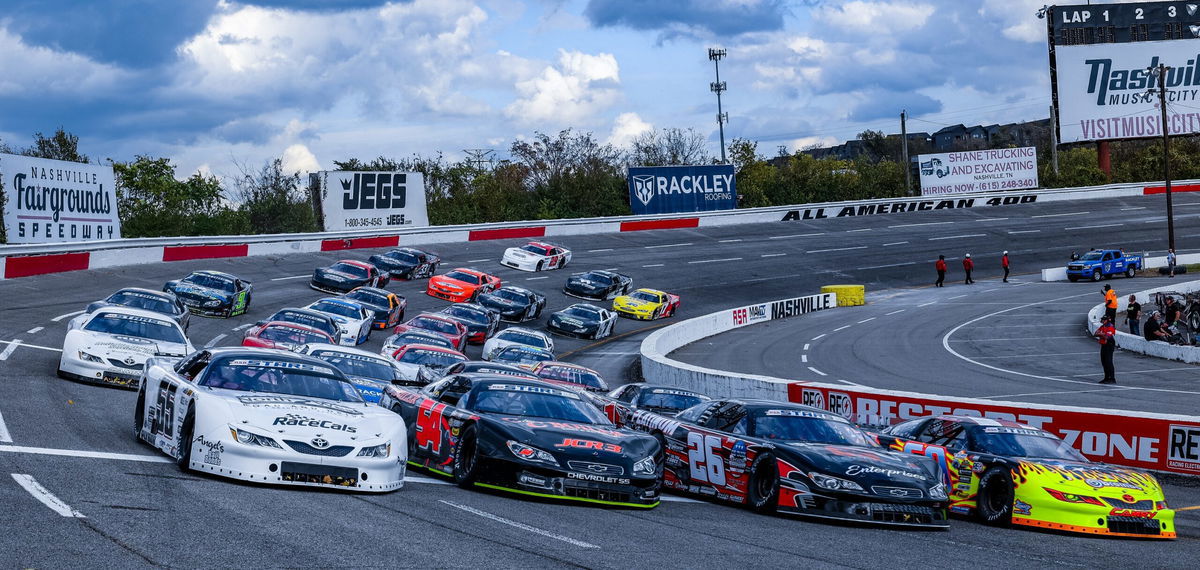
Nashville Mayor Freddie O’Connell isn’t exactly losing sleep over a proposed referendum that could ban auto racing at the Fairgrounds Speedway. In fact, he sounds openly skeptical. The initiative, filed earlier this month by racing opponents, aims to amend the city charter by removing auto racing from the list of required uses at the fairgrounds and replacing it with affordable or workforce housing.


“It’s not a priority for me,” the mayor said bluntly, framing the proposal as a kind of “repeal and replace” solution that oversimplifies a complex issue. “We’ve got 526 square miles to use for potential housing and only 100 acres of fairgrounds,” O’Connell noted. “We tear down Wave Country and put affordable housing there.”
Watch What’s Trending Now!
“Mayor Freddie O’Connell is skeptical of a proposed referendum that seeks to ban auto racing at the Nashville fairgrounds. … Mike Kopp, spokesperson for the group wanting to ban racing, criticized O’Connell’s comments.” – @Axios https://t.co/4W7yZenCpX
— Adam Stern (@A_S12) December 22, 2025
That skepticism matters, especially with a potential deal involving Speedway Motorsports Inc. (SMI) quietly sitting in the background. O’Connell has been weighing a financing plan that could revitalize the racetrack and pave the way for NASCAR’s return to the city.
Under that proposal, SMI would guarantee bonds tied to the project, supplemented by state funding. However, it remains unclear when, or if, the mayor will formally present it to the Metro Council. Meanwhile, the referendum faces an uphill climb. Organizers must collect roughly 53,000 voter signatures to land the measure on the November ballot. Moreover, it still needs approval from both the Metro Charter Revision Commission and the Election Commission.
All of this centers on a track that carries serious historical weight. Fairgrounds Speedway is the second-oldest continually operating racetrack in the United States and once hosted NASCAR’s top series from 1958 to 1984. That chapter ended after disputes with city officials and management. However, the debate over its future clearly isn’t finished yet.
Why is the Fairgrounds so special in NASCAR?
When the Nashville Fairgrounds Speedway first opened its doors, it wasn’t even a paved racetrack. In its earliest days, the venue was a dirt oval that hosted horseless carriage races and motorcycle competitions, a reflection of motorsport’s raw, experimental beginnings. By 1915, the Fairgrounds had already earned national credibility, attracting Indy 500 drivers who hauled their machines to Nashville to test themselves on the rough oval.
The real turning point came in 1958. After securing a 10-year lease from the state fair board, the local racing community paved the facility and constructed a unique layout: a half-mile track sharing its front stretch with a quarter-mile oval. It instantly became one of the most distinctive short tracks in the country.
Just a year later, in 1959, NASCAR’s Grand National Series held its first-ever race at the Fairgrounds. The track began drawing competitors from outside Tennessee. However, top-level NASCAR events remained limited due to recurring disputes between NASCAR officials and city leadership over management and control. As a result, Late Model Stock racing flourished, turning the Fairgrounds into a breeding ground for talent.
By the late 1970s, the speedway had become a magnet for future legends. Drivers like Bobby Allison, Darrell Waltrip, Dale Earnhardt, and Sterling Marlin raced there in 1978 and 1979. These legends cemented the track’s reputation as a place where reputations were forged the hard way.
Eventually, the rise of a new superspeedway pulled marquee NASCAR events away from the Fairgrounds. Still, hope flickered again in 2018 when the then-operator, Tony Formosa Jr., partnered with Speedway Motorsports to modernize the facility. Once more, city politics stalled progress, even after a tentative agreement with Mayor John Cooper.
Now, under Mayor Freddie O’Connell, the fate of this historic track once again hangs in the balance.

