Imago
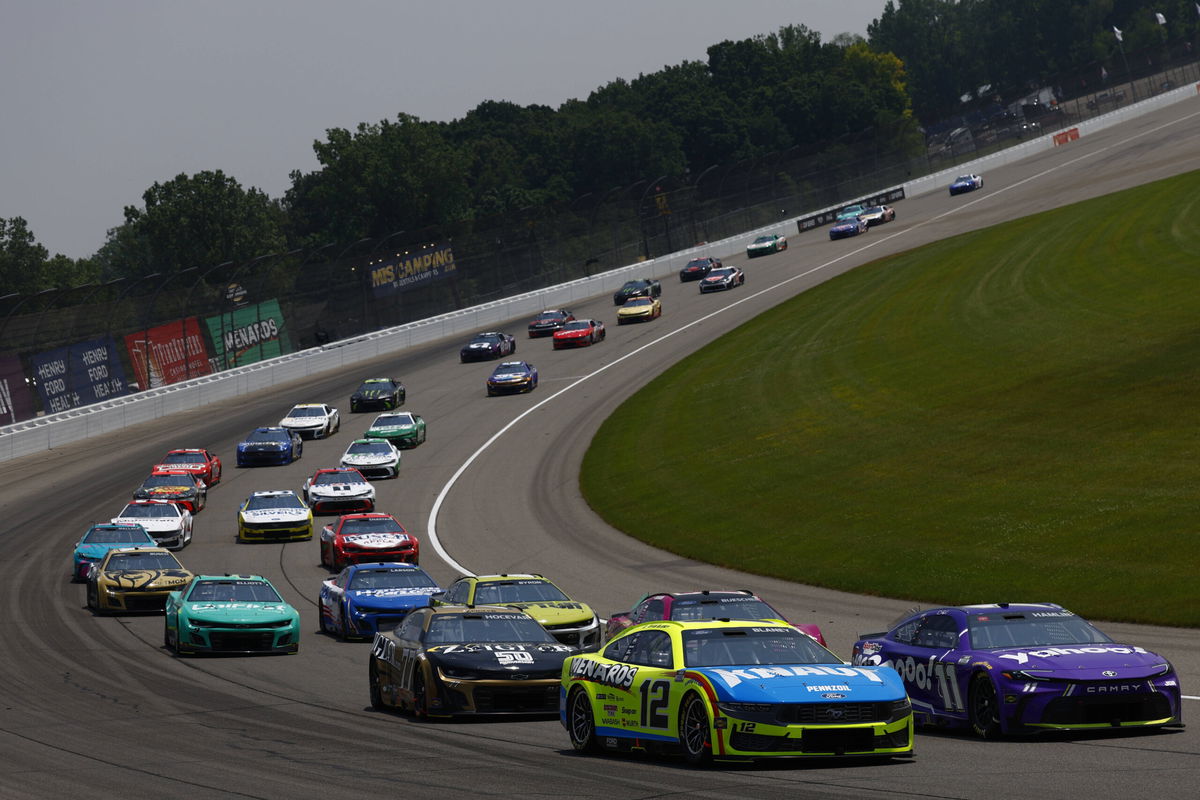
June 8, 2025, Brooklyn, Mi, USA: DENNY HAMLIN 11 of Chesterfield, VA races for the FireKeepers Casino 400 in Brooklyn, MI. Brooklyn USA – ZUMAa161 20250608_aaa_a161_020 Copyright: xWalterxG.xArcexSr.x
Imago
June 8, 2025, Brooklyn, Mi, USA: DENNY HAMLIN 11 of Chesterfield, VA races for the FireKeepers Casino 400 in Brooklyn, MI. Brooklyn USA – ZUMAa161 20250608_aaa_a161_020 Copyright: xWalterxG.xArcexSr.x
What is even the point of racing without overtakes? While NASCAR takes pride in the massive lead changes throughout a race, insiders have long been unhappy with how the cars have been performing. Many times, the lead changes only happen because the drivers wreck or make a simple mistake. Sure, overtaking exists, but as witnessed during the 2026 Daytona 500, it’s not always quite possible. And after a thrilling weekend at Darlington, a NASCAR legend is backing his three-decade-old theory and wants the teams to act on it, perhaps experimentally.


Mark Martin’s low-downforce theory
Watch What’s Trending Now!
Mark Martin has been in and around the sport for a long time and has driven enough miles to make a strong statement on NASCAR’s current state of racing. He has been advocating for low downforce in cars for the past thirty years, but the number has only gone up. Currently, the cars generate somewhere near 2,000lb of downforce on Superspeedways like Daytona. However, Martin wants to bring about a change and has offered to step in and help with his ideal dream team.
“What I’d like to do is have a team, say Chase Elliot, and Alan Gustafson… and spend some time with their engineers and their tech people and other tech people to come up with a plan,” said Martin on Dirty Mo Overdrive. “But I would want it to be a plan that I administer or otherwise direct. And the reason for that is, I’ve been battling this for 30 years.”
His NASCAR career saw some great heights and thrilling finishes. Having competed in many top race cars, Martin still feels like the ones with lesser downforce stood out to him.
“My best car for 1990, the best race car I had, made zero downforce in the front in race trim with the grill open. Zero. It didn’t have a lift. Everybody in the field had cars similar to that,” Martin said. “In ’91, we started raking the bodies. And that’s when NASCAR started having to come at us with quarter panel height rules and all that stuff. We started making more downforce. And by ’95, we had the same problem that we have today.”

Imago
MARK MARTIN (USA) NASCAR Motorsport USA DRIVER MOTORSPORT : VERIZON IndyCar Indy Car IRL USA SERIES – 100TH INDY 500 – INDIANA (USA) – ROUND 6 – 26/05/2016 VISIONSPORTx PUBLICATIONxNOTxINxFRAxITAxBEL
Mark Martin USA Nascar motor aviation USA Driver motor aviation Verizon IndyCar Indy Car IRL USA Series 100th Indy 500 Indiana USA Round 6 26 05 2016 VisionSportx PUBLICATIONxNOTxINxFRAxITAxBEL
While downforce is extremely essential for other series like IndyCar or Formula 1, it seems to be hurting the point of racing in NASCAR. Too much downforce, as Martin suggested, only makes it more difficult for drivers to overtake. He claimed that the driver leading the race and the one running in 20 place have roughly the same speed, and hence, overtaking becomes a rare phenomenon.
“If you take a car with, let’s just say, 200 lb downforce with zero in the front, and you get behind another car, you’re going to lose 60 pounds,” said Martin. “The driver’s going to hardly know the difference. And so I would like, for the first time in 30 years, to have the opportunity to prove that.”
A graph showing pounds of downforce generated by Cup cars since the mid-80s
Today’s cars generate somewhere over 2000 pounds of downforce in clean air pic.twitter.com/R6CkCIDPyZ
— nascarman (@nascarman_rr) June 23, 2025
Having less downforce (in NASCAR) not only contributes to better racing but also better driving overall. For the drivers, high downforce can leave them stuck in turbulent air, limiting their ability to make moves. However, the reduction in downforce helps them with better drivability.
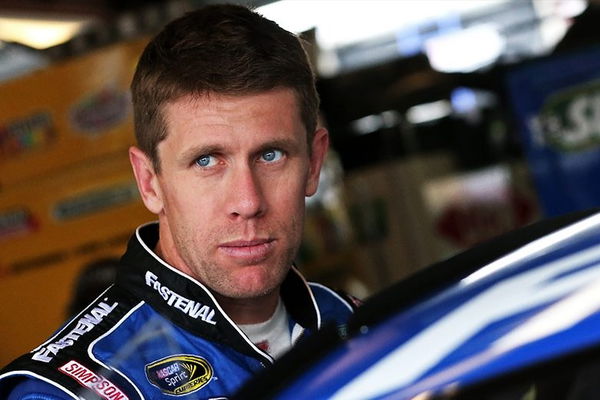
Over a decade ago, now-former driver Carl Edwards had focused on something similar when talking about NASCAR reducing the overall downforce on cars. It seemed to be a huge win, as per his statements, vindicating what Mark Martin has been asking for a long time with regard to operating cars with lower downforce for drivers.
When Carl Edwards advocated for lower downforce in NASCAR
It would be wrong to say that NASCAR has blatantly ignored the suggestion from some of the most legendary drivers. Like they introduced the short-track package for the 2026 season with lower downforce, they did something similar a decade ago, back in 2015.
When the Cup Series went racing at the Kentucky Speedway that year, a new package with lower downforce debuted for the cars. This package showcased a massive improvement in racing, as the overall overtakes throughout the race went from 11,467 a year before in 2014 to 2,665 that particular year.
“I cannot say enough positive things about this direction NASCAR is going with less downforce, I could actually drive the car; I was steering and sliding, I just about wrecked a few times,” said Edwards in 2015 when talking about the car with lower downforce. “I felt like I was doing something, not just sitting in line. To me, that spoiler cannot be small enough.”
Imago
Via NASCAR
Understandably, lesser downforce makes the cars more nimble, changing the overall driving feel and style massively. While this could be dangerous on Superspeedways like Daytona or Talladega, it feels just fine for the other tracks where racing usually feels restricted.
It seems that NASCAR is following this theory for the 2026 season. The short-track package seems to be working well with the lower downforce and higher horsepower. With the series having just completed six races, it will be exciting to see how future races pan out with the new rules.
