
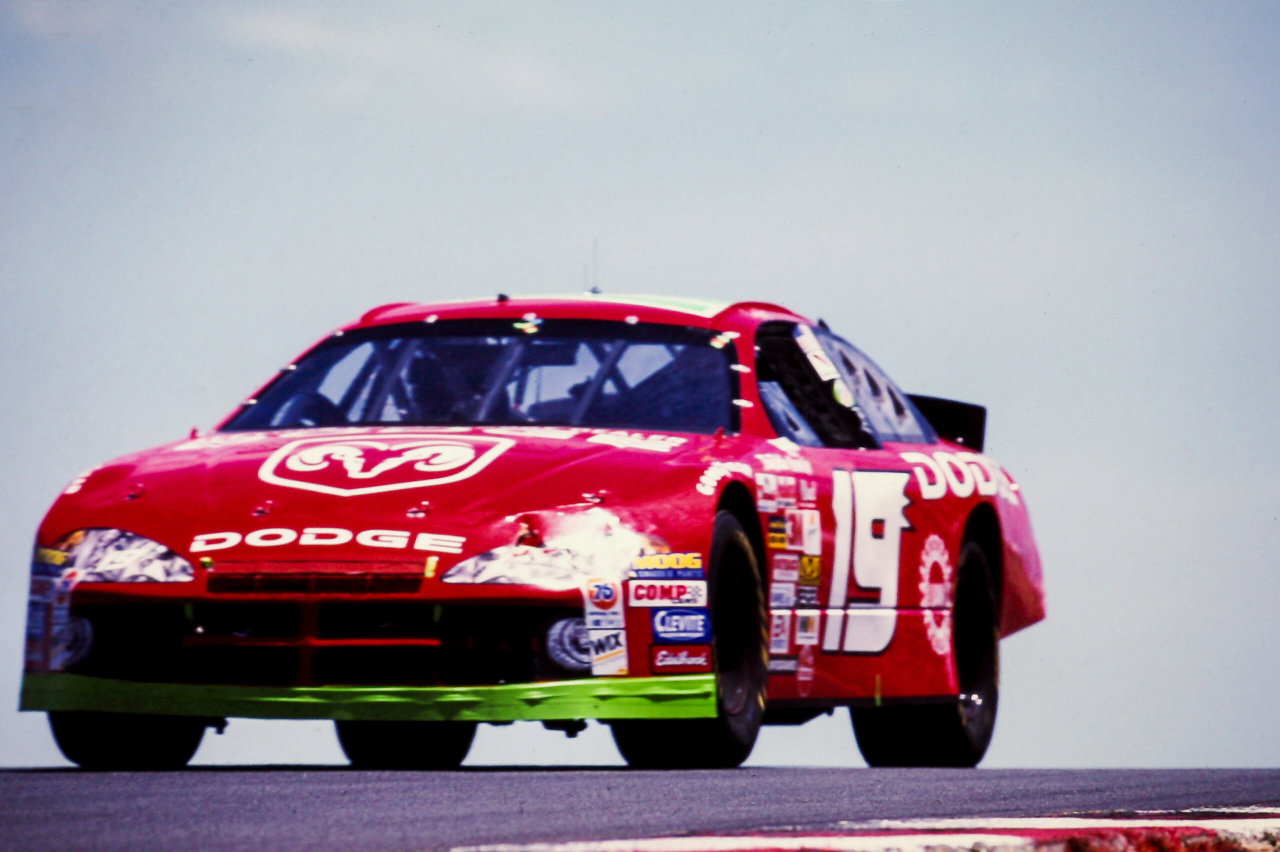
Dodge’s return to the NASCAR Cup Series in 2027 is a major boost for a championship that has spent years with just three manufacturers. However, its arrival is not going to change one of the most important parts of the competition: the number of chartered teams.
Watch What’s Trending Now!
NASCAR has made it clear that it has no intention of expanding the current 36-charter system to accommodate the returning manufacturer. This might seem odd, considering that the sport is welcoming another major automotive brand, but there is a significant financial complication behind it.
The existing charter agreement protects commitments made to the teams already holding those places, and changing that arrangement is far more complicated than simply adding four more entries.
John Probst, NASCAR’s President of Event Management, addressed the issue following the announcement of Dodge’s return. Asked whether the manufacturer could lead to an increase in the number of charters, he was direct.
“We are not intending to create any new charters in our Cup Series,” Probst said (as per a post shared by Noah Lewis on X). He added that there was “not really consideration for that right now.”
This leaves the Cup Series with 36 chartered entries, even as Dodge prepares to join Chevrolet, Ford and Toyota on the grid. The distinction is important because Dodge is not bringing an entirely new team into the championship. Its return will be through Kaulig Racing, an established Cup organization that already has charters and is preparing to switch manufacturers for its 2027 program.
Bob Pockrass offered a useful explanation for why NASCAR is reluctant to increase the number of charters. In his assessment via a tweet, the current agreement complicates expansion because the existing 36 charter teams are already promised specific payments through 2031.
A charter is not simply a guaranteed place in a race. It also gives a team access to a defined share of the sport’s financial distribution. Those arrangements are part of the current charter agreement, which runs through 2031. Bringing additional charter holders into the system would require addressing how existing financial commitments are protected and how available funds are distributed.
That is the central complication. NASCAR cannot look at Dodge’s arrival in isolation and assume that adding more chartered teams would have no effect on the organizations already invested in the system.
There is an important distinction, however. Pockrass presented this as his interpretation of the agreement and its financial implications. Probst did not explicitly identify those payments as the reason for NASCAR’s decision. Nor does the arrangement mean that expansion is legally impossible. It means that increasing the number of charters would require NASCAR to work within the existing financial structure rather than simply create additional guaranteed entries.
The decision also prompted questions given NASCAR’s previous statements about new manufacturers entering the Cup Series.
Matthew Breault highlighted the apparent contradiction on X, arguing that NASCAR had indicated that additional charters would be made available when a new manufacturer arrived, only to maintain the 36-charter limit when Dodge confirmed its return.
Kelly Crandall pushed back against that interpretation. She argued on X that the earlier comments were about a new manufacturer arriving alongside new teams, not an existing Cup organization changing its manufacturer.
Her point was straightforward: Kaulig Racing is not a new team. It already competes in the Cup Series and already holds charters. Dodge’s return through Kaulig, therefore, does not create the same situation NASCAR was discussing when it spoke about making charters available to new teams joining alongside a new manufacturer.
Crandall also questioned why the decision had become such a contentious issue, arguing that NASCAR had not failed to deliver something it had actually promised. The distinction between a new manufacturer and a new team is central to understanding the situation. Dodge is bringing another manufacturer into the competition, but Kaulig is not entering the championship for the first time.
For Dodge, the lack of expansion does not prevent a comeback. Kaulig’s existing two-car operation provides the foundation for its return, meaning NASCAR does not need to create additional charter positions for the program to get underway.
Dodge is returning to the Cup Series after its departure following the 2012 season. Its 2027 entry will restore a fourth manufacturer to the top level of NASCAR, something the series has not had for more than a decade. The comeback also follows a period of uncertainty about the manufacturer’s plans and NASCAR’s future engine direction.
The timing has been made possible through an arrangement with ECR Engines, rather than Dodge developing an entirely new proprietary engine program. That matters because NASCAR is already looking toward its next engine formula, with a potential transition window around 2030 to 2032. The 2027 return gives Dodge a route back into the series without waiting for that longer-term technical change.
The bigger question is what happens if another team wants to join Dodge’s effort. With NASCAR not planning to create additional charters, any organization looking to enter the Cup Series as a chartered team will have to acquire an existing charter rather than expect the governing body to add another.
That could make the availability and value of existing charters even more important as manufacturers look to build their Cup programs. A fourth manufacturer may bring fresh investment, competition and interest, but it does not automatically mean more guaranteed places on the grid.
NASCAR clearly wants Dodge back. What it does not appear willing to do is rewrite the charter structure simply to make room for the manufacturer’s arrival. With 36 teams already protected by an agreement running through 2031, the financial and contractual considerations are substantial. Dodge can return through Kaulig, but the charter count is staying where it is for now.