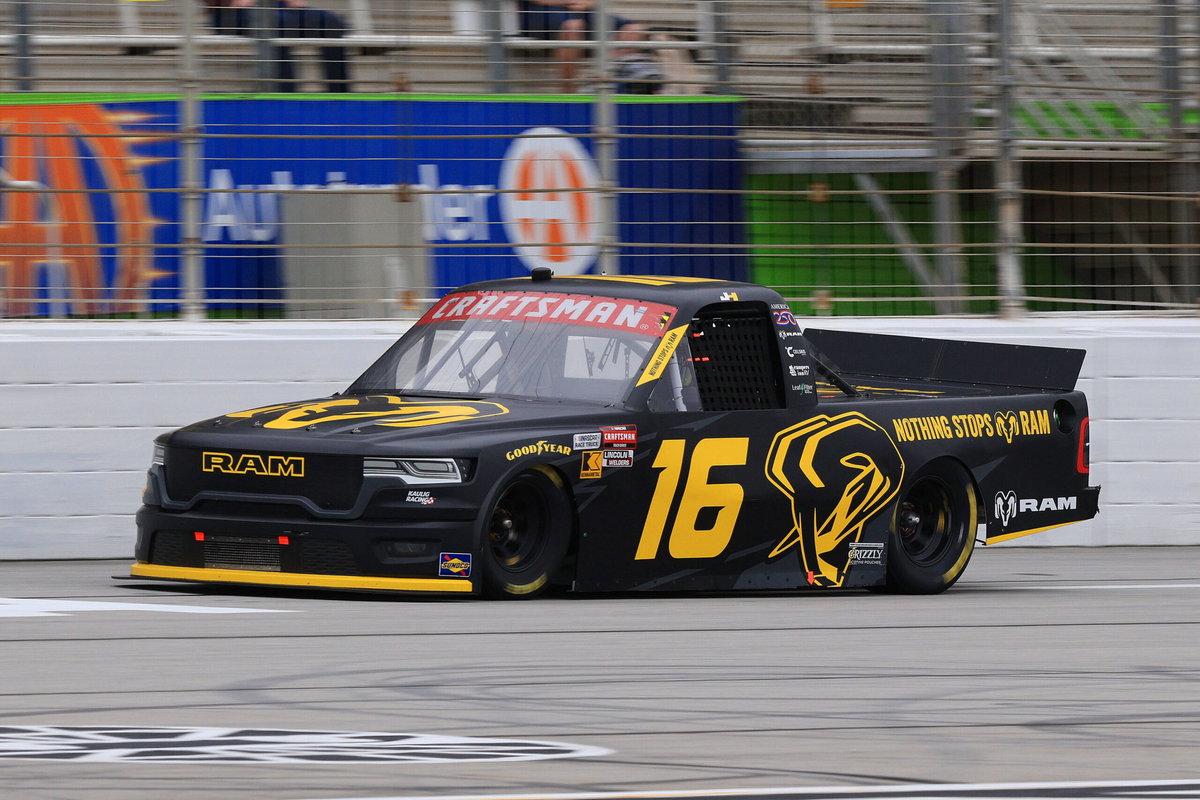
Imago
HAMPTON, GA – FEBRUARY 21: Justin Haley 16 Kaulig Racing Ram RAM during the NASCAR, Motorsport, USA CRAFTSMAN Truck Series FR8 208 race on February 21, 2026 at EchoPark Speedway in Hampton, GA. Photo by David J. Griffin/Icon Sportswire AUTO: FEB 21 NASCAR CRAFTSMAN Truck Series FR8 208 EDITORIAL USE ONLY Icon9532602210218
Imago
HAMPTON, GA – FEBRUARY 21: Justin Haley 16 Kaulig Racing Ram RAM during the NASCAR, Motorsport, USA CRAFTSMAN Truck Series FR8 208 race on February 21, 2026 at EchoPark Speedway in Hampton, GA. Photo by David J. Griffin/Icon Sportswire AUTO: FEB 21 NASCAR CRAFTSMAN Truck Series FR8 208 EDITORIAL USE ONLY Icon9532602210218
NASCAR has always leaned hard into one identity: stock cars. It’s what separates it from the precision-built machines of Formula 1 or the open-wheel world of IndyCar Series. The idea is simple: race cars that look like what you can buy. But lately, fans have started questioning just how “stock” things really are, especially in the Truck Series, sparking a fresh debate that manufacturers can’t ignore anymore.


NASCAR fans question the Truck Series identity
Watch What’s Trending Now!
The NASCAR Craftsman Truck Series has long held a unique place in the sport. Now in its 32nd season, it remains NASCAR’s only national division built around pickup-style stock cars. And over the years, it’s served as a crucial launchpad for drivers climbing toward the O’Reilly Auto Parts Series and eventually the Cup Series.
On paper, the trucks check all the right boxes. They’re designed to resemble real-world models like the Ford F-150, Chevrolet Silverado, Toyota Tundra TRD Pro, and even the returning Ram 1500. But under the surface, the reality is very different. These machines are purpose-built race vehicles.
They sit on steel tube-frame chassis with integrated roll cages, run on slick Goodyear tires, and pack 650–700 horsepower V8 engines paired with 4-speed manual gearboxes. Dimension-wise, they’re over 5.2 meters long, with a wheelbase of 2845 mm, which is roughly the length of a Formula 1 car. Everything about them is engineered for speed, aerodynamics, and safety.
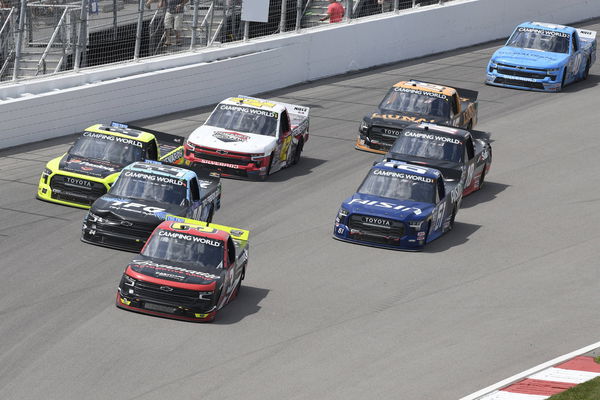
Imago
Sport Bilder des Tages MADISON, IL – JUNE 04: Jordan Anderson 3 JAR Bommarito Automotive Group Chevrolet Silverado leads a pack of trucks into turn one during the Toyota 200 NASCAR, Motorsport, USA Camping World Truck Series event at World Wide Technology Raceway in Madison, Illinois. Photo by David Allio/Icon Sportswire AUTO: JUN 04 NASCAR Camping World Truck Series Toyota 200 Icon95122060418
And that’s exactly where the disconnect begins.
Because, despite the visual resemblance, these race trucks share almost no mechanical DNA with the vehicles you’d find on the road. Real pickup trucks are built for utility, durability, and comfort. These? They’re built to go fast in tight packs at over 180 mph.
Which brings us to the question that’s now stirring debate among fans: How “stock” is a stock truck supposed to be? It all started with a simple Reddit question: How would you feel about changing the truck series to have a more realistic truck size? And from there, the conversation quickly took off.
Fans demand reality
Once the question hit – should NASCAR make its trucks more realistic? – fans didn’t hold back. And interestingly, many didn’t just point fingers at the NASCAR Craftsman Truck Series… they looked at the real world instead.
“I’d rather road trucks return to a more realistic truck size,” one fan wrote, keeping this simple demand in front of the manufacturers. And it’s hard to ignore. Modern production pickups have ballooned in size over the past decade. What used to be mid-size is now full-size, and full-size trucks are pushing into territory that feels oversized for everyday use.
Others took a more sarcastic swing at the idea: “OR OR OOORRRR… how about Ram, Ford, Toyota and Chevy can build production trucks that are the size of the NASCAR trucks.” On paper, it sounds simple. But in reality, race trucks are built with completely different priorities. Shrinking production vehicles to match them would mean sacrificing utility, safety standards, and consumer demand.
Then came the practical racing concerns. “That would be crazy LOL. The drag and the elevation would cause so many wrecks and flips. And on top it would be way harder to do 3-4 wide Racing. Won’t be enough space,” one fan pointed out. Larger, taller trucks would create more aerodynamic instability, especially in pack racing. Add in tighter racing grooves, and suddenly, the idea of 3- or 4-wide battles becomes a lot riskier (if not outright impossible).
And maybe the most telling comment of all: “Why the hell are pickups getting bigger and bigger?” Another fan added that a modern Tacoma now feels like what a Tundra used to be. It’s a shift driven by market trends. Customers want more space, more capability, and more presence. But it’s also creating a growing disconnect between road vehicles and race versions.
In the end, this debate isn’t just about NASCAR’s “stock car” identity. It’s about a wider evolution in the auto industry and whether racing should follow it or push back against it.