
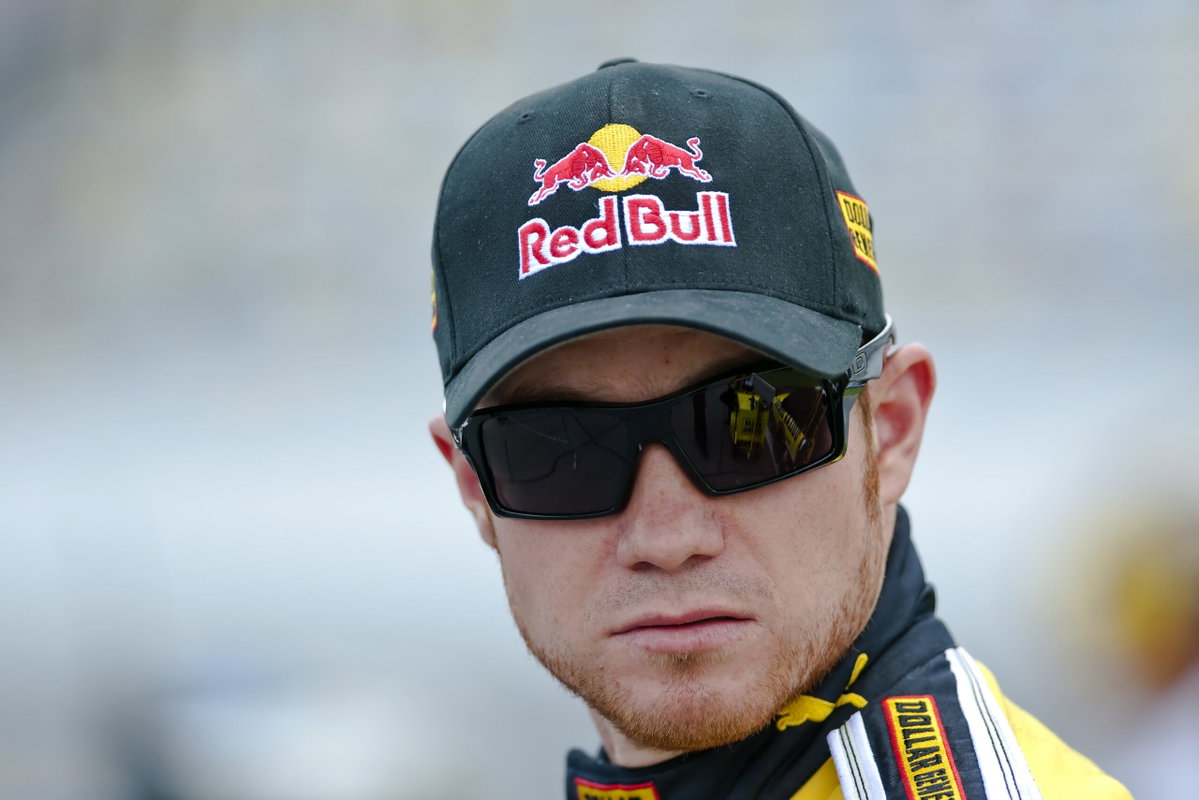
For years, Brian Vickers and Sarah Kellen remained one of NASCAR’s more unusual off-track connections, largely because Kellen’s name had long been tied to the late Jeffrey Epstein scandal before she later became Vickers’ wife. Now, years after the former NASCAR driver quietly stepped away from the spotlight, Kellen has suddenly resurfaced in headlines again after explosive courtroom testimony connected her to fresh allegations involving a former Miami Beach mayor.
Watch What’s Trending Now!
“The Miami Herald has learned that Sarah Kellen, a longtime personal assistant to s-x trafficker Jeffrey Epstein, testified yesterday that she was s-xually assaulted by former Miami Beach mayor and former Florida gubernatorial candidate Philip Levine,” The Miami Herald‘s Shirsho Dasgupta wrote.
The explosive testimony immediately placed renewed attention on Sarah Kellen, who has remained one of the most controversial figures connected to the Epstein scandal and is also known in NASCAR circles as the former wife of ex-Cup Series driver Brian Vickers. She appeared before lawmakers during a closed-door session held as part of the House Oversight Committee’s continuing inquiry into how federal authorities handled investigations involving Epstein over the years. Before the testimony began, House Oversight Committee Chairman James Comer admitted the hearing was expected to be emotionally difficult.
“It’s going to be the toughest one yet,” Comer told reporters beforehand.
During her planned statement, Kellen attempted to explain how she became involved with Epstein in the first place. She said she had originally moved to Hawaii after marrying at just 17 years old and later worked at a hotel where a co-worker eventually recruited her for a position as Epstein’s assistant.
According to Kellen, her life spiraled after a divorce with NASCAR driver Brian Vickers and excommunication from her church left her isolated and vulnerable. She described herself as becoming “a perfect target” for Epstein during that period of her life.
“I am here today to answer your questions, to dispel rumours and conspiracies, and to tell you the truth,” Kellen told lawmakers during her opening statement.
The hearing quickly escalated from there. Comer later confirmed that Kellen accused three men of wrongdoing and identified them by name during the testimony. Sources speaking to CNN said Kellen named Frédéric Fekkai, Philip Levine, and Patrick Demarchelier.
According to sources familiar with the testimony, Kellen told committee investigators that Levine assaulted her in St. Tropez during the early 2000s at a residence being rented by Epstein and his longtime associate Ghislaine Maxwell. Following the allegations, CNN reportedly reached out to Levine as well as representatives for Patrick Demarchelier (who passed away in 2022) through calls, emails, and social media messages seeking comment.
Levine had previously addressed his limited association with Epstein earlier this year in a statement to WLRN.
“As I have stated previously, my only connection to Jeffrey Epstein arose solely through my former friendship with Ghislaine Maxwell. I met Epstein only a few times. I never conducted business with him, never visited his island and never flew on his aircraft. I regret ever meeting him,” he said at the time.
Now, years after Epstein’s passing, the testimony has rekindled public interest in the Epstein probe and the numerous prominent figures still involved in the scandal.
How Sarah Kellen became one of Epstein’s closest associates
In her early twenties, Sarah Kellen started working for Jeffrey Epstein in 2001. She became one of the most well-known members of Epstein’s inner circle during the ensuing ten years and stayed intimately involved in his operations for many years. According to survivor testimonies, court documents, and numerous civil cases, Kellen’s initial responsibilities included organizing and setting up appointments for Epstein and his longstanding colleague Ghislaine Maxwell.
However, survivors later claimed that these duties often went well beyond routine administrative tasks. Kellen’s name was frequently included in lawsuits and investigative records related to Epstein’s trafficking network, since several stated that the meetings she assisted in setting up included massages and visits that subsequently turned sexual.
Kellen became a major public figure in the scandal after details emerged surrounding Epstein’s controversial 2007 federal non-prosecution agreement. The deal, negotiated in Florida under then-U.S. Attorney Alexander Acosta, granted immunity not only to Epstein but also to several women identified as possible “co-conspirators.”
Instead of facing sweeping federal charges, Epstein ultimately pleaded guilty in state court to charges tied to soliciting prostitution from a minor and served just 13 months in county jail under a heavily criticized work-release arrangement. Kellen was specifically named in the agreement alongside Lesley Groff, Adriana Ross, and Nadia Marcinkova.
During her recent Congressional testimony, however, Kellen portrayed herself not as a willing participant but as someone psychologically manipulated and controlled by Epstein for years.
“He groomed me, s-xually and psychologically abused me, controlled me, manipulated me, dominated me, and gaslit me until I could no longer tell which thoughts were mine and which were his,” she said.
Her testimony has now given a case that keeps coming up years after Epstein’s death a very personal touch while also raising new concerns about the individuals who were part of his inner circle and the structures that shielded them for so long.