
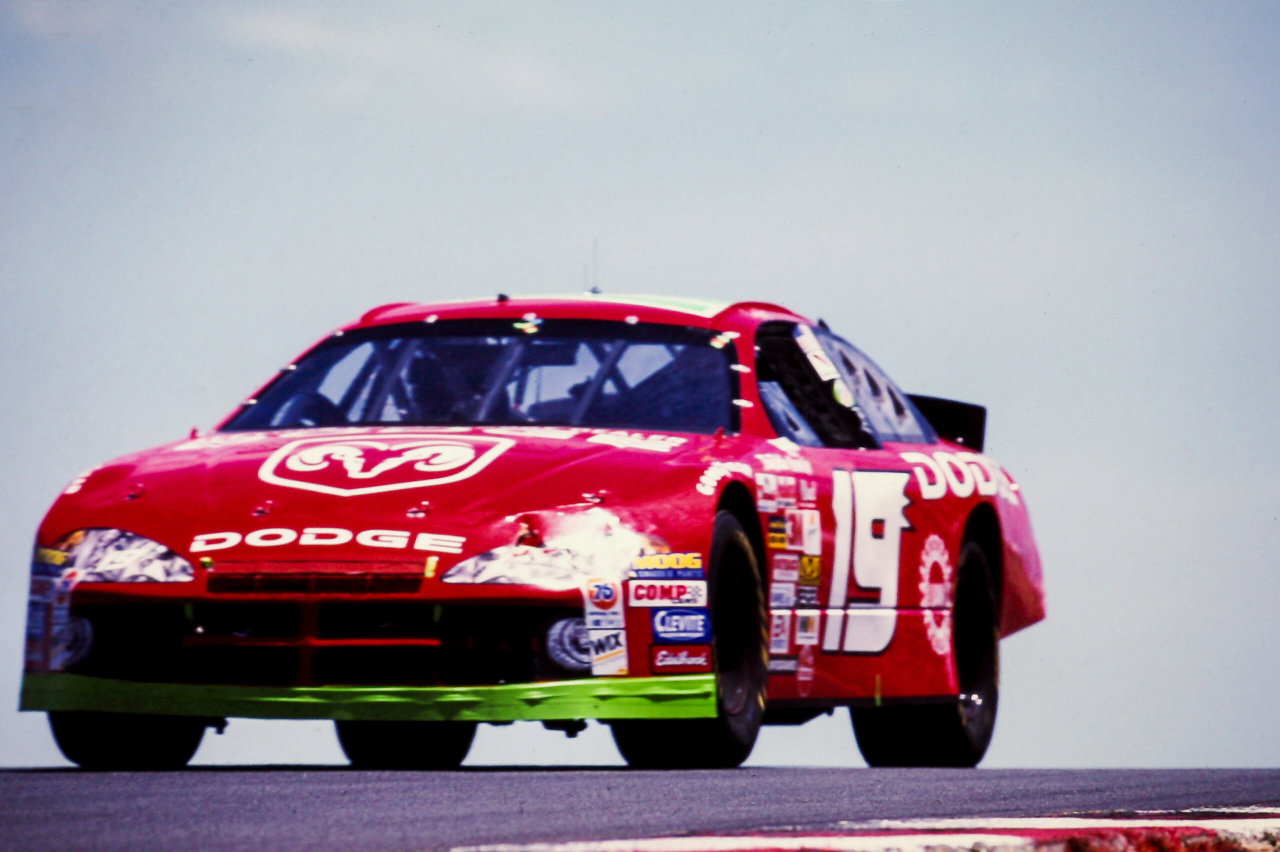
Dodge’s proposed NASCAR Cup Series return hinges on more than finding a team to field its cars. Securing an engine supplier has been a major obstacle, and the latest reporting points to a potential solution from an unexpected source.
Watch What’s Trending Now!
The buzz around Dodge’s impending return to NASCAR is getting strong once again. A report from The Athletic‘s Jordan Bianchi says that the manufacturer is “very close” to finalizing a deal for 2027, and the surprising twist is that Dodge could partner with ECR Engines, owned by Richard Childress Racing.
According to Bianchi’s October 13 report, those involved believe Dodge is on track to return at the Daytona 500 on February 21, 2027. Parent company Stellantis has also begun preparing an announcement, although negotiations are ongoing and the agreement has not been finalized.
If the deal comes through, Dodge would return to NASCAR’s premier series for the first time since 2012, joining Chevrolet, Ford, and Toyota as the fourth manufacturer.
Kaulig Racing is expected to switch its No. 10 and No. 16 Cup entries from Chevrolet to Dodge, giving the manufacturer an established team for its return.
That partnership would build on Kaulig’s existing relationship with fellow Stellantis brand Ram. Ram announced its Truck Series comeback on June 8, 2025, targeting the 2026 season, before selecting Kaulig to run its five-truck operation that August. Neither Dodge nor Kaulig has officially confirmed or denied the proposed Cup switch.
The potential engine deal, however, brings a more unexpected partner into the picture.
On September 15, 2026, Sports Business Journal reported that Dodge was exploring a short-term deal with an existing engine supplier, with ECR among the potential options. Using Dodge’s 2012 engine as a starting point was another possibility discussed, although neither approach had been confirmed at that stage.
Bianchi’s October report provided a clearer picture, identifying ECR Engines as the supplier Dodge was working to secure for a temporary partnership. Richard Childress Racing owns ECR, which has a long-standing relationship with Chevrolet.
The proposal also required cooperation from NASCAR and the existing manufacturers. According to Bianchi, Chevrolet, Ford and Toyota had agreed to the terms because they viewed a fourth manufacturer as beneficial to the sport. Their support, however, did not mean Dodge and ECR had finalized their agreement.
That support also came with a technical requirement. Bianchi reported that ECR would need to build Dodge engines with distinct differences from its Chevrolet engines, rather than simply put Dodge branding on an unchanged Chevrolet engine.
The deal would give Dodge an engine supplier for its potential 2027 return, though the duration of ECR’s involvement remains unclear.
Engines have been a major obstacle to Dodge’s comeback. Kaulig CEO Chris Rice highlighted that challenge during a June appearance on the “Door Bumper Clear” podcast, explaining why securing a supplier matters to the proposed return.
Speculation intensified in July after a Kaulig Racing trailer was spotted outside the Aerodyn wind-tunnel facility. In a July 14 post on X, Bozi Tatarevic wrote that the trailer “seems to be spending a lot of time in front of the Aerodyn wind tunnel building recently.” His post drew attention to Kaulig’s presence at the facility but did not identify what the trailer contained.
The X account ‘Rammin Is Racing’ subsequently claimed that the trailer was carrying a Dodge Charger body for the Cup Series. It also claimed that the engine issue had been resolved and that getting the program ready on time was the remaining challenge. Neither claim was independently confirmed in the July 16 report covering the exchange.
The post also claimed that the engine issue had been resolved and that the remaining challenge was getting the program ready in time. Now, The Athletic’s report provides a clearer picture of the possible engine arrangement through the ECR partnership.
Dodge’s potential return has also prompted speculation about which drivers could be involved, and one name pops out: Brad Keselowski.
The driver, who created headlines by announcing his shock departure from RFK Racing at the end of the 2026 season, has suddenly come into the limelight because of his history with the Dodge brand. He won the 2012 Cup Series championship with Dodge, which was also the manufacturer’s last title in NASCAR’s premier division, after which Penske Racing (now Team Penske) turned to Ford.
As interesting as a Keselowski-Dodge reunion appears, Kaulig Racing CEO Chris Rice has explicitly denied discussing things with Keselowski.
Speaking to SiriusXM NASCAR Radio, Rice explained that a meeting between the two had been unrelated to racing. Keselowski had wanted Rice’s opinion on a committee-related matter, and the conversation took place in Keselowski’s motorhome.
The timing of the meeting was interesting, as it took place not long after news emerged about Keselowski’s future at RFK Racing.
“So, no, I have not had any conversations with Brad Keselowski about driving a Dodge, even if Dodge comes back,” Rice said, per Motorsport.com
Rice said Kaulig already had a plan for 2027 but declined to reveal the details. Ty Dillon’s future in the No. 10 remained uncertain, with Motorsport.com reporting on October 1 that the team had held discussions with him but had not finalized anything. AJ Allmendinger occupied Kaulig’s other Cup entry, the No. 16, though that alone did not confirm the team’s lineup for 2027.
Kaulig’s existing Cup entries also help explain its role in the proposed return. According to Bianchi’s October 13 report, NASCAR did not plan to expand its charter system from 36 to 40 entries to accommodate another manufacturer. Instead, it preferred an incoming brand to partner with an existing charter-holding team.
That approach would give Dodge a route back through Kaulig, with ECR potentially supplying engines during the initial phase. Neither arrangement is final, and the earlier wind-tunnel sighting does not establish that a Dodge Cup car is ready to race.
For now, the Daytona 500 on February 21, 2027, remains The Athletic’s reported target, not a guaranteed debut. Dodge must finalize the outstanding agreements before its return can be considered official.