
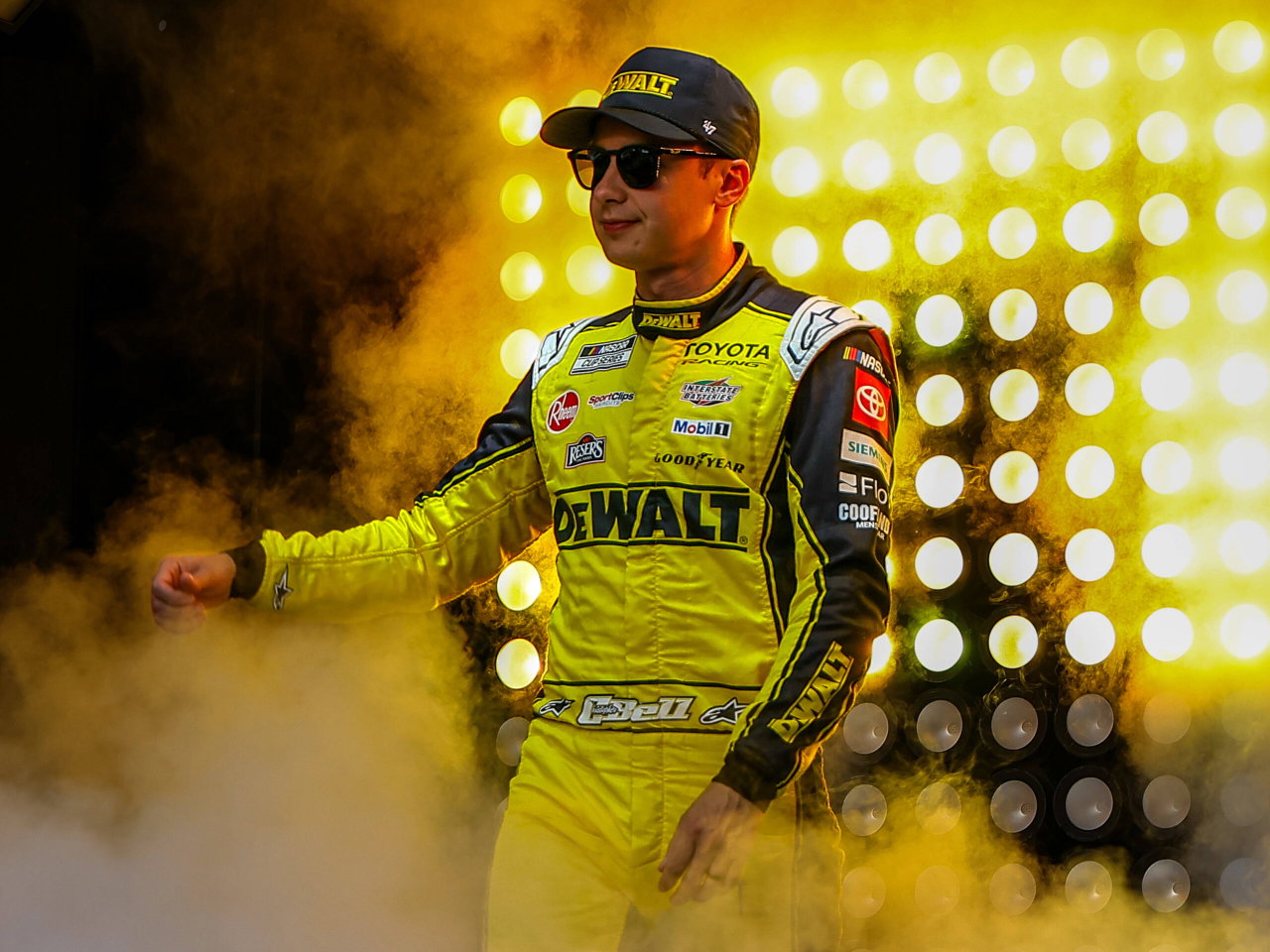
Christopher Bell spent much of 2026 watching victories slip away through pit-road decisions, late-race battles, and circumstances beyond his control. The No. 20 Toyota regularly showed the speed to contend, but converting those performances into trophies proved difficult. A fractured wrist added another challenge, while a series of setbacks threatened to derail an otherwise impressive campaign.
Watch What’s Trending Now!
Homestead offered one final opportunity to change the ending. With the championship slipping out of reach early, Bell still had something important to protect in the standings. Two Joe Gibbs Racing teammates remained close enough to make every position count. For crew chief Adam Stevens, the finale became another reminder of how much the team had left on the table throughout the year.
“It was going to be hard to keep the five from scoring eight or nine points of whatever you needed to do,” Stevens told Frontstretch. “It’s damn near impossible. So I would say this isn’t probably our best track, but we certainly got better through the weekend. We were definitely better in the race than we were in practice and just got away from us a little bit in stage three. Prior to that I felt like we had something we could race with, them. But yeah, the balance just got away from us.
“As a whole I felt like the year of just super competitor up and super strong. Not a lot to show for it. Lot of second-place finishes and a lot of coulda shoulda woulda. Lot of races could have went our way that just didn’t. And if the racing gods are kind, maybe that will all balance out next year and then we can do something really special. I know we have the driver, the group here especially, the team, and the car to make that happen.”
Bell’s frustration was understandable. Before finally breaking through at Darlington, he had accumulated seven runner-up finishes, tying Harry Gant’s 1981 record for the most second-place results in a season without a victory.
He eventually added another second-place finish after winning the Southern 500, taking his season total to eight. The breakthrough itself was particularly rewarding, ending a 33-race winless streak with a victory over Kyle Larson.
The season also tested Bell physically. A heavy crash at Michigan in June left him with a fractured left wrist. Although doctors cleared him to compete at Pocono the following weekend, the injury added another complication to an already demanding schedule.
Bell continued racing, eventually putting together the results needed to remain firmly in the championship conversation.
His playoff campaign, however, never developed the consistency Stevens wanted. Bell was wrecked out at Gateway despite having a car capable of challenging for the victory. A speeding penalty at Charlotte cost him valuable track position, while a power steering failure at Las Vegas turned another promising outing into a disappointing 23rd-place result.
Talladega delivered perhaps the most damaging setback. Bell lost control while entering pit road during a green-flag stop, hitting the inside wall and sustaining significant right-front damage.
Subsequent tire problems and a pit-road penalty compounded the damage, leaving him 35th and 12 laps down. He entered the race just five points behind Larson but left with a considerably larger deficit.
By Homestead, the championship fight had become an uphill battle. Larson mathematically secured the title after finishing fourth in the opening stage leaving Bell with little opportunity to challenge the No. 5 Chevrolet. His attention then shifted towards protecting second place in the standings, particularly with Denny Hamlin and Chase Briscoe still in contention.
“Once the five was out of the race, our focus changed to the 11 and the 19, and then the 19 had their issue,” Stevens said. “And it was only the 11 so absolutely keeping tabs on them because if we want to finish as high up as we can, that was second today.”
Bell delivered when it mattered, finishing fourth at Homestead while Hamlin came home sixth. Briscoe’s engine failure relegated him to 39th, removing another contender from the equation. Bell consequently secured second in the final championship standings, 49 points behind Larson and seven ahead of Hamlin.
That result also made Bell JGR’s highest-finishing driver, despite having fewer victories than any of his three teammates. Hamlin finished third with four wins, while Briscoe collected three victories before ending the championship in sixth. Ty Gibbs, meanwhile, finished ninth with two wins, including his Iowa victory over Bell.
The contrast underlined Bell’s unusual season. He managed only one victory, but his 16 top-five finishes demonstrated the consistency Stevens had been looking for. The No. 20 repeatedly put itself in contention, even when the final result failed to reflect its performance.
For Stevens, the challenge now is ensuring those disappointments do not overshadow what the group achieved. He believes the gap between Bell’s actual results and the team’s potential was considerably smaller than the championship standings might suggest.
“I think the biggest thing is to be proud of our accomplishments,” Stevens said. “And to realize that we weren’t that far off. It had some bad luck in playoffs; we got wrecked out at Gateway, with probably the best car in a position to win, was sped at Charlotte. Put the car capable of winning in Vegas and had that power steering issue, and then Talladega. We wrecked it on the pit road; you don’t need all those things to go your way, but one or two of them, and we’re running it down to a checker flag at Homestead. It’s something to be proud of them. It takes a little bit of good fortune in this sport to do great things, and we just didn’t have.”
The championship trophy went elsewhere, but Bell and Stevens leave 2026 knowing the No. 20 team has the ingredients to challenge again. Their task heading into 2027 is to retain the speed that produced so many strong finishes while eliminating the mistakes and misfortune that repeatedly cost them better results.
After a season filled with near-misses, Stevens will want fewer what-ifs and considerably more trips to Victory Lane in 2027.