Kevin Harvick & Carl Edwards Execute Brutal Public Takedown of NASCAR’s Racing Gimmicks in Resurfaced Footage

Add us on Google
Kevin Harvick & Carl Edwards Execute Brutal Public Takedown of NASCAR’s Racing Gimmicks in Resurfaced Footage
Add us on Google
Imago
Via IMAGO
Imago
Via IMAGO
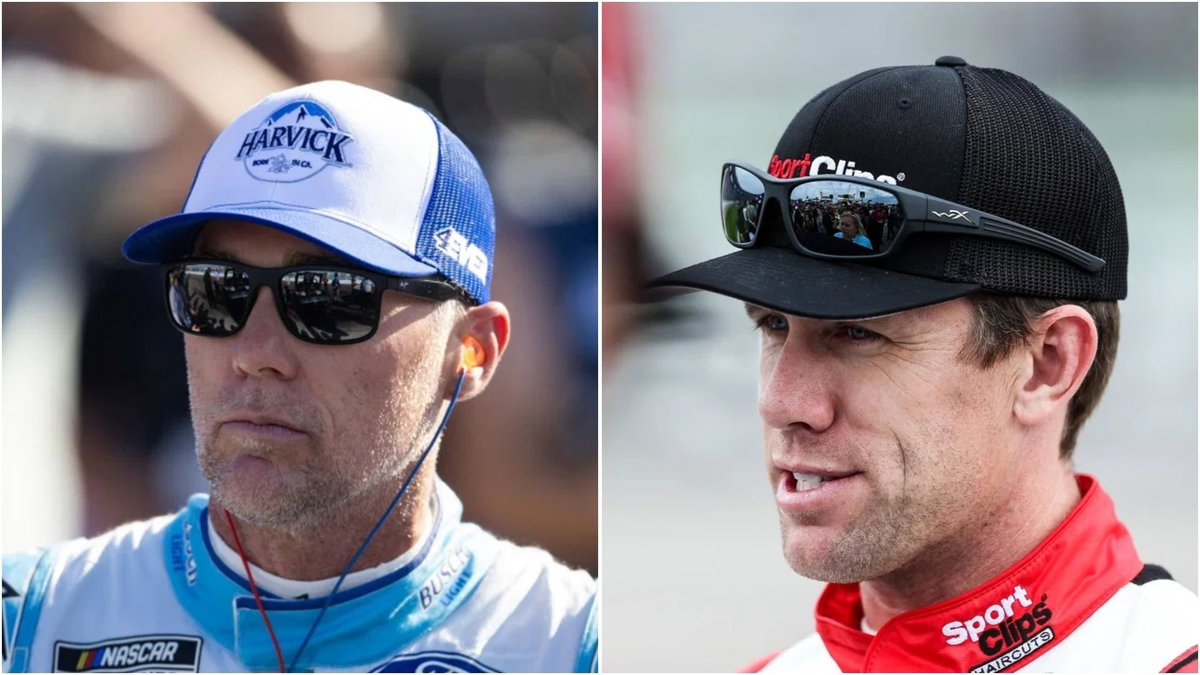
Back in 2012, Bruton Smith wanted to implement mandatory caution or race stoppages to bring more excitement to the sport. Although his idea changed the way NASCAR raced forever, it didn’t sit well with management or drivers. A recently resurfaced video shows many drivers, including Kevin Harvick and Carl Edwards, had called Smith out live in front of the media.
Watch What’s Trending Now!
Harvick didn’t hesitate before taking a brutal, one-line dig toward Smith: “Same guy ruined Bristol.” Smith was also involved in modifying the upper lane of Bristol Motor Speedway, another move criticized by drivers because it gave them less room to race, resulting in more cautions.
NASCAR races didn’t have stages before Smith’s proposal. If a race saw no incidents, there were no ‘competition cautions,’ and the track remained green for the entire duration. Smith grew restless with decades of green-flag tradition and pushed for change.
“Look at some of your other sports — they have a mandatory timeout, TV (commercial) time and all these things, and that creates things within the sport,” he had said then.
Drivers weren’t too happy to learn of the changes. This was a feeble and forced attempt to make the races look more exciting. Edwards explained why the idea wouldn’t work.
“Is it your understanding that when they throw the green flag, right, that the only reason another flag is going to come out, if there’s a condition on the racetrack that is unsafe to continue the race? Is that what everybody understands? If we start getting away from that and we say, ‘Okay, halfway through the race, we’re going to throw a caution. We’re all going to line back up.’ Well, now it’s two races.”
Smith overlooked a fundamental truth: motorsports measure gaps in time, not pauses. Cars cannot simply be paused and restarted from the same point.
Bingo another thing @NASCAR did was not listen to the drivers and fans… look where we are at now.
The stage breaks have not helped grow the sport or helped the race.
All it did was put a band aid on the car/package. Fix the issue don’t put a band aid on it @NASCAR.#nascar…
— Lucas TA 🐀 (@LucasTA62) June 5, 2026
If a caution is thrown out for no reason when a driver has a five-second lead over the driver behind them, then that gap would be destroyed. And this is exactly what Edwards was trying to explain: “It’s my opinion, my humble opinion, I’m not saying what’s right or wrong, but it’s my opinion that that takes something away from the sport.”
Even Matt Kenseth, who won the Daytona 500 that year with Roush Fenway Racing (now RFK Racing), was against the idea of competitive cautions: “Mandatory cautions? When we know when they’re going to come out? No, not really.”
Even NASCAR’s president, Mike Helton, opposed it in 2012, but NASCAR overruled him by 2016.
“NASCAR fans want the event to unfold unartificially,” he said. “The racing that goes on on the racetrack under green is as exciting as any in motorsports.”
And yet, just four years later, in 2016, NASCAR introduced the caution clock. Every time the track went green, a 20-minute timer kicked off, and the minute these minutes were over, NASCAR threw in a caution. This initially started with the Truck Series.
NASCAR introduced the concept of ‘stage racing’ the following year, followed today. It was most interesting that despite all the criticism from the drivers, the sport still went ahead with the decision. But NASCAR had to follow this format for more reasons.
Why NASCAR cannot step away from the stage-racing format
Denny Hamlin had also openly criticized the mandatory caution idea: “You’d end up having more fluke winners and more fluke champions when it’s all said and done.” However, over a decade later, earlier this season, when he was discussing stage racing on his Actions Detrimental podcast, his opinion seemed to have changed quite a bit.
“The stage racing has to stay,” he said. “Absolutely has to stay.”
When NASCAR introduced mandatory cautions a decade ago, authorities claimed one major impact would be the added unpredictability of the team’s strategy, contributing to more competition on the field. Apart from that, the sport had to follow the format for another reason.
The sport has made massive profits from TV broadcasts, and in return, earns more through commercials. Fans regularly complained about too many advertisements during green-flag racing; they missed much of the action.
Further, the broadcasters had to wait for a caution to come out to put on more advertisements, but if a race just went all green, they didn’t get to do that.
“It was put in place because our TV partners didn’t know when a caution was going to come, so they could start airing commercials. We have to air the commercials, which is why you see they try to front-load them as much as they can to give us the most green flag racing at the end of the races as possible,” Hamlin further explained.
Now, with the planned cautions and the stage-racing format, NASCAR has a scheduled time for when the race comes to a halt and when the advertisements can go on air.
Written by

Edited by

Abhimanyu Gupta