
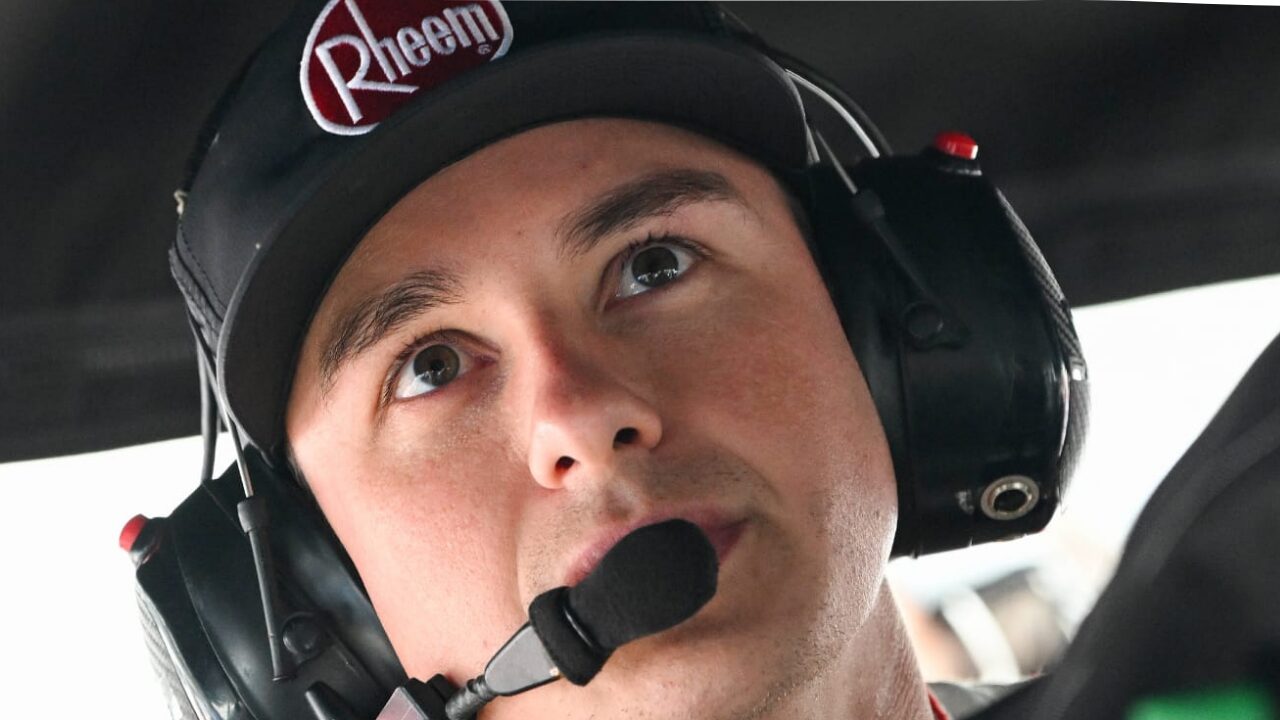
Christopher Bell had a chance to make a big statement at the Cook Out 400. After finishing second in Iowa last weekend, his seventh P2 finish of 2026, he looked like a serious contender for the win. Unfortunately for the Joe Gibbs Racing driver, a bold strategy gamble backfired and left him watching his lead slip away in the closing stages.
Watch What’s Trending Now!
Heading into the final long run, Bell committed to stretching his tires one stop further than the leaders and hoped the track position would outweigh the grip advantage behind him. It didn’t.
“It put us on a tire advantage at the start there. But then I couldn’t get to the lead, you know. Ultimately, to make that strategy work. I needed to get to the lead, be able to pull away, and I couldn’t do it. So yeah, it just wasn’t quite good enough today. I would say it felt similar to last year and similar to what it’s been at Richmond. This place is just really slippery,” Bell said to a Frontstretch reporter after the race.
The No. 20 Toyota came to pit road from the lead on Lap 343. The stop burned another set of tires. This meant Bell had to make the remaining distance on one fewer stop than the drivers around him.
Joey Logano and Chase Briscoe eventually made their additional stops on Laps 362 and 363. Bell then inherited the lead again on Lap 364 as the leaders cycled through pit road.
For a moment, the gamble appeared to have worked. The problem was that Bell could not build enough of a cushion. Richmond’s aging and abrasive asphalt makes tire wear particularly severe. The surface chews through rubber while the grip level changes dramatically as more laps are completed.
That became Bell’s biggest problem. On Lap 376, Logano reached Bell and easily drove past him off Turn 2 on much fresher tires. Bell could only watch the lead disappear and express his frustration on the team radio.
One lap later, Briscoe followed through and passed Bell for second in Turn 1. The fresh-tire advantage only became more obvious from there. By the time the checkered flag flew on Lap 400, Bell had fallen all the way down to seventh.
Crew chief Adam Stevens said after the race that in his view, Bell was unlikely to finish much higher even if the team had chosen a conventional approach.
Stevens explained that the team was forced into the one-stop strategy after making the Stage 3 stop first. With Bell already a stop ahead of the leaders, they could not afford to simply use another set of tires and fall back into the same strategy as the field. But Stevens also believed the No. 20 Toyota did not have the raw pace of the cars that eventually passed it.
“Overall, you know that probably weren’t any better than 7th anyway, so we got to lead a few laps and put ourselves in position to capitalize on the caution that just never came,” Stevens said in another post-race interview.
In other words, the gamble may have exposed Bell to the fresh-tire charge. But it probably did not change the ultimate result by much. Logano and Briscoe had the stronger cars. This meant Bell likely would have finished only a position or two better at best with a different strategy.
Christopher Bell is tied for sixth in points (officially ranked 7th) with Chase Elliott. He still has plenty of momentum on his side heading into the Aug. 23 race at New Hampshire Motor Speedway.