
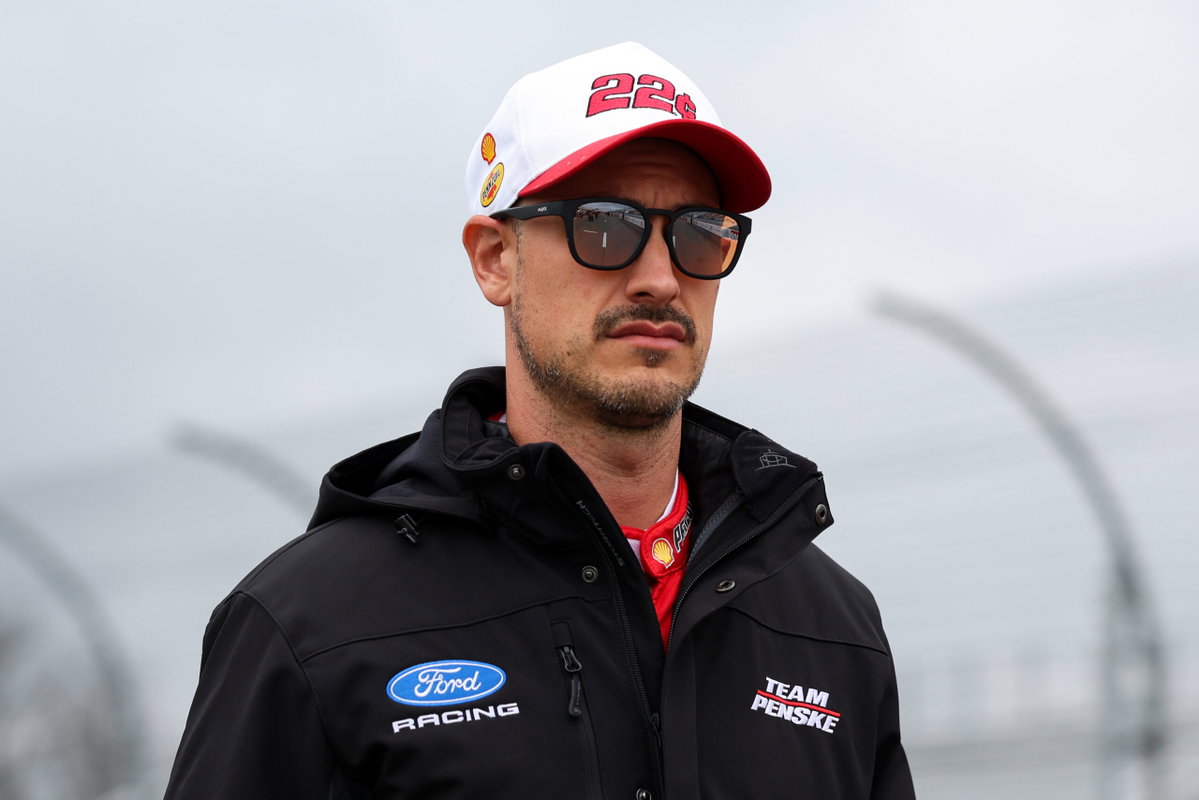
Contact with AJ Allmendinger ended Joey Logano‘s pole-position run at Phoenix after 58 laps, a costly consequence of “bumper tag” that he just helped NASCAR fix. Later on, at Atlanta, Carson Hocevar punted him out of the race. So it’s safe to say that Logano is one of the happiest drivers on the grid right now with the new NASCAR short-track package featuring weaker front bumpers.
Watch What’s Trending Now!
While speaking with reporter Bob Pockrass this weekend, Logano revealed that he was among the drivers who asked NASCAR to introduce new rules regarding front bumpers. As it goes, tracks shorter than one mile will no longer feature foam support for front bumpers. And according to Logano, this decision will help drivers who have been victims of ‘bumper tag.’
“Yeah, I was part of those meetings. I am glad they looked at it to do something. You know, the drivers brought that up, and it’s something that we need to have super stiff bumpers for tracks. We are not going fast, right?” Logano confessed. “We have seen that this car is good under the big crashes, like the huge ones. But it’s the day-to-day bumps and bangs and little things that drivers get out of. Like, ‘Oh my god. This car didn’t move at all.’ So hopefully this kind of does that a little bit.”
Logano has been vocal about this problem ever since the Next Gen car arrived in 2022. Because the bumpers were so tough, drivers could easily ram each other to pass without damaging their own cars. Of course, NASCAR vehicles are not indestructible, but they do have enough resistance to crashes with the modern safety standards of the sport.
But the increased strength comes with its own perks. At lower speeds, the cars can easily take a beating. And on shorter tracks, drivers can try to bulldoze their way through the traffic, owing to the decreased damage to their cars.

Joey Logano was among the drivers advocating for a change to relieve some of the beating drivers took on short tracks with all the bumper tag. So he's happy with the change to the bumper structure (no foam, more collapsable front bumper) announced this week for the short tracks.
To stop this, NASCAR is removing the energy-absorbing foam from the front and rear bumpers. This rule change will start on July 19 at North Wilkesboro. It will also apply to short-track races at Richmond on August 15, Bristol on September 19, and Martinsville on November 1 for the rest of the 2026 season.
Without the foam, the drivers will need to be more careful. Every driver wants to take risks, but not enough to damage their car early on in the race and find themselves at a disadvantage for the upcoming laps. This fear and careful mentality is what Logano hopes these new rules can accomplish on the short tracks.
“It might change, you know; it’s easier to knock the nose in. It’s closer to what the old days were; probably that’s how it was, too. I think it’s good… I mean, there’s been a lot of bumper tag going on. They tame it down; I don’t think it will change much personally, but maybe we will see.”
What is the bump-and-run philosophy on short tracks?
The perfect example of this ‘bumper car’ attitude that Logano mentioned was witnessed this year at the Martinsville Speedway. During the Cook Out 400 race, Bubba Wallace bumped into Carson Hocevar on lap 324 after the race restart. He made contact with the No. 77 before finally ramming him out of the way and causing a multi-car wreck.
While Wallace wrecked himself out of the race with that maneuver, he was able to get away with the smaller bumps before sending his car straight into the back of the No. 77. Now that cars have a weaker front bumper, these erratic maneuvers are going to cost the drivers on multiple levels.
Not only does it significantly increase the risk of wrecking the car, but it also disturbs the aerodynamics of the vehicle. With the short-track package featuring more power and less grip to hold on to, drivers would not want to mess with their car’s stability.
But will these new rules truly spark an end to the ‘bumper car’ philosophy?