“I Still Get Booed”- Joey Logano Exposes NASCAR Fans’ Double Standards Over Carson Hocevar

Add us on Google
“I Still Get Booed”- Joey Logano Exposes NASCAR Fans’ Double Standards Over Carson Hocevar
Add us on Google
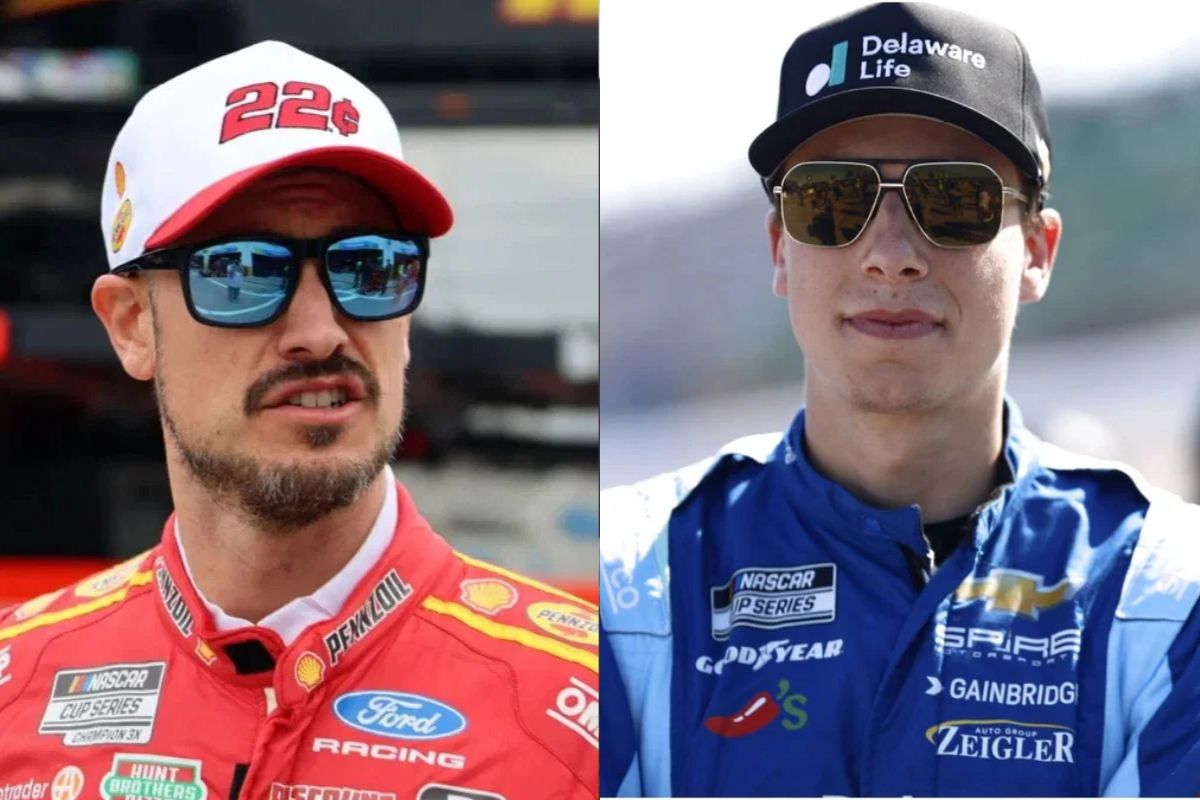
Few drivers in modern NASCAR generate stronger reactions than Joey Logano. More than a decade after his early on-track controversies, fans still boo the three-time Cup Series champion, who has often been painted as the sport’s villain. For this reason, Logano was lately perplexed by Carson Hocevar’s ascent. Logano feels that despite the young Spire Motorsports driver’s even more controversial reputation, fans have been far more receptive to Hocevar than they ever were with him.
Watch What’s Trending Now!
On Kevin Harvick’s Happy Hour podcast, Logano openly discussed Hocevar’s growing popularity and how NASCAR fans have changed.
“There’s no denying that, and that’s great for our sport,” Logano said. “What I don’t understand, though. When I came into the sport, and I had run-ins with veterans and all this stuff, and people hated me for that forever, and to this day, I still get booed. Like you wouldn’t believe for the things I did when I was 19 years old. This kid comes in and wrecks way more people than I ever did, and people love him.”
As a young star with Joe Gibbs Racing, Logano frequently clashed with veterans like Kevin Harvick, Denny Hamlin, and Mark Martin. Fans turned on him fast. That bad reputation followed him throughout a Hall of Fame-caliber career. Despite his three championships, he remains one of NASCAR’s most heavily booed drivers.
👍 @JoeyLogano thinks @CarsonHocevar is great for the sport. However, Logano has just one little issue. @kaitlynvincie | @MambaSmith34 | @Team_Penske pic.twitter.com/EQ5plLg85u
— HarvickHappyHour (@HarvickHappyPod) July 1, 2026
Yet Logano sees Carson Hocevar walking a remarkably similar path. The driver of the No. 77 Chevrolet has already clashed with seasoned drivers like Logano and Hamlin. At racetracks from Atlanta to Michigan and Sonoma, his aggressive driving style has sparked criticism. However, while some fans condemn Hocevar’s actions, just as they did with Logano, a large portion of the fanbase actively cheers for him.
Part of that support comes from the image Hocevar has built. There’s a reason for the moniker “Hurricane Hocevar.” When he runs near the front, fans expect action. Due to his fearless approach, some fans have even compared him to iconic racers like Dale Earnhardt, whose aggressive style became a defining characteristic of NASCAR’s popularity. Hocevar’s unpredictability stands out in a time when many drivers are criticized for being unduly careful.
Another factor is his personality away from the racetrack. Carson Hocevar embraces the chaos, in contrast to many modern sportspersons who take great effort to regulate their public image. He runs his own social media, streams on Twitch, and speaks his mind. He offers a level of authenticity that younger fans appreciate.
Hocevar’s background provides context for his current approach to the sport. Born and raised in Portage, Michigan, he was exposed to racing at a young age. His father, Scott, worked as a crew member and sponsor for various teams. With the support of Scott and his mother, Amy, Carson started racing small cars when he was just seven years old. Spending his childhood in the garage helped make him the direct and hands-on driver he is today.
Carson Hocevar’s appeal appears to stem from the same traits that formerly made Logano unpopular, whether Logano agrees or not. The difference may simply be that today’s fans view those traits through a different lens.
Written by

Edited by

Arunaditya Aima