
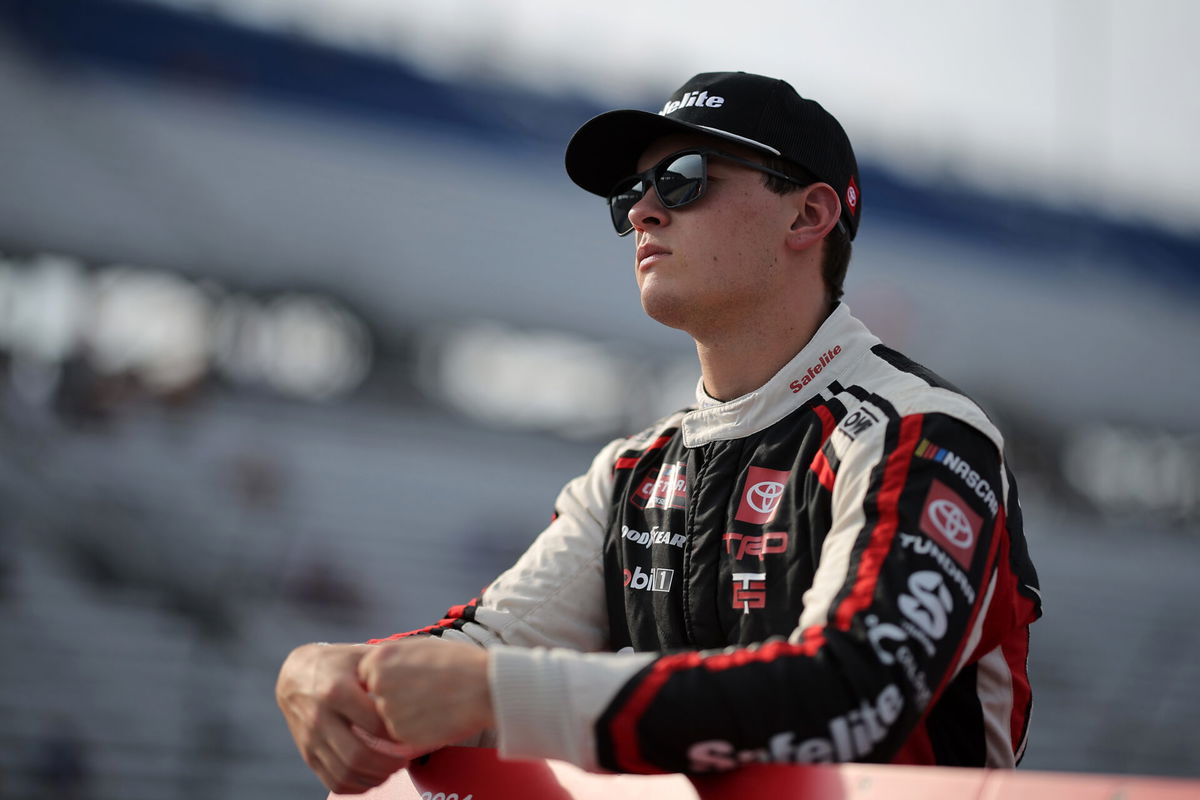
Cup Series teams now have additional time on track according to NASCAR’s most recent competition upgrade. However, not necessarily in the manner the teams and drivers had hoped for. For the duration of the 2026 season, NASCAR will switch from the current structure to a single 50-minute practice session at all non-superspeedway and non-extended-practice events, starting with next race at New Hampshire Motor Speedway. Although most people have applauded the adjustment, Corey Heim thinks it still ignores the main problem.
Watch What’s Trending Now!
“I don’t think you really get much better. You don’t really learn a lot. I think to truly add practice and make the drivers happy, you got to either make them on separate days or just have one in the morning and one in the late afternoon to just have a good gap to debrief about the first practice as a driver, think about what could be better, and then go out there and execute that. So, just adding time to one practice, I don’t think makes much of a difference for me.” Heim explained on Rubbin is Racing.
This isn’t the first time the lack of practice session has become a big talking point. Ever since the COVID-19 days, NASCAR optimized it’s race weekend, and the practice sessions became very limited in the Next-Gen era. NASCAR wanted to reduce the cost on the team by limiting the practice sessions. But they got back on track with some relief with announcement of 50-minute practice.
There’s a catch with this new change. Teams cannot make changes to their cars after the qualifying rounds. So even if teams found their balance to be off or suffered a mechanical issue, they would have to forfeit their qualifying spot. Something similar happened with Ryan Blaney. He had to give up his pole position after fixing the power steering issue at North Wilkesboro Speedway.
Heim even shared the solution to make the practice session really count for the drivers and the teams. “I think if they were to add like a practice session on Friday, a practice on Saturday, and you qualify on Saturday, it makes more sense to me. Because to make really good changes, you really got to have a night to think about it.”
His reasoning mirrors what many top-level racing series already do. In Formula 1, race weekends typically feature two practice sessions on Friday. It is then followed by a final practice on Saturday before qualifying. That schedule gives engineers several hours between sessions. In this time, they can easily analyze performance, simulate different strategies, and evaluate long-run pace. Thus, they can make meaningful setup changes before the cars return to the circuit. Each session builds on the previous one instead of becoming an extension of it.
NASCAR’s decision to extend practice is undoubtedly a step forward after years of limited track time. But Heim believes the next evolution should focus less on the clock and more on the structure. More minutes on track are valuable.
As Corey Heim sees it, the biggest gains come from giving drivers and crews enough time away from the car to understand what they’ve learned.