
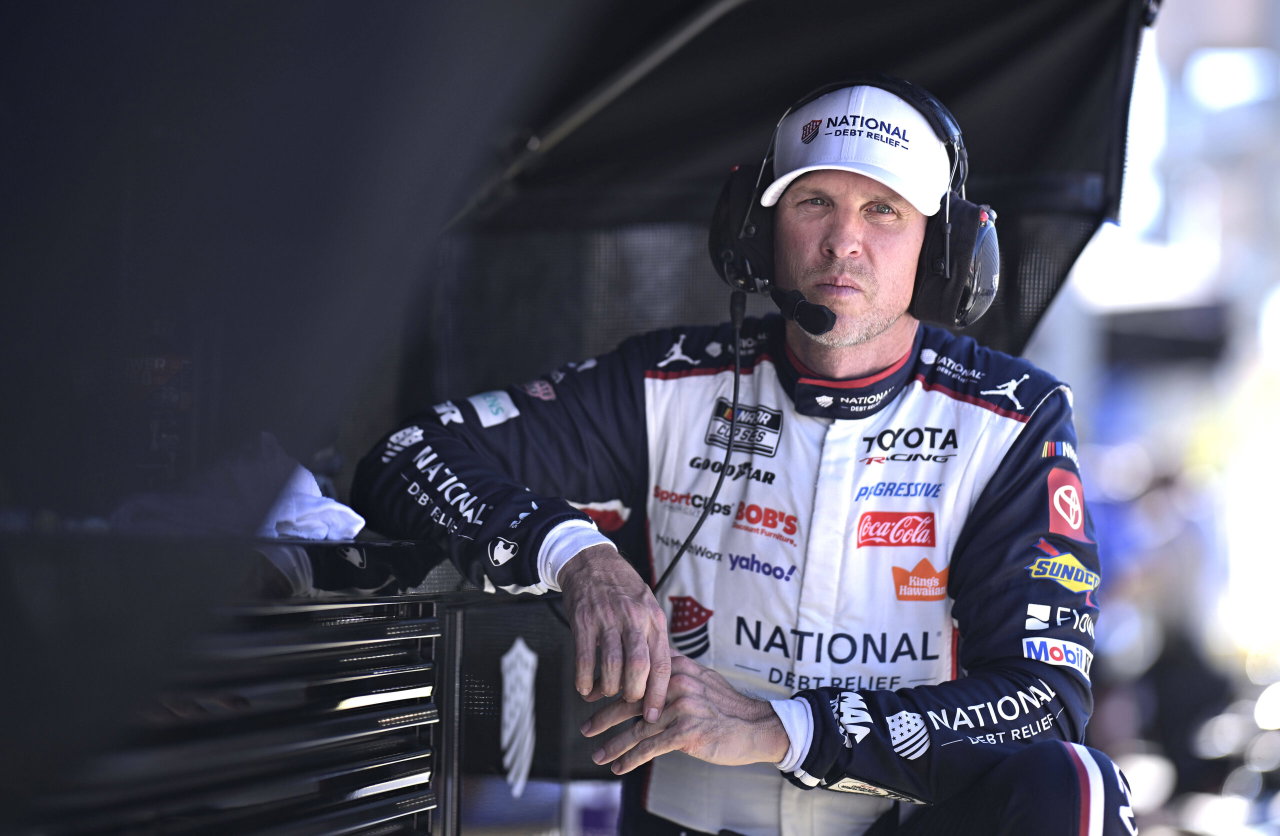
The numbers tell a story NASCAR’s higher-ups may not want to read. With just three races remaining before the sport crowns its 2026 Cup Series champion, viewership figures paint a picture of stagnation, with some postseason races on cable television suffering year-over-year declines of up to 15%. The numbers have reignited a debate over whether NASCAR has sacrificed its long-term reach by placing most of its postseason behind paywalls, potentially alienating its traditional blue-collar audience.
Watch What’s Trending Now!
It’s tempting to suggest that NASCAR should simply move more races back to free-to-air television to recapture the spotlight. After all, broader access could help the sport reach casual fans who might otherwise tune out. But Denny Hamlin warns that such a solution overlooks the harsh financial realities facing NASCAR’s teams.
“What if NASCAR said, hey, we’re going to be on all networks, but your payments are going to be half of what they were?” he said in an interview with journalist Matt Weaver. “The teams, I mean, I don’t know, how many survive that?”
NASCAR’s current media rights deal is worth a reported $7.7 billion. Signed in 2023, it took effect in 2025 and runs through 2031. The deal splits Cup Series coverage among four partners. FOX Sports and NBC Sports each show 14 races, while Amazon Prime Video and TNT Sports carry five races each. Only nine races air on free, over-the-air television. The rest are shown on cable or streaming services.
FOX airs five of the nine free races, including the Daytona 500 and races at Atlanta, Talladega, Bowman Gray Stadium, and Circuit of the Americas. NBC broadcasts the other four, including the regular-season finale at Daytona, the playoff races at Talladega and Martinsville, and the championship race.
NASCAR wants to reach more viewers and give its sponsors greater exposure. At the same time, it doesn’t want to lose casual fans who aren’t willing to pay for multiple subscriptions just to watch a race in Iowa or New Hampshire.
Teams also depend on corporate sponsors to fund their operations, and those sponsors want their brands to reach as many people as possible. If viewership continues to fall because races are behind cable and streaming paywalls, teams could struggle to secure the sponsorship deals they need.
NASCAR could start addressing this problem as early as 2027. CEO Steve O’Donnell has reportedly discussed moving TNT’s five-race Cup Series block to CBS or making those races available on both networks. He plans to meet with CBS Sports President David Berson to discuss the possibility. If the plan goes ahead, the number of free-to-air races could increase from nine to 14 without changing the current media rights deal. But there’s still a financial question to consider.
More viewers could help teams attract sponsors, but Hamlin believes there’s no clear way to make up for lost revenue in the short term. If teams suddenly receive millions less from NASCAR, the promise of better sponsorship deals down the road won’t help them pay their bills today.
“The revenue comes through this sport and, you know, I raised concern in NASCAR a long time ago when they said that nine network races were going to go away,” Hamlin added. “That’s obviously going to be a negative detriment to your ratings, but they were able to piece together something good financially in the short term…
“And I think that they’re obviously going to look at, see in the long term, what effect that has by the time the next TV deal comes up, and then think about the strategy going forward, which they need to do.”
According to an Awful Announcing report examining The Chase’s viewership, the first six races of the 2026 postseason averaged 1.62 million viewers, barely above the 1.61 million recorded over the comparable stretch in 2025. Charlotte’s October race drew 1.48 million viewers on USA Network, down 15% from the previous year’s Charlotte Roval event.
For Hamlin, the financial consequences cannot be separated from the audience question. When asked whether moving more races to broadcast television could mean smaller payments for teams, he offered a hypothetical scenario that captured the stakes. With teams already dealing with high operating costs, losing half their media revenue could put their future in serious doubt. Hamlin admitted he had no clear answer for how NASCAR could manage such a transition.
“No idea. I’m not smart. Yeah, no idea,” Hamlin admitted when asked how NASCAR could manage the transition in the short term, before describing the possible consequence of such a change.
“If that’s the route, then it has to, there has to be a reset, then it’s just going to be a survival of the fittest, who can survive.”
Ultimately, Hamlin’s concern reaches beyond the next television negotiation. A deal that delivers more money today may still leave NASCAR with difficult questions about reach, sponsorship, and competitive sustainability tomorrow.
His hypothetical 50% payment cut is not an actual proposal, but the question behind it is real. How much financial pressure can teams absorb in exchange for greater exposure?