
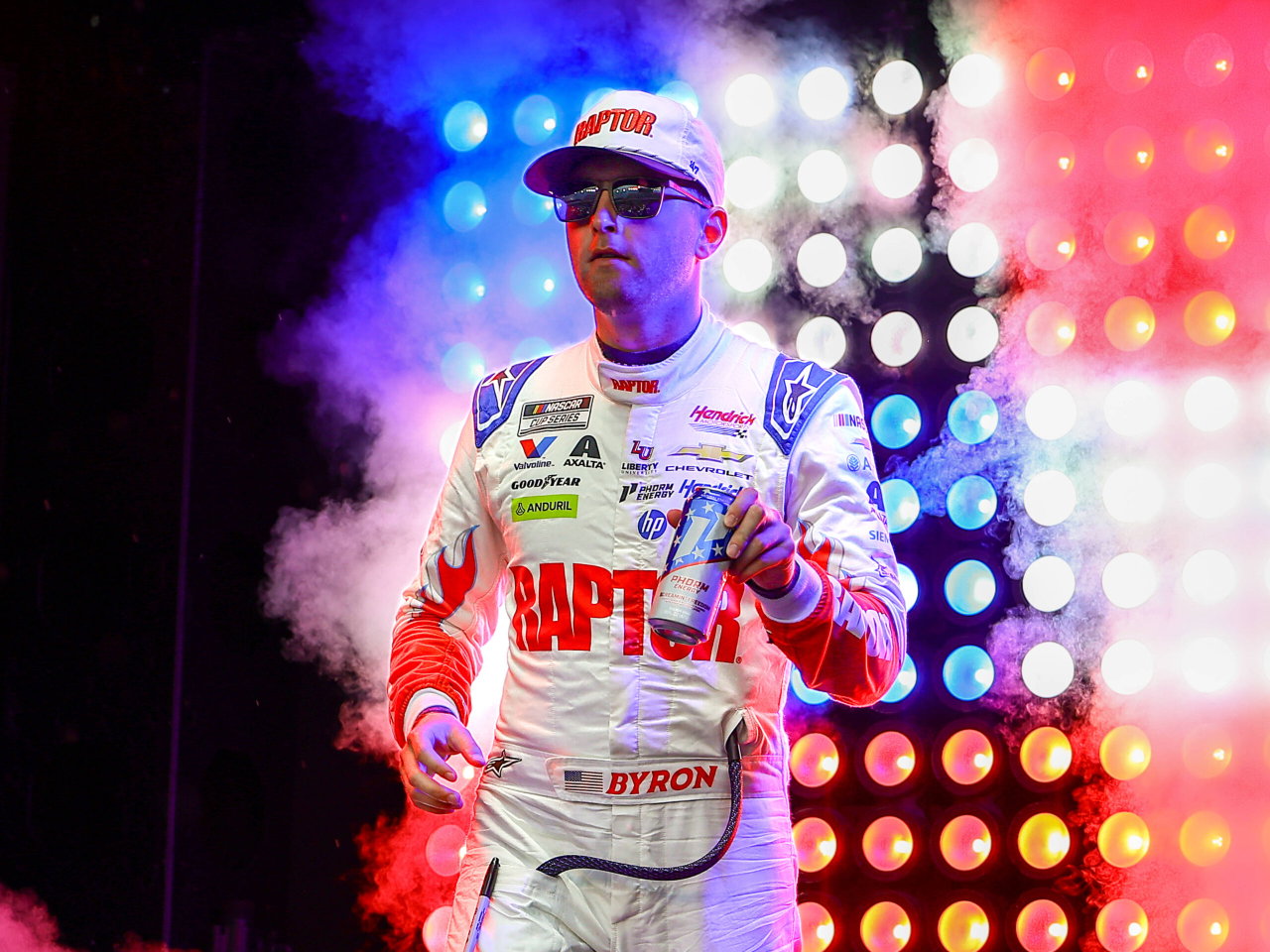
For most of the season, William Byron had a familiar problem: the No. 24 Chevrolet could run near the front, but the race rarely ended with him in Victory Lane. A strong qualifying effort or a promising stretch of green-flag pace offered little comfort when the afternoon unraveled through contact, mechanical failures, or opportunities that never quite materialized. The results kept coming, but the wins did not.
Watch What’s Trending Now!
That made Martinsville more than a welcome change of fortune. Byron returned to the track where he had last won a Cup race, carrying the weight of a 35-race drought while watching his Hendrick Motorsports teammates collect the victories that had eluded him. By Sunday afternoon, he had turned the same place that began the wait into the place that finally ended it.
“It’s been a year that you just felt like nothing was going our way,” Byron told Heather Williams. “And honestly, I woke up today just thinking, ‘Man, what’s going to happen this time?’ And I think, honestly, just keep showing up, keep putting in the work, and we really did. We didn’t change anything this week of how we do things and really just tried to show up and put our best effort forward. And things just kind of went our way. We had a good strategy and just had good pace.”
The performance was emphatic. Byron swept both stages of the Xfinity 500, led 362 of its 500 laps and beat Chase Elliott to the finish by 2.049 seconds. He also claimed the fastest lap and established a career high for laps led in a Cup race. Only seven of the 37 cars finished on the lead lap, underlining how thoroughly the No. 24 controlled the afternoon.
The victory was Byron’s fourth at Martinsville and 17th in the Cup Series. More striking was the contrast with the season that preceded it. Across his first 34 starts of 2026, he had led a combined 356 laps. At Martinsville alone, he led six more than that. The driver who had spent months struggling to turn speed into results finally had a race in which pace, pit strategy and execution held together from start to finish.
His previous victory had also come at Martinsville, in the fall of 2025. The drought was not caused by a lack of opportunities. Byron finished third at Las Vegas and Pocono, fourth at Chicagoland and, most recently, second to Kyle Larson at Talladega. Those results showed that the No. 24 remained capable of contending, but they also made the missed opportunities harder to ignore.
There were weekends when the result was decided by circumstances beyond the team’s control. Byron encountered trouble at EchoPark Speedway and Talladega earlier in the season, while a crash at Watkins Glen left him 36th after contact broke a toe link on his Chevrolet. Nashville brought another accident-related setback, and a crash at Charlotte later in the Chase ended his afternoon with a 39th-place result.
Darlington was particularly costly. In the opening race of the Chase, Byron brought his car to pit road with what he initially suspected was a flat tire. The problem was engine-related, and the No. 24 could not return to the track. He was credited with 37th, a damaging result at the start of a championship campaign in which every point mattered.
That is why Martinsville carried a different weight inside Hendrick Motorsports. Chase Elliott had already won twice, at Martinsville in the spring and Texas in May. Larson, meanwhile, had emerged as the championship favorite. He won at Talladega the previous week and left Martinsville with a 67-point advantage over Christopher Bell heading into the season finale at Homestead.
Byron was ninth in the standings, 166 points behind Larson, and no longer part of the title fight. But his teammate’s position only sharpened the contrast. Hendrick had been at the center of the championship battle all year, while Byron was still trying to get his own season back on track. His Martinsville victory gave him a moment that belonged to the No. 24 team, rather than another Sunday spent watching the organization’s championship hopes take priority.
It also offered a reminder that a winless stretch does not necessarily mean a team has lost its speed. Byron and crew chief Rudy Fugle did not overhaul their approach for Martinsville. They kept working through the difficult weekends, and when the opportunity came, they executed. After months of wondering what might go wrong next, Byron finally had a Sunday when very little did.