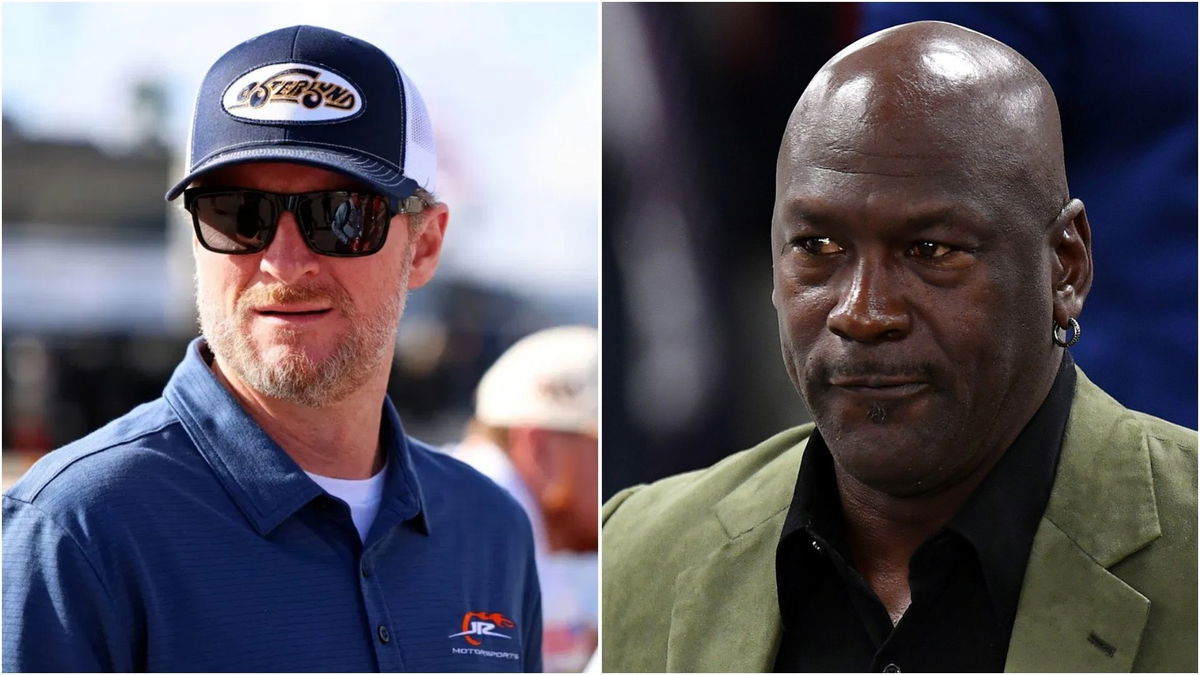
The core subject of the NASCAR charter lawsuit is simple. Michael Jordan and Denny Hamlin’s co-owned 23XI Racing and Front Row Motorsports accused NASCAR of being a ‘monopoly’ owing to its control in the sport and its regulations. One major aspect of that complaint was NASCAR’s ownership of certain tracks, alleging that the deals stifled competition by prohibiting tracks from holding events with rival racing series. While the act may seem problematic, upon closer inspection it might actually be helping the sport as per Dale Earnhardt Jr.


“I don’t know that 23XI wants NASCAR to sell their tracks,” the retired racer said on the Dale Jr Download podcast. “I’m hoping that’s not really what they’re asking. That’s not unusual in any other sports and arenas and so forth. But I think there’s been something made about NASCAR owning the racetracks and the way they’ve restricted use of those facilities is helping the argument of 23XI. It’s kind of got to be a be careful what you wish for kind of thing because No. 1, no one’s building racetracks.
Watch What’s Trending Now!
“Building a racetrack today is not a financial success. Running a racetrack today is not a lucrative operation. No one is clamoring to go out there and build any type of racetrack, big or small. Nobody’s gonna be standing on the steps waiting for those tracks to go to the highest bidder. If NASCAR and Marcus don’t own these racetracks, who does? They’re gonna turn into development, they’re gonna be turned into Amazon centers — they won’t be racetracks.
What will happen is in 10 years, we’ll be racing on a bunch of street courses and road courses, no sh-t. So, everybody kind of be careful around that because as unique as it is, we need NASCAR to own the tracks they own because it’s really a lost or dying sort of business model.”
And he’s not wrong, with one example being the now-defunct Auto Club Speedway, once a highly touted track for its similarity to Michigan International Speedway.
In 2023, 433 of the 522 acres of land used the speedway was turned into warehouses and an industrial park. While the rest was supposed to be under NASCAR’s control for a new track, commissioner Steve Phelps paused the project indefinitely in April 2025.
“That market is important for us,” he said. “What the future of that particular facility is, I’m still unsure. Would I like to build a new facility at Fontana? I would. It would be a short track because we don’t have room for anything else, frankly. Do I think creating a short track out there would be a cool thing for us? Yes. With that said, it’s $300 million to build that facility. Is that the best use of that money? That is the big question. The cost of capital right now is still really high, so for us to just press pause right now is essentially what we’re doing.
“But, yeah, I’d love to build a facility out there. When that is going to happen or if that is going to happen, I don’t have a timeline.”
Now, couple that will the sport’s declining viewership over the years, and it’s pretty evident why NASCAR is already in a downward spiral that risks losing more of its tracks.
Just take the Cup Series championship race this year. Last year, the Phoenix event earned a 1.60 rating while averaging 2.9 million viewers, compared to a 1.44 rating and 2.744 million viewers this year. This was part of an overall 14% decline in television viewership for the tourney. Many will argue that this has got to do with the fragmented broadcasting structure and streaming platform dependency. But the numbers before the broadcasting change doesn’t spell confidence either.
As per reports, the 2023 season averaged 2.86 million viewers across USA Network, NBC, FS1 and FOX, down 5% from the year prior (3.03 million). In fact, the Phoenix season finale averaged a 1.6 rating and 2.92 million viewers, making it the least-watched Cup finale at the time. In fact, 12 of the 13 races saw a decline.
In comparison, the 2024 season was up 1% with 2.89 million viewers across NBC, USA, FOX and FS1, with the ten-race playoffs averaging 2.33 million (+6%). That’s an increase, yes. However, in the grander scheme of things, it’s still not as satisfactory as one would like it to be.

Imago
BRISTOL, TN – SEPTEMBER 20: Dale Earnhardt, Jr 88 JR Motorsports Hellmann s Chevrolet talks with members of his crew during practice for the NASCAR, Motorsport, USA Xfinity Series Food City 300 on September 20, 2024 at Bristol Motor Speedway in Bristol, TN. Photo by Jeff Robinson/Icon Sportswire AUTO: SEP 20 NASCAR Xfinity Series Food City 300 EDITORIAL USE ONLY Icon240920952300
That said, there is a lot more to the lawsuit than just NASCAR’s ownership of the tracks. The main issue discussed in the courtroom is related to the Charter Agreement. Steve Phelps recently delved into the negotiation.
Steve Phelps reveals ‘frustrating’ charter negotiation
NASCAR introduced the charter system in the 2016 season. This was to provide teams with security in owning and maintaining their cars, labeling the contracts as Charters. Included in the same deal was a share of NASCAR’s broadcasting revenue. However, with the new agreement signed for this year, teams claimed that the size of the revenue share wasn’t enough, and Michael Jordan and Co. found this enough to file the lawsuit.
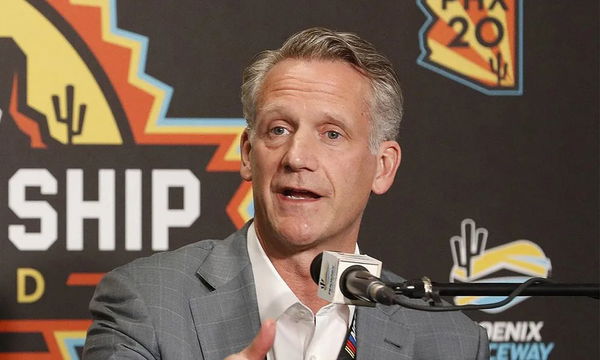
There were other aspects to this, too, with former negotiations made with Curtis Polk, who represented the teams. Steve Phelps, who was then the NASCAR President, recently shared some details of the negotiations.
“It was one of the most challenging and longest negotiations I’ve ever been part of,” he said. “The TNC never wavered off their four pillars. It was just the same thing, the same thing, and that was very frustrating.”
It is understood that the teams asked for $720 million in share of the broadcasting revenue. However, the sport did not favor this, mentioning that they would incur a huge loss.
While the trial still continues, Dale Jr’s statement does shed some light on the current state of owning and maintaining race tracks. However, will 23XI and Front Row Motorsports side with him, knowing that this statement would help them in the court?
Written by

Edited by

Suyashdeep Sason