
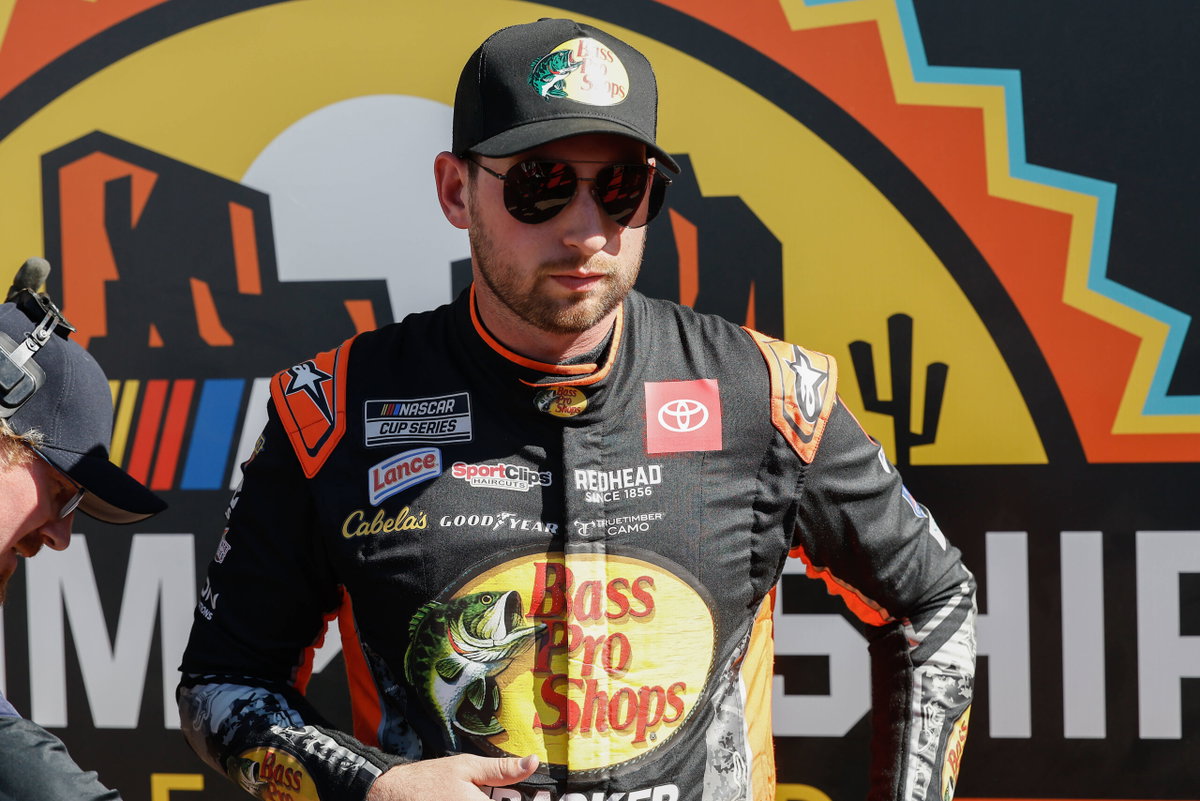
A familiar track can become a frustrating place when nothing seems to work the way it once did. Chase Briscoe discovered that the hard way at Martinsville, where a difficult afternoon left him running outside the top 10 for much of the race. The Joe Gibbs Racing driver eventually crossed the finish line 14th. This result ended his championship hopes before the season finale as he now sits 84 points behind Larson with just one race to go. And his post-race comments pointed to a deeper issue: the equipment gap between his current team and his former one.
Watch What’s Trending Now!
“We just weren’t good enough to ultimately win the race. So I don’t know. This place has been very challenging for whatever reason ever since I came to JGR, which at SHR, I feel like this is always one of my better tracks. So, yeah, I don’t know just have to go back and try to learn and be better,” Chase Briscoe told NASCAR after the race.
His post-race assessment left little doubt about how far the No. 19 team was from the pace it needed at Martinsville. The biggest problem was finding a balance that would let him make progress through the field. Instead, the car remained stuck around the middle of the pack, with Briscoe unable to turn a difficult afternoon into a genuine challenge for the leaders.
The race data backed up his frustration. Briscoe started 11th but spent much of the afternoon outside the top 10. He briefly moved forward during the final stage, even taking the lead when other drivers cycled through green-flag pit stops. However, that position came through strategy rather than a sustained stretch of front-running speed. He eventually settled into 14th, one lap down from race winner William Byron, and had zero stage points from the race.
However, Briscoe’s struggles were not shared across the entire Joe Gibbs Racing garage. Ty Gibbs finished third after leading 44 laps, while Denny Hamlin recovered to sixth and Christopher Bell crossed the line 10th. Bell’s afternoon included a speeding penalty and a late incident involving Hamlin and Joey Logano.
But in the end, the other JGR drivers still managed to finish ahead of Briscoe. That spread in results makes it difficult to pin the No. 19’s performance on a team-wide equipment problem. The more immediate issue appears to be the combination of balance and setup Briscoe and his crew could not get right for the race.
That contrast becomes more striking when looking at Briscoe’s history at the Virginia short track. During his time with Stewart-Haas Racing, he put together five consecutive top-10 finishes at Martinsville, making it one of the venues where he could regularly deliver strong results.
Martinsville has been a recurring setup puzzle for JGR, rather than a problem unique to Briscoe. Christopher Bell spoke about the organization’s struggles at the track in 2025, recalling how the team experimented with different setups during the early Next Gen seasons but struggled to find a package it could consistently rely on.
Even after Hamlin’s setup helped Bell during a test and contributed to a breakthrough victory, the team found it difficult to reproduce that form. Bell admitted he had struggled with several aspects of the short track and could not point to one specific issue. Briscoe’s experience now adds another example of how difficult it has been for JGR to establish consistent speed at the paperclip.
Across his first three Martinsville starts with the organization (before today’s race), Briscoe’s best finish was ninth. The latest 14th-place result only added to that difference, leaving him searching for answers at a track where he once felt comfortable.
Briscoe had actually been candid about the difference before Sunday’s race. He described Martinsville as one of JGR’s statistically weaker venues, explaining that the team typically had an 8th-to-12th-place car there. That was a noticeable step back from the top-five speed he felt SHR could bring to the track. His comments were not an accusation that JGR’s equipment was generally inferior. Rather, they pointed to a specific weakness in the team’s Martinsville package, one that has continued to affect his results despite his previous success.
He also discussed how having Hamlin as a teammate could help him understand the track. Hamlin has extensive Martinsville experience, and Briscoe previously had access to his throttle and steering traces through NASCAR’s shared driver data.
But Briscoe suggested that the advantage of having a teammate’s information has changed as modern technology makes more driver input available across the field. That leaves less of a gap between what teammates can learn from each other and what rival teams can study.
There is still something for Briscoe to fight for before the season ends. His Martinsville result eliminated him from championship contention. That being said, he remains No. 4 in the standings, 14 points behind Hamlin in third and 17 points behind Bell in second. A runner-up finish in the final standings is therefore still within reach. And Briscoe believes Homestead offers a much better opportunity, given the No. 19 team’s strength on mile-and-a-half tracks.
“But yeah, unfortunately obviously not racing for the championship next week, but can still finish second in points and feel really good about going to another mile and a half where we’ve been extremely strong.”
For now, the Martinsville questions will have to wait for the team’s debrief. Briscoe knows the No. 19 group needs to understand why its setup has failed to match his old SHR results. He also accepted that he has work to do behind the wheel. The challenge is turning that review into a more competitive package when NASCAR returns to the short track.