
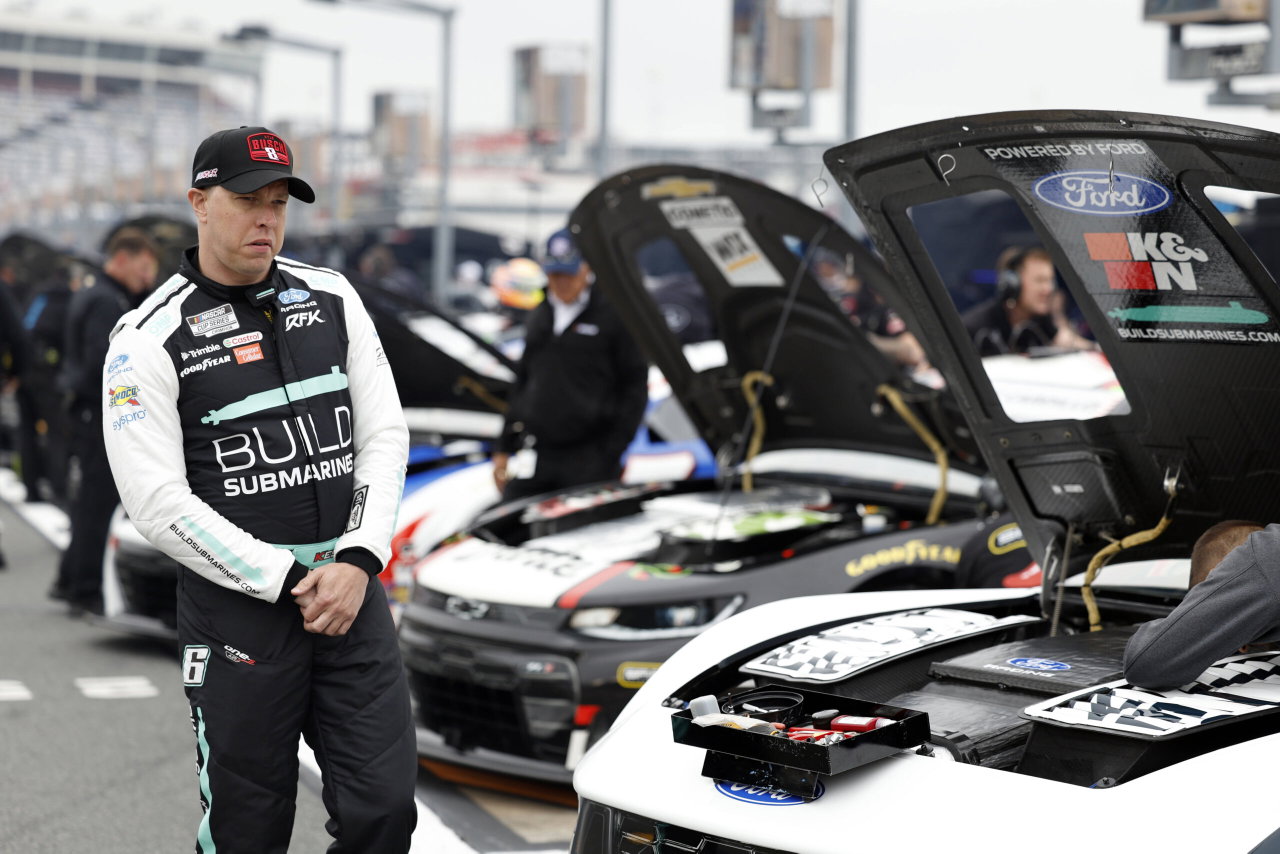
Brad Keselowski’s final days at RFK Racing had already started to look different before anyone knew they were his final days. On September 21, Jeremy Bullins was suddenly out as crew chief of the No. 6, and Mike Skarbowski was thrown into the job for Kansas. A week later, Skarbowski was still learning the ropes when RFK announced that Keselowski himself would leave after the 2026 season.
Watch What’s Trending Now!
That would have been enough to create a major offseason story. It wasn’t the whole story, though. Buried in RFK’s announcement was a much bigger admission.
“This is RFK’s words: ‘The search for a new head of competition, a position previously held by Keselowski, will begin immediately,’ said Jeff Gluck in his recent YouTube live.
Keselowski came into RFK in 2022 as a driver and co-owner. He became involved in the competitive and technical transformation of the team, helping shape how it developed cars, used data and technology, and organized its competition operation. Even Keselowski described himself in his departure statement as having learned a great deal “as a co-owner and as the head of competition.”
And there is a reason that role matters right now. RFK has finally reached the point Keselowski was brought in to help create. In 2026, Chris Buescher and Ryan Preece both qualified for the Chase. Preece did it by winning the Daytona regular-season finale and taking the final spot in the 16-driver field. Brad Keselowski finished 18th and missed it. After four Chase races, Preece had become RFK’s strongest performer, including a 10th-place finish at Kansas.
That is the strange part of this breakup. RFK is not losing Keselowski because the entire operation has stopped working. The organization has two Chase cars. Its three-car model is producing results. Buescher is staying, Preece is staying, and RFK still wants three Cup cars in 2027. The car Brad Keselowski is leaving is therefore only one piece of the puzzle.
RFK already knows two-thirds of its 2027 driver lineup. Buescher signed a multiyear extension, and the team exercised Preece’s option. The No. 6 is open, while RFK continues looking for a third charter. Keselowski’s ownership stake also has not been publicly resolved. The team says it and Keselowski will work through the next steps regarding that interest.
Then comes the question: who replaces Brad Keselowski upstairs? That person will not simply be responsible for making one Cup car faster. RFK’s technical operation now includes the RFK TeK Alliance, which covers engineering, data analysis, software, vehicle dynamics, quality control and manufacturing, along with the AVL RACETECH relationship added in 2026. Keselowski has been part of that larger competitive structure for years.
This is also where the Chris Gabehart situation becomes relevant, although the two cases should not be confused. Gabehart left Joe Gibbs Racing and joined Spire Motorsports. JGR then took the dispute to federal court over allegations involving trade secrets, confidential information and a non-compete agreement. The case remained active on October 1, when a discovery hearing was held, with a February 1, 2027 trial scheduled. Gabehart and Spire have disputed the allegations.
“What’s going to be interesting is how Keselowski and RFK unwind this relationship now. Because you’ve heard about the JGR lawsuit against Chris Gabehart, right, and it’s non-compete, which included information beyond just set-ups. And Keselowski, he knows things about Ford’s engine performance; he knows all sorts of proprietary information, so how is that going to be handled going forward?” Gluck added.
RFK has made no comparable accusation against Brad Keselowski. There is no RFK lawsuit alleging that he took information, and Keselowski remains with the organization through the end of 2026. His next team has not been announced.
Still, Gabehart’s case shows why a competition executive is different from an ordinary free agent. The valuable information inside a NASCAR team is not limited to a setup sheet. It can include development methods, simulation processes, data interpretation, internal performance benchmarks, and the way engineers decide what to pursue next.
Keselowski has spent five years inside those conversations. RFK now has to make sure the knowledge that made the organization better has become part of the organization itself, rather than remaining tied to the person who helped build it.
That is already difficult enough. Add a new No. 6 driver, a new head of competition, an unresolved ownership stake, and the fight to keep a three-car operation intact, and the 2027 transition becomes much bigger than Silly Season.
Brad Keselowski still wants to race. NASCAR reported that much of the 2027 market was already occupied, leaving his next move uncertain. Kaulig became an obvious rumor because of its connection to Dodge, but CEO Chris Rice said October 1 that he had not spoken with Keselowski about driving for the team, even if Dodge returns.
Although if Keselowski does go on to join Dodge, or even Toyota, the JGR and Chris Gabehart problem could be staring him right in the face. That, however, is a big what-if for now.
So RFK has a driver to replace, a competition chief to replace, and an ownership issue to settle. But the question sitting underneath all three is much harder to answer.
When Brad Keselowski leaves RFK Racing, does the organization simply lose Brad Keselowski, or does it discover that it has not yet figured out how to replace everything he brought with him?