
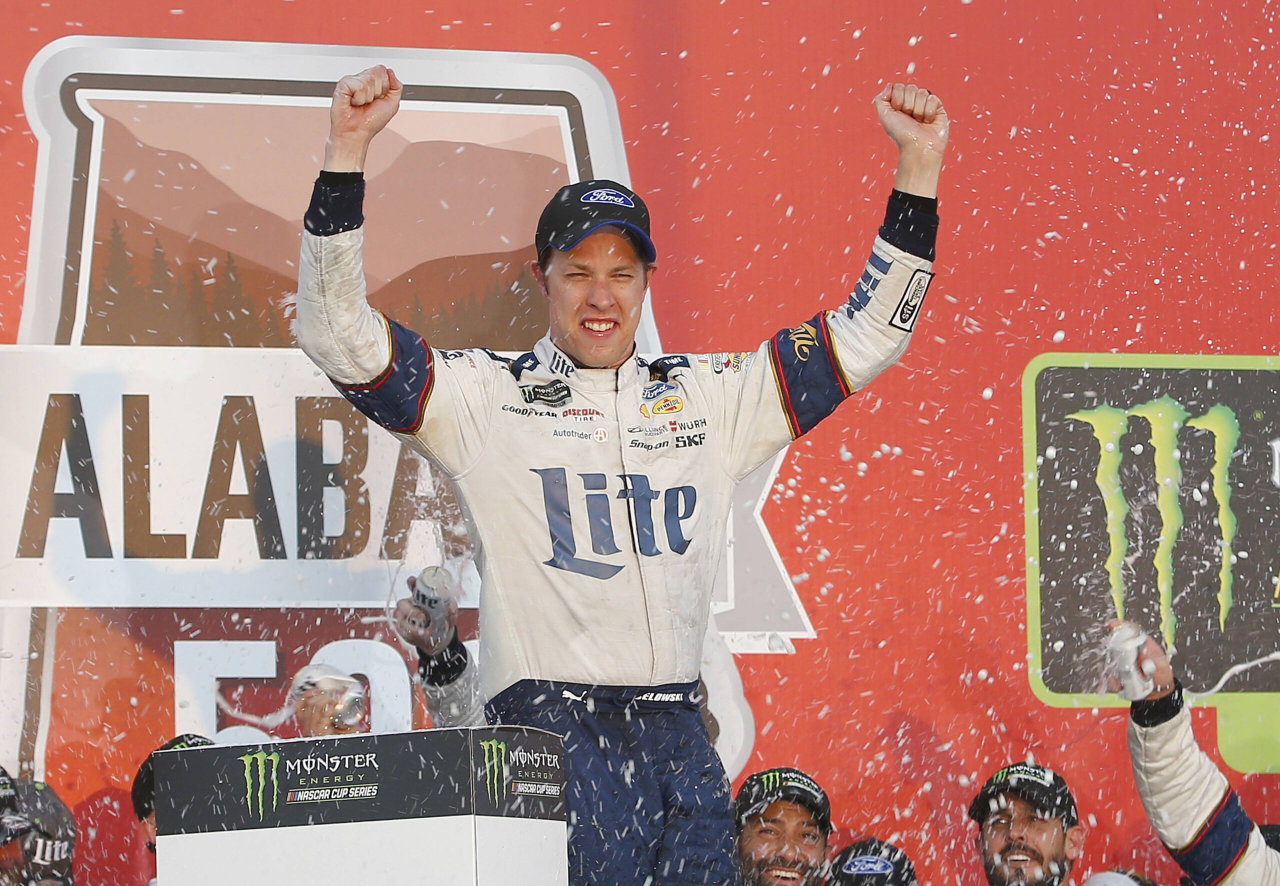
‘Could have been you.’ That was what many people told Brad Keselowski after Austin Cindric won the Daytona 500 in 2022. It came just months after Keselowski had left Team Penske to take on an owner-driver role with Roush Fenway Racing, which would later become RFK Racing. But when he stood atop the podium at Darlington two years later, the colossal gamble he had taken suddenly felt worth it.
Watch What’s Trending Now!
The team had been struggling before Keselowski joined in 2022, having gone 163 races without a win. Under Keselowski, who also took over as head of competition, RFK began finding its way back to Victory Lane. More importantly, the team began believing in what it was building. Wins, trophies, lessons, and new success followed. That fairytale, however, has now come to an end.
On Tuesday, September 29, RFK Racing announced that Keselowski will no longer drive the No. 6 Ford after the 2026 season concludes in six races. This leaves the 42-year-old driver’s Cup Series future up in the air and, importantly, raises questions about what happens to the “K” in RFK as the organization moves into 2027.
RFK Racing, in its statement, declared that both parties would “collaboratively and mutually” decide what to do next regarding the existing stake Keselowski holds in the organization. The wording was understandably vague, with the two sides still needing to work through the formalities surrounding his ownership. But behind that carefully worded statement, two of NASCAR’s biggest insiders have offered a clearer picture of what could come next.
Jordan Bianchi reported that Keselowski is set to give up his ownership stake due to fundamental disagreements over the direction of the team. It has not been revealed exactly what led to the fallout, although reports suggest there were several areas where the two sides saw the future of RFK differently, with signs of friction having emerged over the past several months.
Keselowski has been vocal about what he sees as core operational issues within RFK, particularly when it comes to OEM partner Ford. Just two weeks ago at Gateway, the 2012 Cup Series champion felt that Ford was treating RFK Racing as a second-tier priority while giving more support to Team Penske, a larger organization.
“I wish I was a Ford considered good enough to get one of the good engines… Instead we’re called a sbox team and get the sbox stuff. That’s a f****ing bunch of bullsh***. I’d already be past these guys and driving away if I had that s***!” he said over the team radio.
Interestingly, he had already called Ford out before this. In July, he stated in an interview that Ford lacked the level of collaboration between its top teams that Toyota had developed, saying RFK was being hurt by the absence of that cooperation. However, this wasn’t the only thing he was concerned with.
Ryan Preece joining RFK in 2025 and the team adding a third car was a major moment for the organization, but Keselowski also knew it came with risks. After expanding the team, he admitted there was “no sugarcoating” how difficult it would be to run the No. 60 car, especially with reduced league payouts and no guaranteed starting spots.
Adding to that frustration, the No. 6 team was not living up to expectations. At Illinois last year, Keselowski climbed from 23rd to second before a poorly timed pit stop dropped him back down the order. Handling issues and a lack of cooperation from other Ford drivers further derailed his strategy in the final stage, eventually pushing him out of the top 10.
RFK Racing announced that they would support Keselowski’s “desire to explore opportunities” among other teams in the garage. And going by what the 42-year-old said in his statement, a retirement can certainly be ruled out.
“I’m nowhere near ready to be done as a driver. I still have a lot I want to accomplish in this sport,” Keselowski shared in his social media statement. “I’m thankful for everyone who has been part of this journey and for the fans who continue to support me. I look forward to sharing future plans when the time is right.”
For RFK Racing, meanwhile, it’s now about adapting to life without the man who sparked their turnaround.
When Keselowski took over, RFK was coming off several years of poor Cup results. He drove the No. 6 Ford while also running the competition side of the organization, and instead of looking for quick fixes, he focused on changing how the team operated. By 2023, NASCAR had documented changes across the shop, pit crews and engineering process.
Chris Buescher won three races that year, while Keselowski finished eighth in the standings. In 2024, Keselowski won the spring race at Darlington, his first Cup win with RFK. It was an emotional moment that showed his gamble was starting to pay off, with his No. 6 team ending a winless streak that had lasted more than a decade. Buescher also won at Watkins Glen later that year.
Preece completed RFK Racing’s three-car lineup in 2025 and came close to making the playoffs, but a late crash at Daytona ended his hopes. 2026 proved to be redemption, as Preece made the Chase after a consistent season alongside Buescher.
Both drivers had relatively strong results at RFK Racing. It was Keselowski’s No. 6 team that underperformed. One race win in five years is well short of what a former Cup Series champion would expect, regardless of how well the team performs overall.
Then, Keselowski’s crew chief Jeremy Bullins left the No. 6 team on September 21, with Mike Skarbowski taking over. RFK said Bullins left for “a new opportunity” and called the split amicable. It is tempting to connect these dots, but nothing confirms that any of this caused the breakup.
Now RFK Racing faces two major questions, and this is where the story gets interesting. Keselowski also served as the team’s head of competition, meaning RFK needs to find a new leader while also filling the No. 6 seat. Buescher remains with the team, while Preece’s option for 2027 has already been exercised.
Team president Chip Bowers said in May that if RFK cannot secure a third charter, the organization will still run three cars, with the third competing as an open entry. That means Keselowski’s exit could create two questions in the driver market.
Who could replace Brad Keselowski at RFK Racing?
This brings John Hunter Nemechek into the conversation. It is too soon to make a solid link, but he is a logical name to consider given how suddenly he became available.
Legacy Motor Club told Nemechek on August 31 that it would not honor the final year of his contract for the 2027 season, announced the split on September 2, and signed Josh Berry to the No. 42. Nemechek said the decision caught him completely by surprise, leaving him searching for his next opportunity.
Nemechek rebuilt his career at Joe Gibbs Racing and Kyle Busch Motorsports, picking up 11 Xfinity wins and 13 Truck Series victories, including seven Xfinity wins in 2023. His 2025 Cup season at Legacy was his best yet, with a 20.3 average finish, although this year has been a step back, with the figure dropping to 21.9.
If RFK needs someone for that third car, Nemechek could provide a path back to a full-time ride.
Kaulig Racing has entered the conversation surrounding Keselowski’s future because of its Stellantis ties through the 2026 Ram truck program, with Dodge also exploring a return to the Cup Series.
Keselowski was the last driver to win a Cup title for Dodge, back in 2012, but veteran journalist Bob Pockrass does not expect him to land at Kaulig or return to Dodge.