
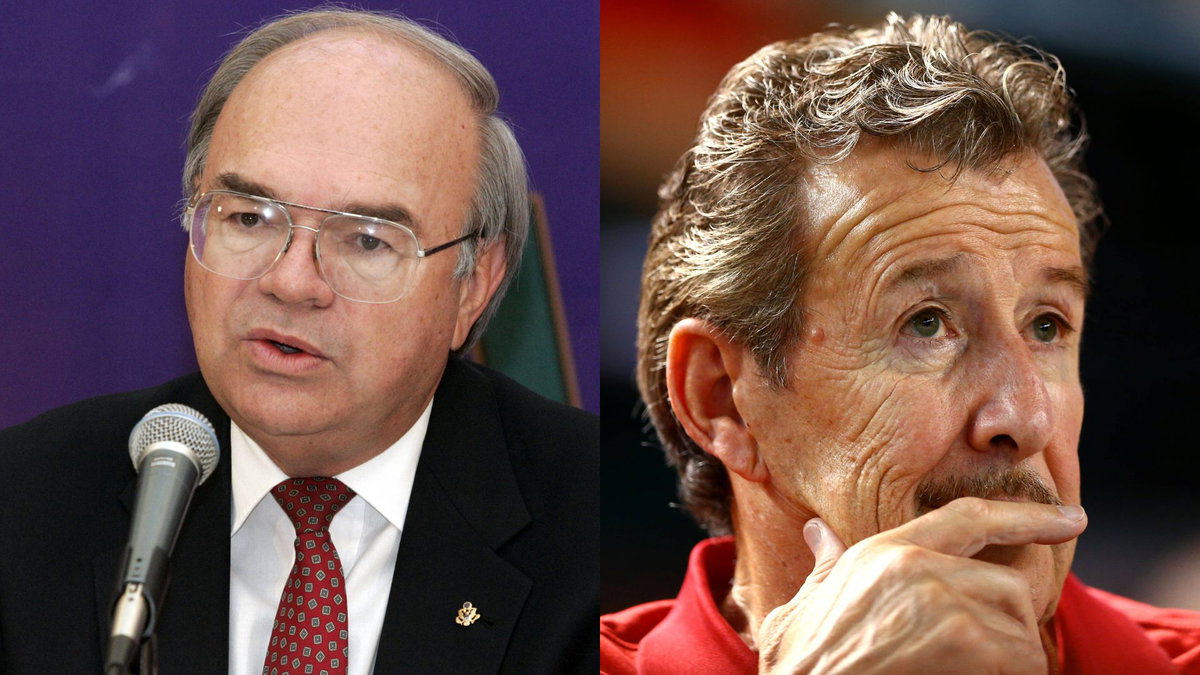
It began with a high-profile celebration in a stadium pool and ended with two MLB franchises chasing millions from a company that disappeared. For the Los Angeles Angels and Arizona Diamondbacks, a sweet partnership turned into a chilling case of a combined alleged fraud of $2.4 million.
Watch What’s Trending Now!
Per reports from the Athletic, both teams were duped by a company called Cremily. The report has testimonies from former employees, too.
One of those statements said, “The Diamondbacks lost out on $2 million.”
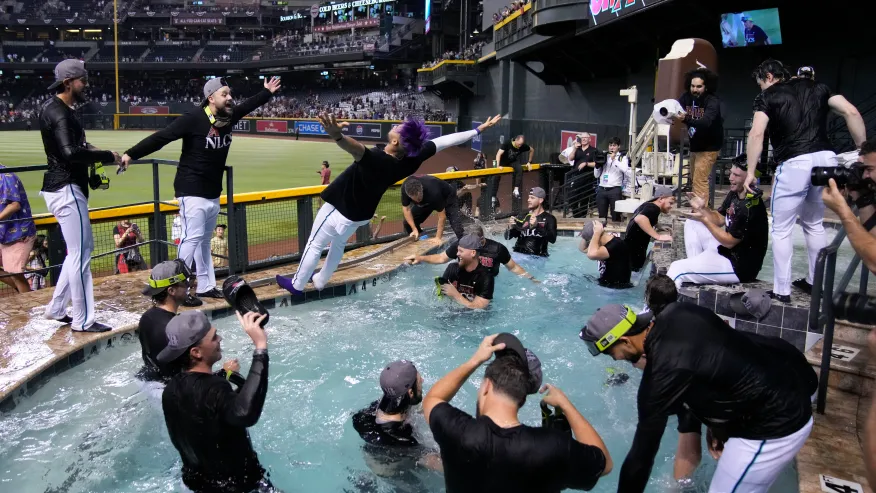
Cremily first gained attention during Arizona’s 2023 NLDS celebration after they beat the Dodgers. While the Diamondback players were celebrating in the pool at Chase Field, we could see the tiles covered with Cremily logos and a large popsicle structure. By that time, the brand had already secured naming rights and promised to pay around $2.3 million over 5 seasons. The deal with the Diamondbacks included pool naming rights, signage, and product stands inside Chase Field.
That exposure extended to a big signing with the Angels at around $3.45 million over five years, with in-game promotions. The total deal with the Angels and the Diamondbacks came to around $5.75 million.
They had also pitched to teams like the New York Knicks, the Boston Celtics, and the Boston Red Sox, and the New York Mets were also involved.
But troubles started piling up from 2023.
Imago
Arizona Diamondbacks left fielder Lourdes Gurriel Jr., center, falls into the pool after the Diamondbacks defeated the Los Angeles Dodgers 4-2 in Game 3 to win a baseball NL Division Series, Wednesday, Oct. 11, 2023, in Phoenix. (AP Photo/Rick Scuteri)
The Angels went unpaid between July and September. Invoices were sent, but there was no payment. Later, the Los Angeles Angels claimed over $401,700 in missed payments. The Arizona Diamondbacks also claimed that they were owed $358,053.78.
But looking at the employee statement and other reports, the total due to the MLB teams is around $2.4 million.
The lawsuit filed in 2024 accused Cremily of failing contractual obligations. Court filings also referenced product issues, including third-party ice cream sold under Cremily’s branding.
But reports suggest that in 2025, many of the disputes were settled privately.
At the center of all this was Steven Delaportas, previously linked to a $2 million fraud judgment in 2008. He also pleaded guilty in 2006 to bankruptcy concealment tied to business financial misrepresentation.
Employees described him as persuasive.
“He’s got the ability to sort of sell himself to people,” one remarked, implying that it helped him secure such big deals despite the company’s lack of revenue streams.
Internally, staff reported “ghost job” conditions, with over 50 employees having limited work. One employee even pointed out, “We were just collecting paychecks and sitting around.”
The product itself struggled badly with reports of freezer burn, machine failures, and inconsistent texture.
Some employees even mentioned, “(It was) just ice cream. And they were selling that as authentic French frozen yogurt, which was also keto.”
By mid-2023, due to a lack of funding and the whistleblower emails, internal issues were exposed. Operations stopped, the brand folded, and employees lost jobs without severance.
One employee recalled the time, “I cried every single day at work.”
But this may not be a one-off incident.
In recent years, MLB has been going through a phase where the organization of a couple of teams or players is getting caught in crossfire.
MLB faced a similar case a few years back
Major League Baseball started to expand its betting ties with companies after the legalization across multiple states. They made a partnership with DraftKings in 2015, and the deal included odds integrations and in-game promotions during broadcasts. By 2021, the league’s revenue from sponsorships and media deals crossed $10 billion.
Fans began placing bets tied to live games, including pitch outcomes and scoring sequences. Yet, this growth made many question the integrity of the game.
That concern sharpened after the Houston Astros scandal exposed sign-stealing methods using cameras and signals.
MLB confirmed the Astros used illegal systems during their 2017 championship-winning season. The team defeated the Dodgers in seven games, including a 13-12 Game 5 thriller.
Investigations led to a $5 million fine and loss of two draft picks, which still looks like a slap on the wrist. But this is when many fans really started to question the fairness of the game.
Soon after, bettors filed lawsuits claiming losses from games influenced by unfair advantages. Plaintiffs argued MLB promoted betting while failing to prevent known integrity violations across seasons. Claims pointed to many Astros home games, citing that the odds were changing suspiciously as the game progressed.
However, courts dismissed most cases, stating that betting losses cannot be directly recovered under existing laws.
Although MLB did not take any financial penalties, the trust between fans and the organization took a major hit.
The situation mirrored cases like Cremily, where trust and money collapsed under hidden problems. Both showed how quickly confidence breaks when systems fail behind strong public images.