
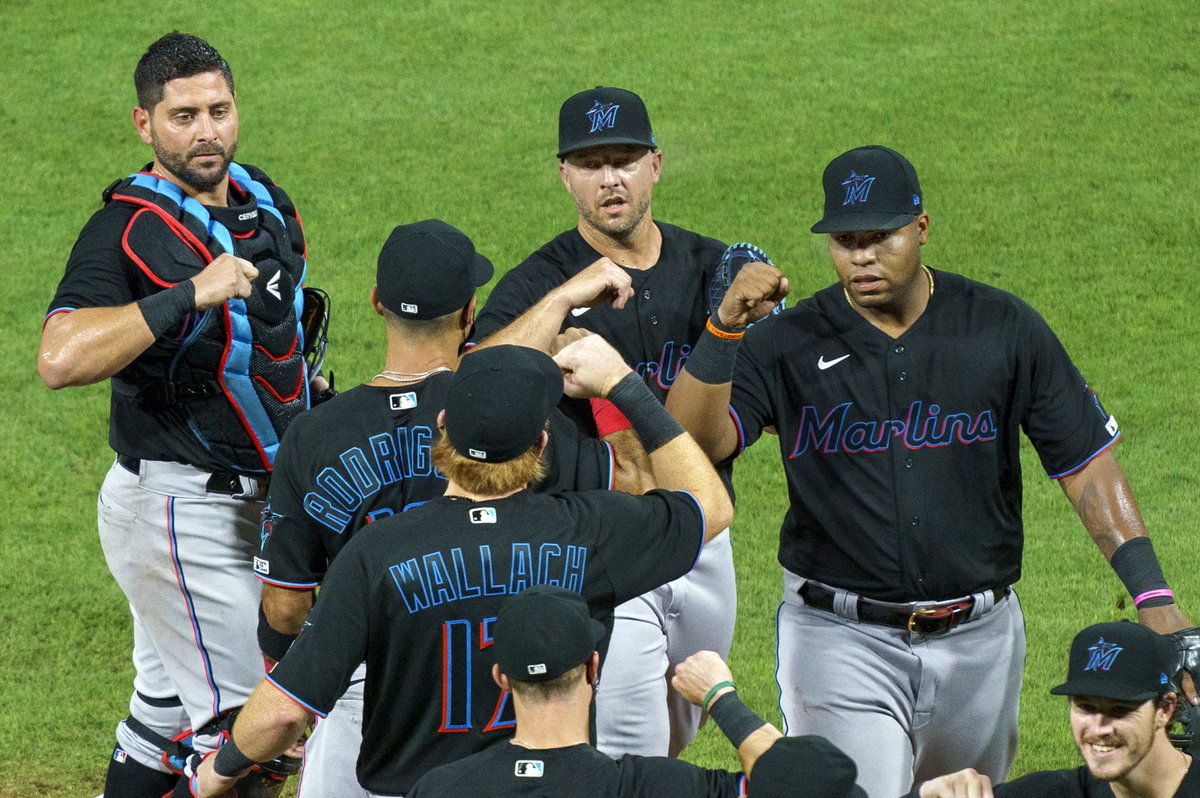
The Miami Marlins pay their players a fraction of what the Dodgers do. That huge gap is why everyone is fighting over a $150 million salary floor right now. Miami just sold a 15% stake in the team to deal with years of debt. The cash helps them out for now, but it really shows the money problem behind the current labor fight.
Watch What’s Trending Now!
“The Marlins very much sit on the opposite end of MLB’s financial spectrum compared to the Padres, who fetched $3.9B in a control transaction,” Kurt Badenhausen highlighted the contrast in a social media post.
According to different sources, the Miami franchise has a valuation of $1.4 to $1.55 billion.
For context, the Los Angeles Dodgers generate roughly eight times Miami’s local media revenue before revenue sharing. This 8X gap in TV money makes the current Collective Bargaining Agreement (CBA) talks a nightmare.
The Marlins opened the $634 million LoanDepot Park, largely funded by the taxpayers, in 2012. That was the only season they had an attendance of over 2 million since their World Series win in 1997.
Over the last 13 years, their crowds have been among the worst in baseball. Last season, Miami drew just 1.16 million fans. Only the Rays and Athletics had fewer. To put that in perspective, the Padres drew 3.44 million.
The Marlins very much sit on the opposite end of MLB's financial spectrum compared to the Padres, who fetched $3.9B in a control transaction. Padres: #2 in attendance, $530M in gross revenue Marlins: Last finished better than 27th in attendance in 2012. Dodgers generate 8x Show more

SCOOP: MLB’s Miami Marlins recently sold a roughly 15% stake in the franchise to pay down debt. The deal valued the club at $1.55 billion. Details 👇 at @Sportico. sportico.com/business/team-…
The Marlins usually receive the biggest shares of revenues from the big-market teams, and last year they accepted around $75 million. But instead of spending that money on players, they are cutting costs.
Looking back to 2023, Miami’s payroll was around $135 million. By 2026, they slashed it to just $78.8 million.
In comparison, the Dodgers have $300 million, while the New York Mets have around $334 million. These two teams are at opposite ends of the spectrum from the Marlins in revenue generation and total spending.
MLBPA’s proposal puts more pressure on clubs like Miami
The Marlins’ financial challenges resurface at a time when the MLBPA has proposed a new competitive-integrity tax. They are pushing to raise the minimum spending limit to $150 million.
The Players Association wants teams with a lower payroll to be penalized. Although the exact penalties haven’t been drafted, this will surely put way more pressure.
Steve Cohen bought the Mets for $2.24 billion in 2020. And that was the franchise record until the San Diego Padres recently went above and beyond with a $3.9 billion sale. The valuation gap is too big to ignore.
The negotiation becomes more complicated with 13 MLB teams currently having a payroll lower than $150 million.
The owners can specifically point to Miami as evidence that some clubs might not be able to cross the proposed threshold. And that’s exactly what necessitates the cap-and-floor system. The Marlins might be able to pay off their debt with the latest move, but it will surely be a focal point for the CBA.