Imago
Source: IMAGO
Imago
Source: IMAGO
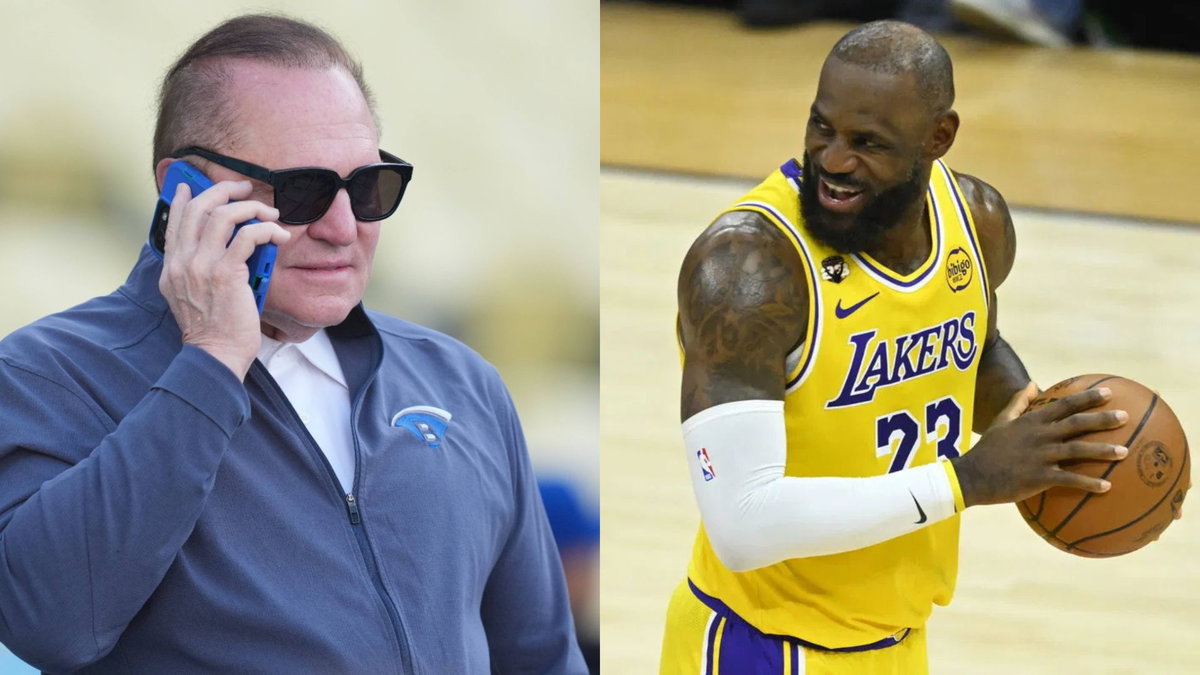
LeBron James is one of the biggest players in the NBA and has been for the past 15 years. But his 2 year, $101.35 million contract doesn’t define it. And that is exactly what Scott Boras thinks will happen if MLB adopts a salary cap.


In a recent interview with Jon Heyman and Joel Sherman, Boras was asked if the NFL and the NBA are doing well with the salary cap, then why can’t MLB?
Watch What’s Trending Now!
Scott Boras responded, “The presumption is they’re doing well… Did LeBron James really receive his value over the last 15 years? I don’t think anybody in their right mind would probably say that he received maybe a third of his value.”
Boras continued, “There are so many factors that I can give you that can clearly demonstrate that a non-cap system provides much more parity than a cap system. And we have all the data to illustrate that. I’m for a reward system, an absolute reward system where when we have revenue sharing… I’m also for the idea that your rewards are less if you showed a propensity for not being in the playoffs for a decade.”
The NBA operates under a collective bargaining agreement governing salaries, contracts, and revenue sharing.
The latest agreement began July 1, 2023, officially lasting through the 2029–30 season. This system limits player salaries through maximum contract rules tied to salary cap percentages. Players receive roughly 49-51% of league revenue under the modern collective bargaining agreement.
These limits prevent teams from paying players unrestricted amounts based purely on market demand.
Scott Boras believes this capped structure has restricted earnings for even historic superstar players.
Boras pointed to LeBron James’ contract with the Lakers. That averages roughly $48.7 million annually despite enormous financial influence across global basketball markets. His career NBA salary alone has exceeded $580 million through multiple team contracts already. Yet he earns over $80 million annually from endorsements, surpassing his on-court salary significantly.
Forbes estimated his total earnings reached $133.8 million during the 2024-25 season alone. These figures highlight financial value extending beyond his NBA contract limitations and salary cap restrictions.
Beyond salary, LeBron’s brand generates enormous commercial influence, benefiting franchises, sponsors, and league exposure. His Nike partnership helped signature shoe sales reach $300 million annually during peak years. His lifetime earnings approach $1.3 billion, combining contracts, endorsements, and business ventures.
He also became the first active NBA player to reach billionaire status. Yet, his contract remains tied to salary cap percentage limitations.
Boras argues that such capped earnings fail to reflect the actual financial impact of iconic athletes. His warnings felt like a vow ahead of future labor talks involving baseball players’ earnings protections.
“We have every argument in the book now because we have seen cap systems operate for 15 years. And the parity argument has gone out the window,” explained Boras.
Imago
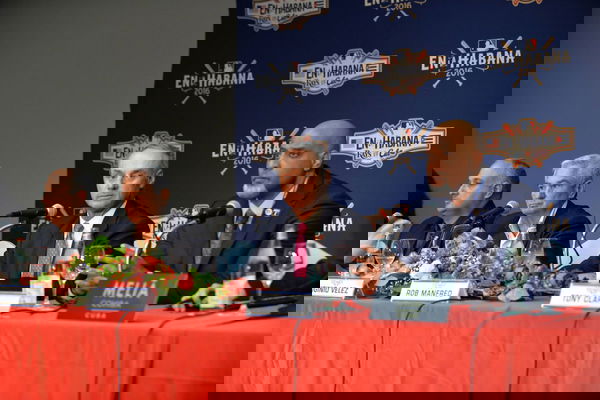
(L-R) Cuban Baseball Commissioner Heriberto Suarez, President of the Cuban Soccer Federation Higinio Velez, MLB Baseball Herren USA Commissioner Rob Manfred and Executive Director of the MLBPA Tony Clark deliver a presser on tomorrow s match before Cuba that will count with the presence of US President Barack Obama in La Habana, Cuba, 21 March 2016. TAMPA BAY RAYS PRESSER IN CUBA !ACHTUNG: NUR REDAKTIONELLE NUTZUNG! HAB004 20160321-635941869947425798
Per Scott Boras, “The system isn’t the problem. It’s talent and acquisition of talent and the intellect to do it and the capital to do it at the right time that makes teams successful.”
Boras’ point was one and clear: capped salaries fail to reflect actual financial value delivered to franchises. Boras uses LeBron’s case to warn baseball against adopting similar salary cap restrictions. He believes free markets allow players to earn proportionate value based on revenue contributions.
With that, Sherman went on to reverse the roles and placed the super agent on the MLB management side of things, asking about his approach in the negotiation process.
“This business is about talent. Like any league, they have this group. They earmark leagues, and they create interest. So, we have to make sure we are unearthing every process available to make sure that talent enters our league. And when you go to do that, you have to farm it, you have to create an incentive for parents to get their kids to play baseball.”
His stance reflects MLB’s current uncapped system, allowing contracts exceeding $300 million occasionally. He promises to protect baseball players from capped systems limiting their earning potential and future growth.
Instead, Scott Boras supports reward-based systems encouraging performance and financial growth for both sides.
He proposes rewarding teams investing in talent while allowing players to share financial success proportionately. This structure encourages spending without hard limits restricting superstar earnings potential.
Reward systems align salaries with revenue growth, increasing league value and competitive balance. Such systems strengthen partnerships between teams, players, and leagues through shared economic success.
New MLBPA boss gives his take on CBA and Scott Boras
Bruce Meyers became the MLB Players Association executive director after Tony Clark resigned. He has to answer some important questions about how he will handle the CBA negotiations and the accusation of him favoring Scott Boras.
Meyer was unanimously elected by player representatives, showing immediate trust during uncertain negotiations ahead. He now represents about 1,200 major league players entering crucial labor discussions.
Boras represents many elite players earning contracts exceeding $300 million across baseball. But Meyer has firmly rejected favoritism claims, saying every agent receives equal respect inside union meetings. He stressed unity matters with 30 teams preparing for difficult bargaining in the months ahead.
The current collective bargaining agreement is set to expire in December 2026, raising lockout fears.
Owners previously pushed for a salary cap, which the union strongly resisted during past negotiations. Meyer warned that salary caps hurt middle players, limiting earnings across entire rosters over time periods.
He also defended arbitration, citing Tarik Skubal winning a $32 million case against the Detroit Tigers’ payroll.
Meyer immediately began meeting players, planning visits across all 30 teams this spring.
He answered calls from MLB officials, including deputy commissioner Dan Halem, after the appointment announcement. Players watched closely, knowing union decisions would shape salaries and futures beyond the 2026 season.
For now, Meyer promised to protect players, refusing to implement systems to reduce fair earnings opportunities for everyone involved.
Written by

Edited by

Ahana Chatterjee