

Home run moments are widely considered the most exciting and spectacular plays in baseball. However, the recent report suggests that Japan’s NPB might have taken those a bit more seriously than required.
Watch What’s Trending Now!
High-impact plays often provide immediate offense, dramatic, long-distance action, and are frequently viewed as the ultimate goal in baseball. But a new report reveals an uneasy secret: the NPB may have been manipulating the game to create more of those very moments.
“According to confidential information obtained from a certain team, at an executive committee meeting of the 12 professional baseball teams held on August 4th last year, it was decided that because the trend of pitchers dominating at the plate has continued for several years, we will aim for the highest value within the standard range of the coefficient of restitution, and we will instruct Mizuno, the manufacturer of the unified ball, to do so,” Yahoo Japan reports.
Pitchers have traditionally dominated baseball through high velocity, movement, and advanced, technology-driven training, making hitting increasingly difficult. For reference, it is extremely difficult to make contact against pitchers like Paul Skenes and Tarik Skubal in MLB. Their deceptive techniques make hitting a tough nut.
Same in NPB, Shunpeita Yamashita’s 100 mph fastballs are considered one of the toughest. The league has been evaluated as pitcher-dominant because the official ball did not bounce well, and scores were generally low.
But now, reports suggest that NPB secretly planned to reverse the traditional dominance of the pitchers and make the game more batter-friendly.
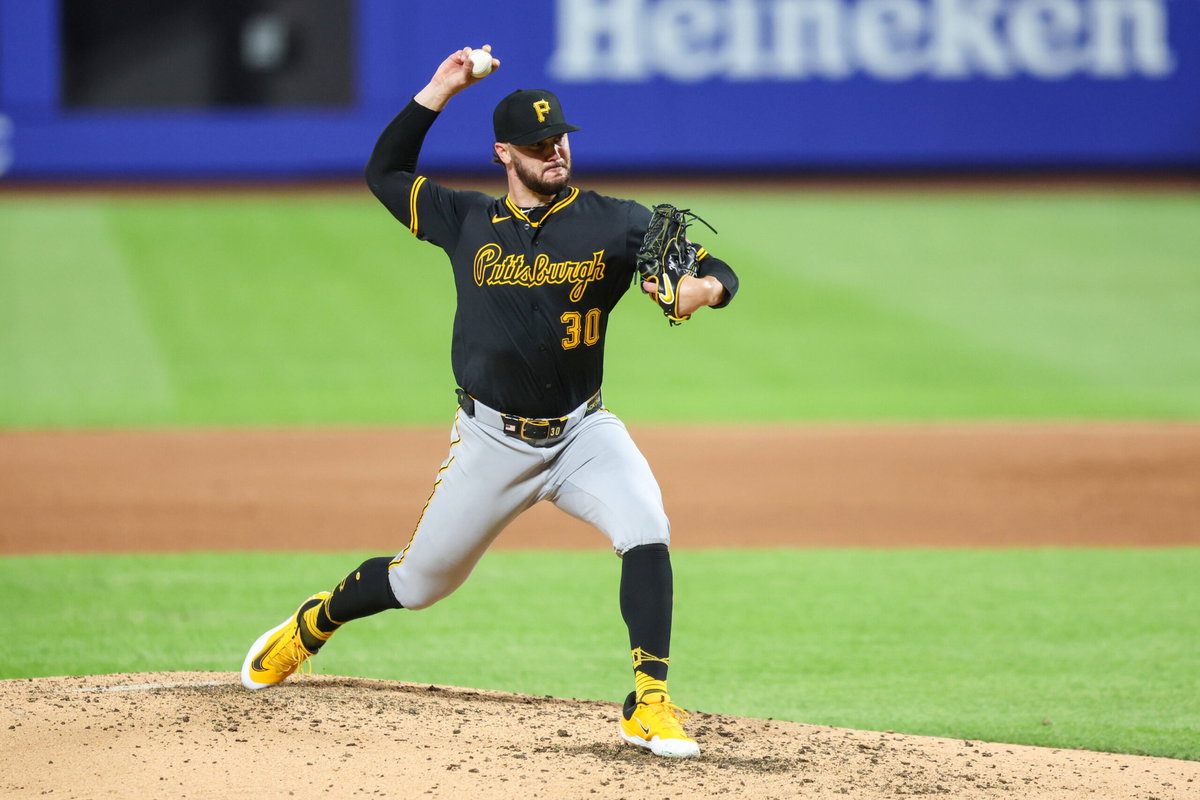
Imago
MLB, Baseball Herren, USA Pittsburgh Pirates Vs. New York Mets Pittsburgh Pirates starting pitcher Paul Skenes 30 throws during the fifth inning of a baseball game against the New York Mets at Citi Field in Corona, N.Y., on May 12, 2025. New York City N.Y. United States PUBLICATIONxNOTxINxFRA Copyright: xGordonxDonovanx originalFilename:donovan-pittsbur250512_npvEF.jpg
NPB looked to make the official ball harder and achieve the highest possible “coefficient of restitution.”
The Japanese league uses a “unified” ball by Mizuno. All 12 teams use this leather-covered ball, which is known for having a slightly smaller, tackier, and more textured feel than MLB’s Rawlings balls, aiding in grip.
Last year, Mizuno was reportedly asked to make “the ball harder by tightly winding the yarn.”
The harder the ball, more coefficient of restitution it will generate. But apart from manipulating the ball, NPB was also caught lying about it.
Sankei Shimbun, a Japanese paper, reported, “Although they refuted claims that they did not touch the league’s official ball, given the league’s flow since last summer, it is natural to conclude that the coefficient of restitution was manipulated.”
In 2011, there were only 939 homers, a huge decrease from 2010’s 1605. The coefficient of restitution was set within the range of 0.4134 to 0.4374 that year (2011). Then, in 2013, it was found out that NPB had deceptively changed the specifications of the unified ball. Since then, the coefficient of restitution was set at 0.4134. That whole scandal seems to be repeating now.
Although NPB Secretary-General Katsuhiko Nakamura denied the allegations of altering anything, Mizuno had reported the test results for the coefficients of restitution. The range has increased to 0.4154 and 0.4194.
With a higher coefficient of restitution, the ball bounces more, and thus, the chance of home runs increases. In fact, the game outcomes are indicating towards the manipulation.
Currently, there are 132 games played in the 2026 NPB season and 184 homers already scored. This puts around 1196 homers by the end of the season, which will cross the 1096 home runs scored last year.
NPB players have also revealed that “the ball definitely travels farther than in previous years.”
But the case is not just limited to NPB.
MLB faced the same controversy as NPB
What NPB is facing currently, MLB faced it back in 2019.
A record-breaking 6,776 total home runs were hit in the MLB during the 2019 regular season. This total surpassed the previous record of 6,105 set in 2017 by 671 homers, marking the highest number of home runs in league history at the time.
Questions were raised, and MLB was forced to investigate by a committee of outside experts.
They focused on the performance of baseballs and the increased home run rates during the 2017 and 2019 seasons.
It was concluded that there was an obvious change in the balls, resulting in more home runs. But the changes were unintentional.
Due to the inconsistent baseball seam heights, the seams were producing far less drag. Although the balls were looking juiced up, it was just manufacturing variability.
“No evidence was found that changes in baseball performance were due to anything intentional on the part of Rawlings or MLB and were likely due to manufacturing variability,” the committee concluded.
Since then, MLB’s recent efforts have focused on balancing gameplay between the pitchers and batters. However, NPB might have targeted a home run grandeur, making the league more thrilling and engaging.