
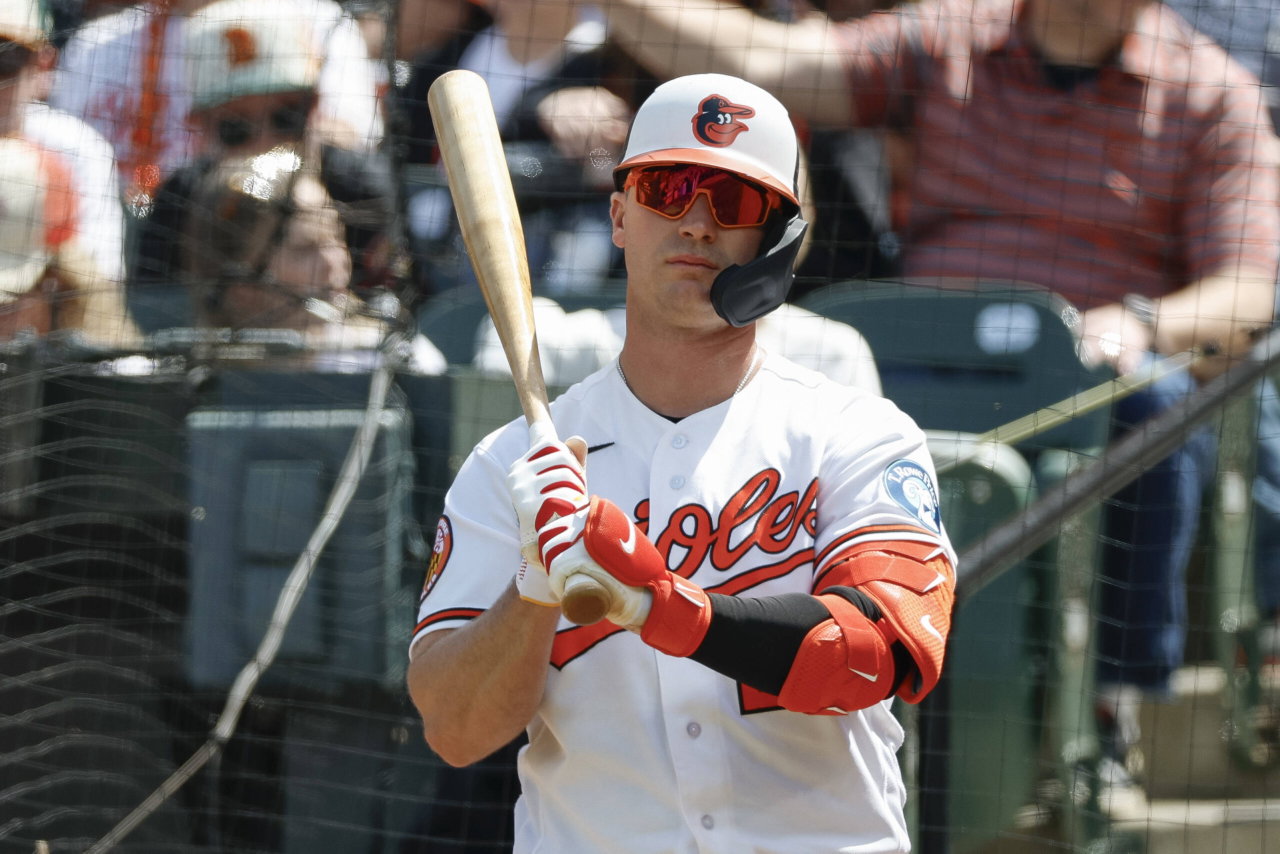
For a moment, Pete Alonso thought he had put the Orioles ahead. Instead, he was standing in the batter’s box again, trying to process a foul call that would survive replay review.
Watch What’s Trending Now!
The call came with Baltimore and New York tied 3-3 in the bottom of the seventh, and Alonso struck out on the next pitch. What made the moment even harder to accept for Baltimore was what Alonso said he had seen on the technology available to the team.
“What would have been the go-ahead home run from Pete Alonso was upheld as a foul ball after review,” Jomboy Media shared via X.
The play came with two outs and the bases empty in the bottom of the seventh. Alonso sent Brent Headrick’s first pitch 410 feet down the left-field line at 107.1 mph, and the ball flew over and around the foul pole before landing on the walkway in left field. Third-base umpire Will Little ruled it foul, and after a review that lasted roughly one to two minutes, the call stood.
MLB’s Replay Operations Center explained why. “After viewing all relevant angles, the Replay Official could not definitively determine that the ball left the playing field in fair territory. The call stands, and it is a foul ball.”
That distinction is what made the ruling so difficult for Baltimore to accept. The replay did not prove the ball was foul. It simply did not provide enough visual evidence to overturn Little’s ruling. The available cameras could not give the replay center a clear view of the ball crossing the foul pole’s vertical plane.
Alonso did not stop at questioning the call. He suggested a way MLB could remove the uncertainty altogether. “I think a simple fix is like football, you have the pylon camera with the plane, where it shoots right across the goal line. And I feel like, for us, we could easily have a laser or a camera that shoots straight up,” he said.
Alonso also explained why he believes MLB has the resources to solve the problem. “We have all the technology, analytics, whatever, funds. I don’t see why we can’t do it, but the reason why I’m told that we can’t do it … is that every ballpark is unique. It’s not the same dimensions everywhere,” he said.
Albernaz also pointed to the technology already available to MLB teams. “I think technology is advanced pretty good. There are teams using AI on the iPads and other sports use ball-tracking data for challengeable calls. Don’t understand why we don’t do it, but it’s not why we lost the game. But I think that moment was a big moment, especially it takes a home run from us and Pete, as well,” he said.
Orioles pitcher Chris Bassitt was even more direct about what he believes is stopping MLB from adding dedicated technology around foul poles. “Because it would cost money. That’s it. I mean, that’s literally it. You ask every fan of this game, that’s a true fan, every single fan would want those cameras. If you ask every single player, they would want those cameras. If you ask every coach, they want the cameras. It costs money. That’s it,” Bassitt said.
The Yankees saw the play differently. Manager Aaron Boone said the team’s replay coordinator believed the ball was foul, while pitcher Brent Headrick admitted he thought the call “could have gone either way.”
The Orioles Cannot Afford Many More Missed Chances
Baltimore entered Thursday 61-66 and sat 1.5 games behind the Minnesota Twins for the final AL Wild Card spot. FanGraphs’ models put the Orioles’ playoff chances between 13.9% and 15.5%, depending on the model.
Earlier in the game, Alonso hit his 29th homer of the season. Had his seventh-inning drive counted, it would have been his 30th, extending his streak to six straight full seasons with at least 30 home runs.
Baltimore signed Alonso to a five-year, $155 million contract in December 2025, making him one of the biggest pieces of the franchise’s long-term plan. He arrived after seven seasons with the New York Mets, where he hit 264 home runs. Missing the postseason in his first year with Baltimore would make an already frustrating season even harder to swallow.
Baltimore cannot change the replay decision now. What the Orioles can change is what comes next. With the Wild Card race still within reach, they will have to make sure a disputed call at the foul pole does not become another missed opportunity in a season running out of time.