
Baseball is a sport built on memories. The crack of the bat, the roar of the crowd, and the games that become part of history. But its nine lockouts have left a different kind of legacy, costing the league just under 2,000 games. Every lost game means revenue slipping away, moments that never get to happen, and internal battles spilling out into the public eye. For fans, it is a painful reminder that the game they love can be held hostage by disputes far removed from the diamond.
Watch What’s Trending Now!
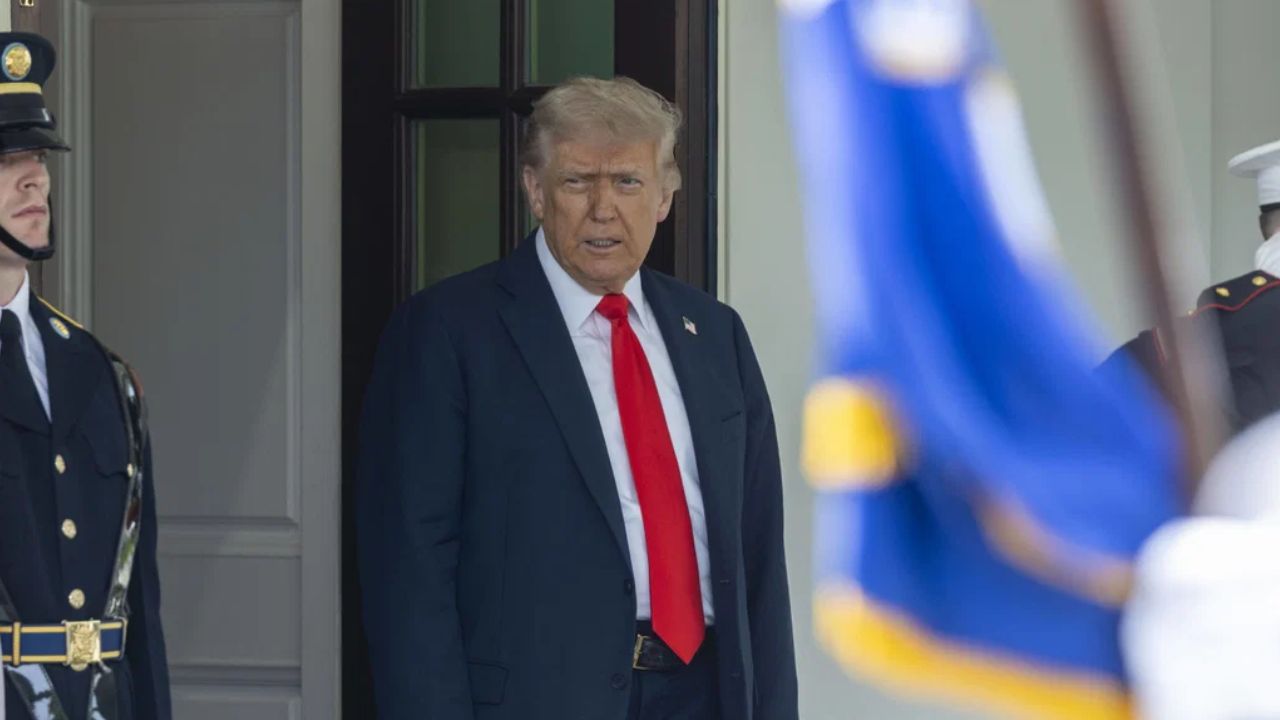
And now, the past threatens to repeat itself. As the possibility of another lockout looms, even President Donald Trump, who had been keen to help resolve the issue, appears to have given up.
“So, there’s a looming lockout coming in Major League Baseball, as you know,” a reporter asked Trump on Tuesday. “I think it will. That is going to happen,” Trump responded.
But just as the reporter tried to add that two lower-salaried teams will fight it out in this World Series, Trump said, “Okay, let’s do it another time. Nobody cares.”
Here’s the thing: With the CBA expiring on December 1, it looks like the sport is headed towards another lockout. The MLB and the MLBPA are fighting a contentious battle over the implementation of a salary cap, and so, another labor shutdown could threaten baseball’s future. Trump could have emerged as an influential voice in the standoff, but his apparent disinterest may leave MLB with one less potential ally just when it needs one most.
Plus, his blunt response comes as a surprise considering how Trump was always at the front with anything related to MLB. “If you don’t have a salary cap, you don’t have a sport. Because they can’t help themselves. You know, in sports, they can’t help themselves,” Trump said in June. “They should have done it a long time ago.”
It prompted ESPN’s Jeff Passan to predict that Trump may act as a mediator between MLB and MLBPA. But if the President’s disinterest in the subject is to be taken as an indicator that he isn’t willing to resolve the problem, it’s on Commissioner Ron Manfred and the MLBPA to sort it out.
MLB proposed a hard cap of $245.3 million and a payroll floor of $171.2 million starting in 2027. The proposal was firmly rejected by MLBPA.
MLB contends that massive payroll gaps destroy competitive parity and leave small-market fans “without hope.” But the Dodgers’ NLCS loss undermines MLB’s argument.
The massive-spending Dodgers ($339 million+) were cleanly swept in the NLCS by the Milwaukee Brewers, a small-market club ranking 19th in payroll. Meanwhile, the low-budget Tampa Bay Rays clinched the American League. This has resulted in a historic Rays vs. Brewers World Series matchup, proving to the players’ union that meticulous player development and scouting can beat raw spending without a cap.
So, with the MLBPA and MLB yet to come to a consensus ahead of the December 1 deadline, a lockout is visibly near.
A lockout would bring all operations to a standstill. Nothing will proceed further until both parties come to an agreement. And until a deal is reached, trades and free-agent signings will be halted. Players would also be barred from contacting team personnels, like staff and coaches.
From a business standpoint, a lockout will ruin MLB’s momentum with viewership. And if there is no solution found until February, it would ruin spring training. By mid-March, the regular season would suffer.
But the Baltimore Orioles’ owner David Rubenstein’s latest statement about MLB team owners earning enough profits may just have worsened the debate.
The Orioles owner’s statement revealed an uncomfortable truth
MLB team owners have historically argued that baseball’s economic landscape is “unsustainable” and unprofitable for small-to-mid-market clubs without a hard salary cap. But Rubenstein blew open the narrative.
“A lot of my friends were buying teams, and I realized they’re making money. They’re making more money than I’m making in private equity,” Rubenstein said.
Rubenstein’s boasting directly contradicts infamous past claims from owners, such as St. Louis Cardinals chairman Bill DeWitt Jr., who famously claimed that owning a baseball team “isn’t very profitable.”
So, just before the CBA deadline, the MLBPA got leverage with Rubenstein’s statement.
The MLBPA and MLB have their own sets of arguments. But Rubenstein’s statement and Trump’s outright rejection of getting into the matter could affect the negotiations. Positive or negative, time will answer.