
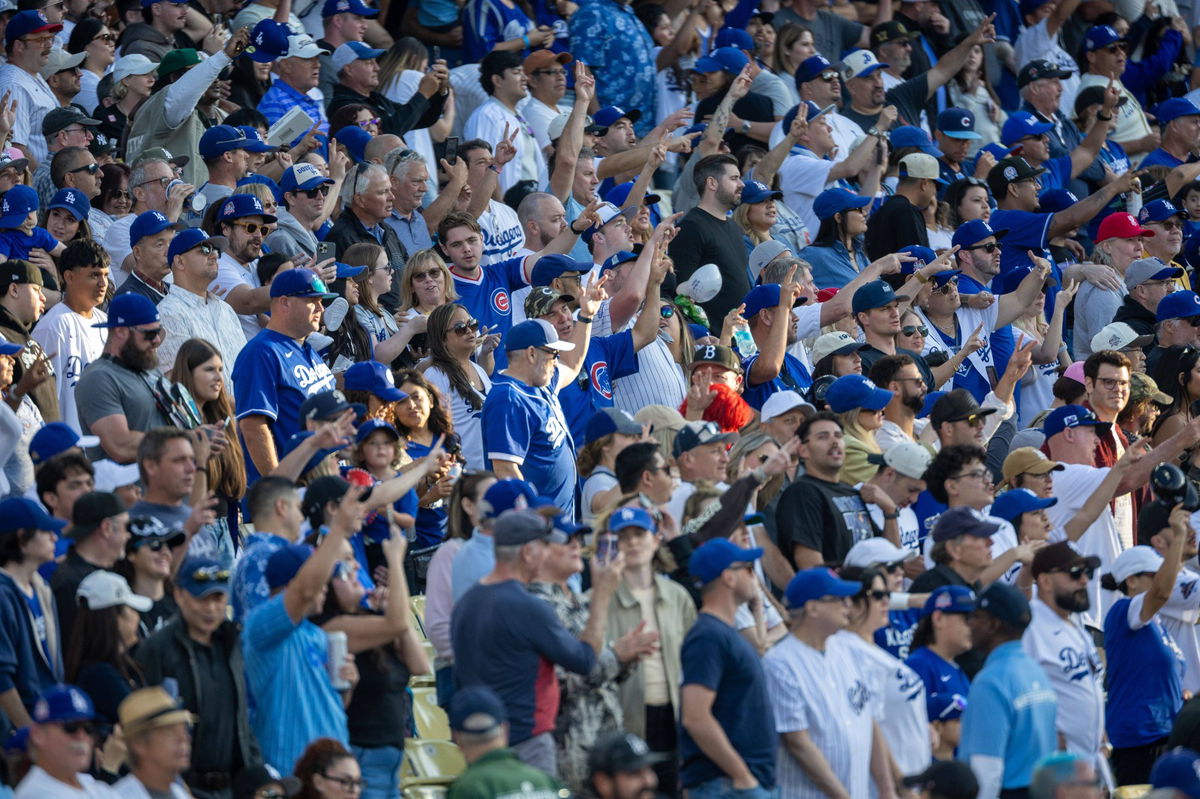
Dodger Stadium’s eighth inning told a story no postseason team wants to see. The venue was packed on Sunday, but by the eighth inning, it suddenly looked like the fans had decided they had seen enough. With the Los Angeles Dodgers trailing the Atlanta Braves 3-1, fans began emptying the stands despite the NLDS matchup being anything but over. And when Max Muncy launched a ninth-inning home run to bring the Dodgers within one, many of those seats were already empty.
Watch What’s Trending Now!
The strange sight immediately raised an uncomfortable question: were Dodgers fans really giving up on their team in the middle of a postseason game, or had the brutal Los Angeles heatwave finally won the battle?
“Dodgers fans left a 2-run postseason game in the 8th inning en masse,” Barstool Sports shared via X.
The clip shows fans leaving the stands en masse. However, this was not the first time Dodgers fans deserted their game midway.
They are known for arriving late and leaving early, a decade-long baseball trope often called “The Chavez Ravine Skedaddle.”
One of the most fascinating reasons fans started leaving early dates back to the team’s arrival in Los Angeles in 1958.
Hall of Fame broadcaster Vin Scully had a play-by-play style so vivid and trusted that thousands of fans would bring transistor radios directly to the stadium to listen to him call the game from the booth.
Eventually, fans realized they didn’t have to stay until the 9th inning to catch the end. They would regularly leave in the 7th or 8th inning because they could listen to Scully call the game’s climax on their car radios while beating the parking lot rush.
Dodger Stadium sits atop Chavez Ravine with highly congested entry and exit points. The ballpark routinely averages 47,000 to 50,000 fans per game, but its parking lots only hold about 16,000 spaces. Leaving in the 7th or 8th inning can save fans an hour or more of sitting gridlocked in the parking lot and the surrounding roads.
Sunday may have seen the same phenomenon, but what was surprising was how the fans deserted a close game.
A 1-7 deficit might justify early departure, but a 1-3 game offered hope for a comeback, and Muncy was about to script the same.
Fans who left early missed the Dodgers’ ninth-inning collapse:
Only Muncy homered; no other hits. With that, Shohei Ohtani’s struggle is becoming unwatchable for the fans.
Ohtani’s postseason slump deepens
“Ohtani, playing through injuries, is only providing meaningless at-bats for the Dodgers.” The Los Angeles Times reported, “Ohtani once struck fear into Major Leaguers for years. However, this season, injuries to his knee, biceps, and neck prevented him from playing. It’s hard to imagine anyone hasn’t considered whether the Dodgers should take the bat away from him.”
Most of the Dodgers fans would least expect such a review of Shohei Ohtani.
However, in his final 18 regular-season games this year, Ohtani hit .157 and hasn’t hit a home run since August 19. In NLDS Games 1 and 2, Ohtani went 1-for-4 in each game.
In the second game, his lone hit came in the fifth inning in a sharp opposite-field single to left field.
This can be one of the reasons behind the Dodgers’ not-so-dominant outing this postseason.
Ohtani batted .265 with 18 hits, 8 home runs, 14 RBIs, and 13 runs scored in 17 games in the 2025 postseason.
“He’s swinging at too many pitches out of the zone. It’s difficult to make solid contact on those. That’s the core issue,” Dave Roberts noted.
On Sunday, Ohtani chased 53% of pitches outside the strike zone and recorded seven whiffs.
However, he stopped any speculation of benching Ohtani.
“That won’t happen. He’ll play, and I expect him to show his best form and deliver results at the plate.”
The Dodgers’ biggest star’s low-key outing may be another reason behind fans leaving the stadium because, in Game 2, many left after Shotime’s final at-bat. However, the Dodgers’ Game 2 outing proved that Roberts needs to work on a few more things rather than getting concerned with the fans’ behavior.