Exclusive: Indy 500 Winner Rosenqvist Cheekily Calls for NFL-Like “Halftime Show” for IndyCar’s Freedom 250 GP

Add us on Google
Exclusive: Indy 500 Winner Rosenqvist Cheekily Calls for NFL-Like “Halftime Show” for IndyCar’s Freedom 250 GP
Add us on Google
Imago
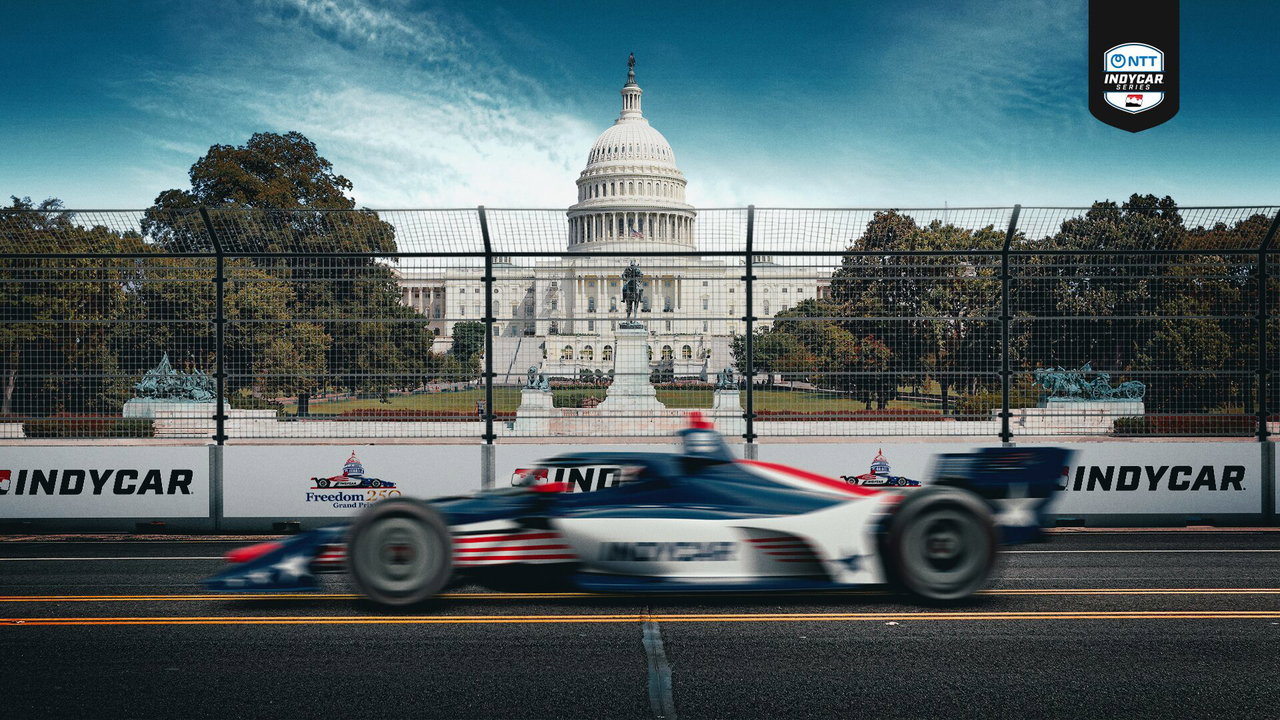
Freedom 250 GP Renders – CAPITOL – Image Credit: INDYCAR
Imago
Freedom 250 GP Renders – CAPITOL – Image Credit: INDYCAR
After seven months of wait, the first-of-a-kind IndyCar race in Washington, D.C., is only a few days away. The 25 IndyCar drivers are in for the opportunity of a lifetime. But what is now set to be a long, grueling 250-mile race was not how it was initially planned, and it naturally surprised the paddock, including 2026 Indy 500 winner Felix Rosenqvist, when the increase in race distance was announced in early August.
Watch What’s Trending Now!
The original length was supposed to be 125 laps around the seven-turn, 1.7-mile street circuit, which would equate to 212.5 miles. But earlier this month, to truly embrace the spirit of America’s 250th independence, the length was increased to 147 laps, taking the distance to 250 miles, nearly 18% more racing than the original plan. That extra distance also means adding another pit stop, another layer to the fuel, tire, and timing decisions.
Naturally, the decision divided fans on social media, so we had to ask a driver what it meant to them. During a Zoom media availability in early August, EssentiallySports asked Felix Rosenqvist how the increase in race distance would affect the race strategy.
“Yeah, I mean, we haven’t really gone into DC too much yet,” he shared. “Just the way it kind of rolls in motorsport. You do one weekend at a time with some small prep for DC in the background. Yeah, obviously I think we’re up to 147 laps. Maybe it’s going to be 200 by the time we get there (smiling).”
The Freedom 250 GP is the last of six IndyCar street races this season and the longest by a great margin. The shortest street race was the Detroit GP at 164.5 miles, and the longest, behind the Freedom 250 GP, was the race at Markham, Canada, which took place on Sunday, at 197.1 miles.
There is a difference of 52.9 miles between the races at Markham and Washington, D.C. That makes the Freedom 250 the only street race on this year’s calendar to cross the 200-mile mark by such a margin. So Rosenqvist couldn’t help but further joke about it by calling for an NFL-like halftime show for drivers to cool off.
“Obviously a very long race. Probably by far going to be the longest street course we’ve had, I think. We need a halftime show in the middle just to cool down a little bit (smiling),” the Meyer Shank Racing driver jokingly added.
Coming back to the serious aspect of the race strategy, with respect to race distance, he compared the Freedom 250 GP to the Indy 500, the longest and grandest race on the IndyCar schedule, where drivers cover 500 miles on the 2.5-mile Indianapolis Motor Speedway.
“I think in terms of strategy, when you have that long of a race, it turns more into an Indy 500,” explained Rosenqvist. “It depends. If it’s green, it’s going to be like any other or most of the races. If it turns into chaos with a lot of yellows, one second you’re going to be leading, then the next second you’re going to be last. You just kind of try to nail it for the end. Yeah, I guess it’s just going to be more random the longer the race you have in terms of strategy.”
His 2026 Indy 500 victory offered a direct example of that volatility. A late caution erased the advantage built by Rosenqvist’s fuel strategy and brought Team Penske’s David Malukas back into contention and into the lead, setting up a final-lap battle. And the MSR driver struck back at Malukas right before the finish line to win by 0.0233 seconds, the closest winning margin in Indy 500 history.
Written by

Edited by

Yash Kotak