
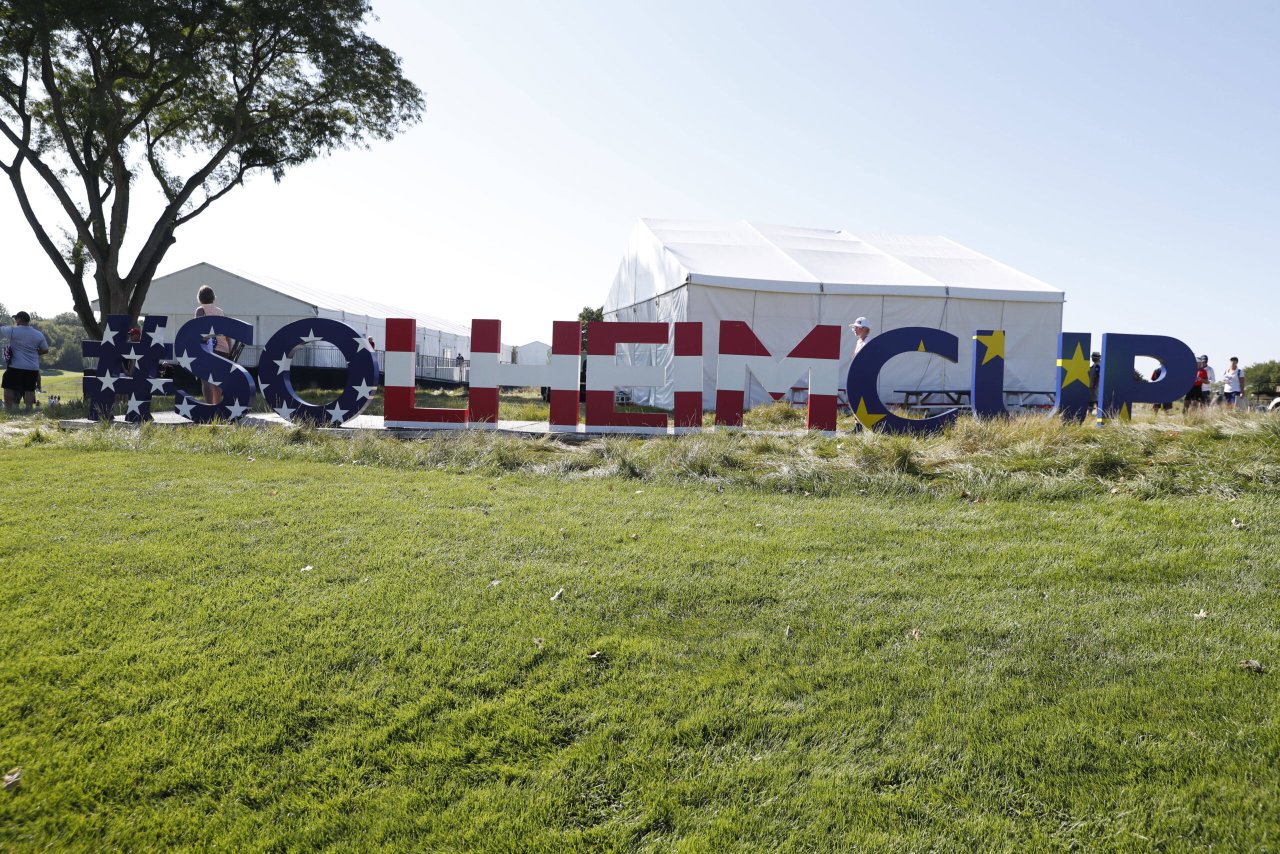
The 2026 Solheim Cup exposed a troubling disconnect for the LPGA: the competition itself was exceptionally close, but that drama did not translate into a large American television audience. Fried Egg Golf’s Kevin Van Valkenburg highlighted the Sunday Golf Channel audience of just 170,000, calling the figure a “three-alarm fire.” One day later, the LPGA announced that its chief marketing officer and the executive director overseeing the next Solheim Cup were stepping down. The timing inevitably raises questions about the tour’s ability to convert compelling on-course competition into mainstream attention—and whether its marketing and event strategy are equipped to do so. But the departures, on their own, do not establish that the television audience triggered the personnel changes.
Watch What’s Trending Now!
Speaking on The Shotgun Start, former LPGA caddie and golf analyst Matthew Galloway suggested that the situation had escalated further, quipping that the “three-alarm fire” might have reached a fourth alarm with news of the leadership departures. The comment captured the growing concern about the LPGA’s ability to turn a marquee event into sustained interest—and came as questions about the tour’s marketing and leadership strategy were suddenly impossible to ignore.
“I think the three-alarm fire might have hit the fourth alarm Monday morning there in Daytona Beach. It sounded like,” Galloway said. “There’s a tournament; directors are out. There’s some, I think Craig’s starting to get mad and starting to show some people the door.”
On September 28, LPGA staff were informed that chief marketing officer Chad Coleman had stepped down, marking a notable change to commissioner Craig Kessler’s early leadership team. Kessler had hired Coleman, the former chief brand officer at Dude Perfect, in January 2026, making him one of the commissioner’s earliest and most high-profile appointments. His departure, therefore, represents a significant change in the marketing operation Kessler had put in place less than a year into his tenure.
An LPGA spokesperson said Coleman’s departure was a personal decision, with Coleman saying he left “to be present with his family.” But the timing of the change is notable: rather than immediately replacing one of Kessler’s early high-profile hires, the tour is leaving the chief marketing officer position open for now. Instead, the firm appointed former Aon global partnerships executive Taylor Strick as senior vice president of marketing. He will oversee the LPGA’s social media efforts and report directly to Kessler, giving the commissioner a more direct role in the tour’s marketing operation as the LPGA works to build greater attention around its events.
Coleman was not the only senior LPGA executive to depart. Lindsay Allen, the executive director of the 2028 Solheim Cup, is also leaving the organization. According to Golfweek, Allen’s departure is likewise tied to family reasons, although she is expected to remain in the role through the end of 2026. The LPGA has already identified her successor: Ryan Ogle, a veteran of major championship operations who directed multiple PGA Championships, including the 2024 edition at Valhalla Golf Club. That experience carries particular relevance, since Valhalla is also set to host the 2028 Solheim Cup.
Taken together, the departures leave Kessler with two important leadership transitions to manage: integrating a new head of marketing while also handing responsibility for one of the LPGA’s flagship events to a new executive. That comes at a particularly consequential moment for the tour. Kessler is also tasked with turning greater coverage and increased player visibility into sustained audience growth, making the effectiveness of the LPGA’s marketing and event strategy an increasingly important part of his early tenure.
The concern is that these leadership changes could disrupt whatever momentum the LPGA has built. That matters because the tour is operating amid a broader surge of interest in women’s sports, yet much of that attention has been captured by properties such as the WNBA and women’s soccer. The LPGA now faces the challenge of converting that broader interest into sustained attention for its own players and events—making stability in its marketing and event leadership particularly important.
That challenge is not lost on Commissioner Craig Kessler, who has acknowledged that the LPGA needs to do more to connect with audiences. The leadership changes therefore come at a consequential moment: as the tour looks to expand its reach and capitalize on growing interest in women’s sports, it is also adjusting the very marketing and event leadership responsible for helping build that connection.
“The LPGA has done almost nothing to tell the stories of our athletes. And by the way, the stories are way more interesting outside the ropes than they are inside the ropes,” he told Sports Business Journal.
He pointed to Charley Hull and Nelly Korda as examples of players whose personalities extend beyond the golf course and can help attract younger audiences to the sport. Their visibility, Kessler argued, highlights an opportunity for the LPGA to build deeper connections with fans by presenting its players as personalities and storytellers, rather than focusing solely on their performance as competitors.
Nelly Korda has also pointed to signs of growing interest at the grassroots level, particularly among young girls and families attending LPGA events. She said the change has been noticeable since her rookie season, with the size and energy of Thursday crowds sometimes surprising her. Those observations suggest that interest in the LPGA may be growing in person, even if the tour has yet to translate that engagement into larger television and broader media audiences.
The LPGA is doing a lot right. Making every golf event available live, for example, represents a significant improvement from where the tour was previously. But greater accessibility does not automatically translate into a larger audience. That gap was evident in the conversation around the Solheim Cup, with Mel Reid, a four-time Solheim Cup player and member of the 2026 European team’s leadership, directly addressing the event’s ratings and the attention it received.
“I do feel like the players are delivering the entertainment, the players are delivering everything that we’re asking them for,” she said.
She called the LPGA marketing budget “horrific” and said the Solheim viewership was “really heartbreaking.”
The LPGA now faces a clear test: whether it can turn the quality of its competition and the growing visibility of its players into sustained audience interest. That challenge becomes more pressing as the tour undergoes key leadership changes and faces renewed scrutiny over its marketing strategy. The coming months will therefore be important not only for the LPGA’s new leadership team but also for its broader effort to close the gap between the compelling product it puts on the course and how effectively it connects that product with fans.