
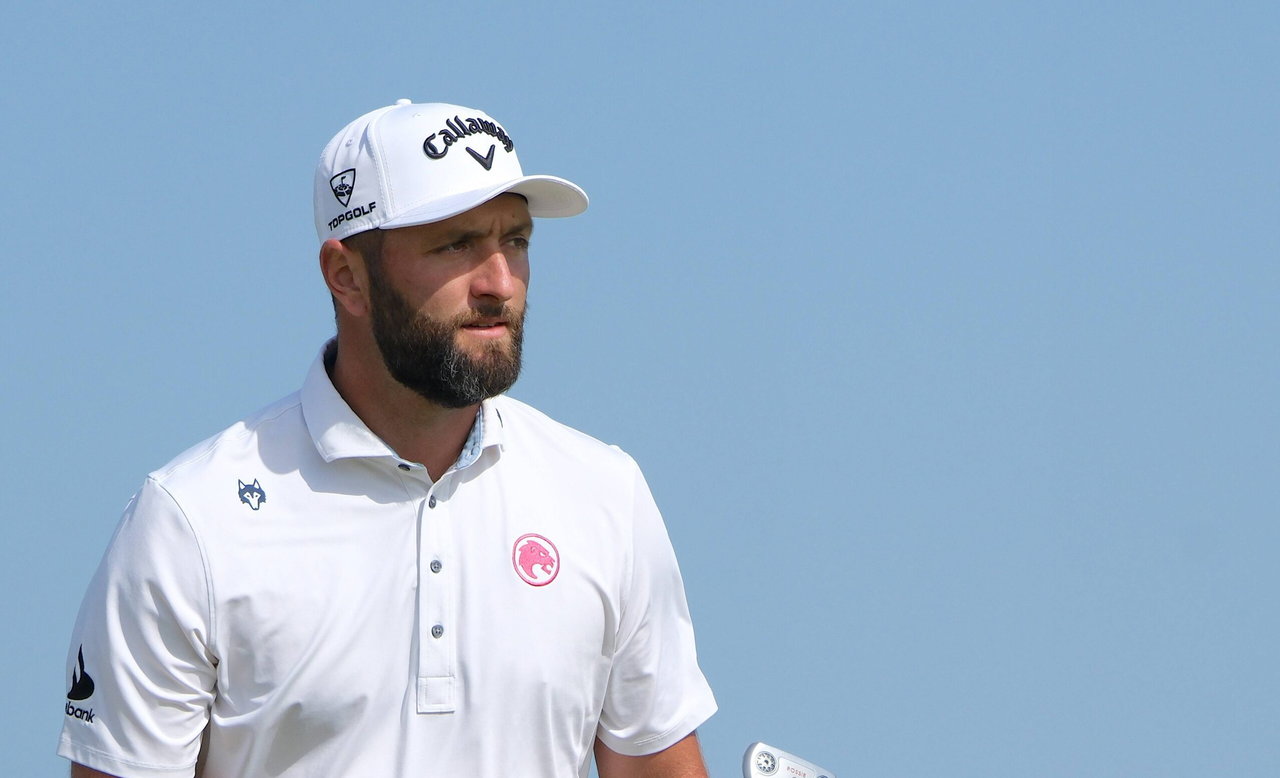
Jon Rahm’s exit from LIV Golf could be the beginning of a much bigger collapse. The two-time major champion will not participate in the proposed LIV 2.0 after his attorney, John Beck, told a US Bankruptcy Court hearing that Rahm had reviewed the new terms and found them “unacceptable.” On the latest episode of Dan on Golf, released immediately after Rahm’s departure became public, Dan Rapaport put the situation rather brutally: “There’s like nobody left.”
Watch What’s Trending Now!
And Rahm’s departure gives that line some uncomfortable weight. LIV has already lost Brooks Koepka and Patrick Reed over the past year, while Cameron Smith, Joaquin Niemann, Tyrrell Hatton, Tom McKibbin and Adrian Meronk are among those whose futures remain uncertain. The league is no longer trying to convince players to join a revolution. It is trying to convince them not to leave one.
Sergio Garcia now sits somewhere in that uncertainty too. After being released from his LIV contract, the Spaniard is weighing a PGA Tour return, though his priority is the DP World Tour in 2027. He has not ruled out LIV 2.0, but his message was clear: if joining the revamped league means giving up his place on the European circuit, he will not do it. “Without a doubt, I’ll be playing on the DP World Tour,” Garcia said. For a league trying to sell its next chapter, that is hardly a ringing endorsement.
LIV is in Chapter 11 bankruptcy after Saudi Arabia’s Public Investment Fund decided to end its funding at the close of 2026, following more than $5 billion reportedly spent on the project. The league is now working toward a restructuring backed by BC Partners Credit, with up to $300 million in proposed financing and a new ownership model that gives players a majority stake. Rahm himself is listed among LIV’s largest unsecured creditors, with a claim of roughly $7.5 million, while the league works through its existing player obligations and seeks commitments for its planned 75-man events in 2027. His representatives are now negotiating a separation from LIV. The player who once represented the league’s biggest recruiting coup is instead becoming one of the first major stars to walk away from its reboot.
Rapaport believes that distinction is crucial because the economics have fundamentally changed. “The money was there in the first edition of LIV and the players just had to come,” he said. “Now the players have to come” for the money to be there. The new investors, he argued, are not the same as the PIF. “These are private equity guys. These are money guys.” They need a credible business model, strong fields and a path toward a return rather than simply another few years of enormous losses.
That makes every player who hesitates more important. Rapaport pointed specifically to Smith admitting that players are “in a bit of limbo” and Niemann questioning whether LIV is something he wants at this stage of his career. “If you think that Jon Rahm making this decision is not going to sway other guys, you’re crazy,” he said.
And then there is Bryson DeChambeau. With Rahm gone, he is LIV’s biggest remaining marquee name and arguably its most important piece. Rapaport’s description was blunt: “As of right now, it’s the Bryson League.” He believes DeChambeau “has all the leverage in the world,” adding that if he leaves, “there’s actually no league.” That may sound dramatic, but Rahm’s departure has exposed just how thin the top of LIV’s roster could become.
Rahm was not merely another star. He arrived as the reigning Masters champion and finished each of his first three LIV seasons as the league’s top player. DeChambeau now has to carry the attention of a league that has lost its best golfer while simultaneously asking its players to buy into an uncertain financial future. Even Bryson might find that a rather large team assignment.
The fundamental problem is that LIV can no longer rely on money to solve every problem. Under its original Saudi-backed model, the league could pay enormous purses, offer massive contracts and worry about the business case later. That cushion is disappearing. BC Partners has to make the numbers work, and that means LIV needs enough recognizable players to make those purses and tournaments commercially worthwhile. Rapaport questioned whether the league can even stage its planned events if the stars keep walking. “They just lost their best player,” he said of Rahm. “So it’s a disastrous day. A disastrous day for LIV Golf.”