
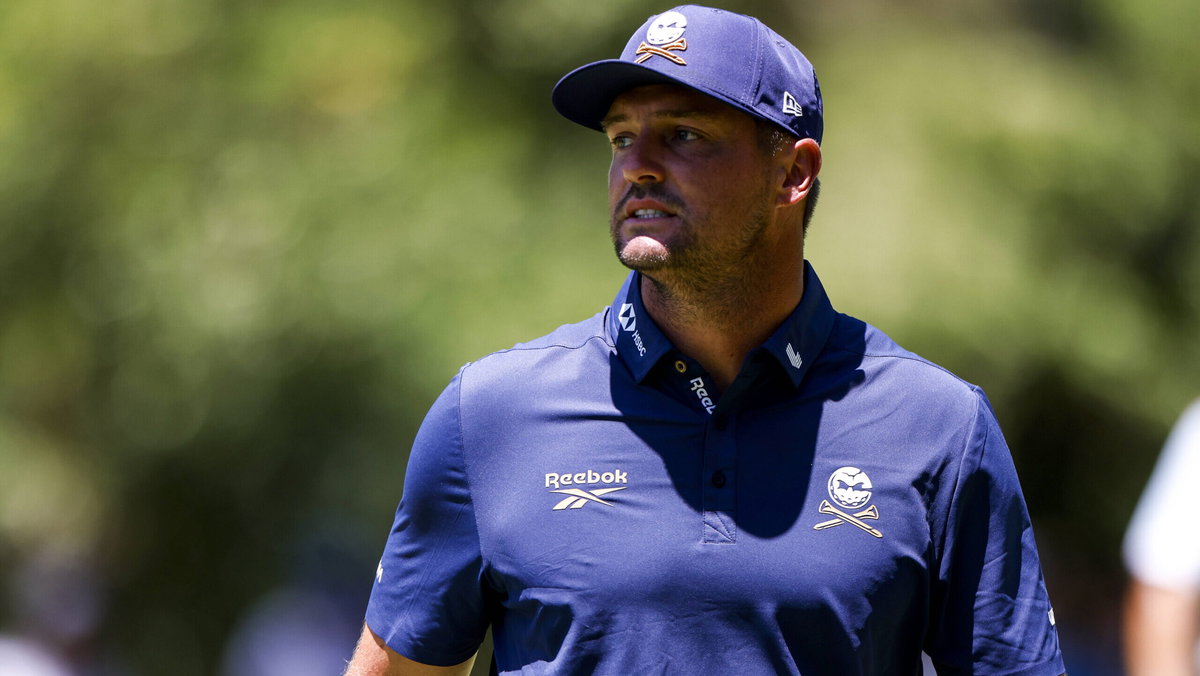
When golfers left for the LIV Golf, they knew they were burning bridges with the PGA Tour. Yet, few anticipated that the one thing that made the breakaway tour so attractive would be in danger so soon. After the PIF announced it would end its funding, the futures of everyone involved with LIV Golf are surrounded by many unanswered questions. The biggest one of them all: what would the golfers do?
Watch What’s Trending Now!
“I would have a policy that says if you leave the PGA Tour for more than twelve months to play in a competing tour and then you wanna come back, you can come back, but you don’t come back with any kind of status whatsoever,” Tom Lehman (winner, 1996 Open Championship) told Garrett Johnson on the BeyondTheClubhouse podcast. “You’re at the bottom of the barrel.”
“To leave and then to come back and be able to just jump right in and play at any point — I don’t care if you sit out a year — is wrong,” Lehman explained. “Totally against that. I think that’s a terrible idea to let the guys who were not loyal to the PGA Tour leave and then walk back in with just a slap on the wrist, and then ‘let’s go, boys.’ Start over, earn your way back up.”
As debates rage over LIV Golf’s fight for survival and the PGA Tour brainstorms new paths forward, Lehman’s words offer a glimpse into the fierce loyalty of the old guard. The 1996 Open Championship winner went on to suggest exactly what he would do if he were sitting in the chair of PGA Tour CEO Brian Rolapp.
To Lehman, past accolades should mean nothing for those who defected. “I don’t care what your status is — when you come back, you go behind the Tour school, he added. “You start from the bottom of the barrel when it comes to eligibility, and you work your way back up.”
This call for loyalty over financial gain mirrors the frustration shared by many who stayed. Rory McIlroy was one of the pros who voiced a similar sentiment when reports of a potential PGA Tour-LIV merger first broke a few years ago. Yet, the Tour was ready to welcome its players back.

Tom Lehman says if LIV players try to come back to the @PGATOUR they should have “no status whatsoever.” “Get in line behind the Tour School and you start at the bottom of the barrel.” “Start over, earn your way back.” Candid thoughts from the @championstour star.
The PGA Tour set up a single route for players to return. The Returning Member Program, announced in January 2026, allowed players who had won a major or The Players Championship from 2022 to 2025, and who had been away for at least two years, to apply for reinstatement. Only four players met the criteria: Brooks Koepka, Bryson DeChambeau, Jon Rahm, and Cameron Smith. However, the application period ended on February 2, 2026.
PGA Tour CEO Brian Rolapp had made it clear that this was a one-time offer and would not be repeated. Of the four, only Koepka accepted, and he agreed to pay $5 million to charity, forfeit equity grants for five years, receive no FedExCup bonus in 2026, and play at least 15 events. He did fulfill his one-year suspension but has been back on the Tour.
Which brings Lehman’s framework closer to reality than it might seem. Patrick Reed is a nine-time Tour winner and 2018 Masters champion, and he couldn’t access the Returning Member Program because his Masters victory predated the eligibility window by four years.
Reed left LIV after his contract expired at the end of 2025, played his way onto the DP World Tour, and became eligible to compete in PGA Tour events as a non-member only from August 25, 2026, which is one year after his last LIV appearance. Full reinstatement is set for 2027, while in the interim period, all he can look forward to is sponsor invitations and Monday qualifiers.
The long road Lehman described is, for most players, already the only road available.
Q-School’s Final Stage runs December 10–13 at TPC Sawgrass. The top five earn a PGA Tour card while everyone else gets a Korn Ferry Tour starting point.
DeChambeau and Rahm pose a different kind of problem.
DeChambeau’s LIV contract ends in 2026, and he has already stated his interest in returning, though the terms are still unclear. While Lehman’s comments are recent, DeChambeau had already made his response clear on Skratch: “Everybody can tell me what I want to do, but I think what matters also is what makes me happy.”
His representatives have already opened discussions with the Tour about options after 2026, a conversation DeChambeau initially denied before later confirming to ESPN. Rahm is a harder case, a much more complicated situation with his LIV contract extending beyond 2026. Rahm paid over $3 million in fines to the DP World Tour to play the Scottish Open in July. He did not enter the Returning Member Program window. Instead, he chose to move forward without engaging in that process.
Nobody really knows how players are supposed to get back in yet. There’s no set rule for the guys who missed out on the old program. But for Lehman, that’s actually how it should be. He thinks you shouldn’t just get a free pass. If you want back in, you’ve got to start from scratch and prove yourself all over again.