

Golf, as a sport, can become complicated very quickly. Swing positions, launch angles, club data, endless tips, and what-nots can make you feel as though you need to master everything at once. But before worrying about any of that, it is worth getting the basics right. Here are the seven questions you can start with.
Watch What’s Trending Now!
What’s the perfect grip technique for you?
The most important thing is to make sure the club face is aimed directly at your target before you even grip the club. If the club face is twisted left or right when you hold it, your shots will go off target.
For left-handers, place the back of the grip between the middle of your index finger and the edge of your little finger. Wrap your fingers around the grip and rest the pad of your thumb on top. You should see a “V” shape between your thumb and index finger that points toward your right shoulder.
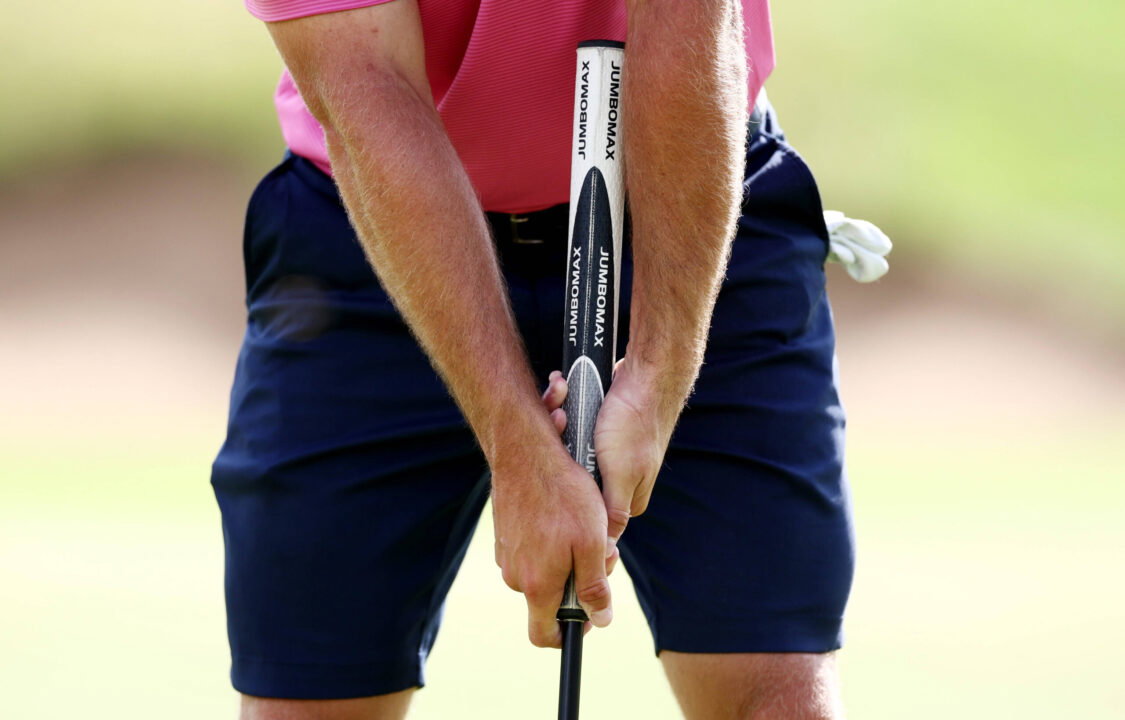
Imago
Mandatory Credit: Photo by James Marsh/Shutterstock 13995948bw The putting grip of Bryson DeChambeau of USA and team Crushers. LIV Golf Invitational London, Day Two, Golf, Centurion Club, Hemel Hempstead, UK – 08 Jul 2023 LIV Golf Invitational London, Day Two, Golf, Centurion Club, Hemel Hempstead, UK – 08 Jul 2023 PUBLICATIONxINxGERxSUIxAUTxHUNxGRExMLTxCYPxROUxBULxUAExKSAxONLY Copyright: xJamesxMarsh/Shutterstockx 13995948bw
Meanwhile, for right-handers, your right hand goes below the left. Wrap your fingers around the grip so the pad of your right hand sits on top of your left thumb. Again, a “V” should form.
There are three common ways to connect your hands: the 10-finger grip (all fingers touching), the interlock grip (little finger and index finger link together), and the overlap grip (little finger rests on top of the index finger). Choose whichever you feel comfortable with.
Am I setting up with correct posture and spine angle?
Good posture, in simple terms, is a combination of a hip hinge, a relatively long spine, and balanced weight over the middle of the feet.
So, keep your upper back long and slightly extended, and tilt forward mainly by folding at the hips while your weight stays balanced over the mid-foot area. From the side, try to maintain a mostly straight “back line” from the back of your head through your spine to your tailbone, with the forward tilt coming from the hip joints.
As you start your move toward the ball, your pelvis and hip joints fold to create the tilt while the spine stays tall and stable. If you instead bend by rounding the upper or lower back, you reduce your spine’s ability to support efficient rotation. That, in turn, can increase stress on the lumbar region over repeated swings.
Should I bend my knees or my back when standing over the ball?
You should hinge from your hips, not bend your back or squat down through your knees. Your knees will have some flex, but not too much.
At address, keep your spine straight and brace your core. Tilt forward by pushing your hips back so your torso angles toward the ball while your arms hang naturally. This creates a stable axis for rotation and sets a reliable “frame” for the club to move around you.
If you bend too much from the knees, your body becomes more upright, and your midsection points outward instead of down toward the ball. That often forces the club to travel above the ball unless you add extra hand and arm manipulation. That, again, can lead to low-point inconsistency and excessive sliding, for instance.
What should my body do during a golf swing?
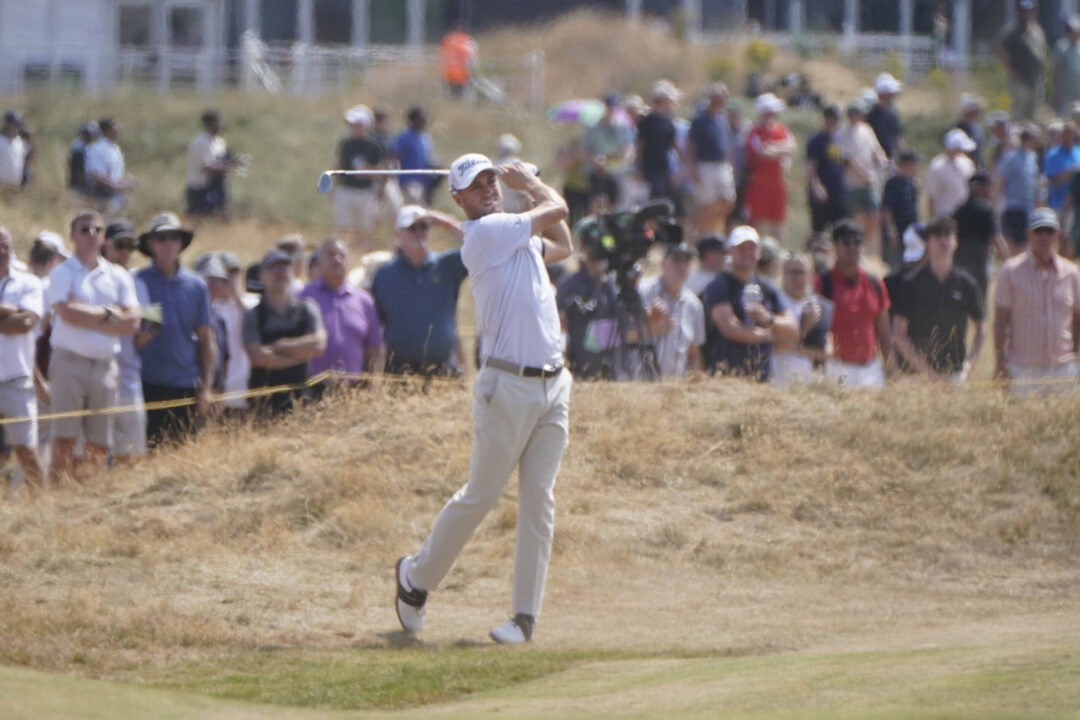
Imago
The 154th Open Championship 2026 Royal Birkdale England UK Justin Thomas On the first day. play during the 154th Open Championship at Royal Birkdale, Southport, England, as the worlds leading golfers compete in golfs oldest major championship for the Claret Jug. UK Copyright: xMarkxNewcombex
Now, this one is pretty simple. My Golf Spy says body movement in a golf swing should start with a solid setup from the ground up. Feet should be shoulder-width apart, ball roughly in the middle of the stance, arms hanging naturally, and proper weight distribution.
Here are some key points to keep in mind:
- Turn your shoulders, keep arms connected, and let the lead arm stay reasonably straight but not rigid in the backswing.
- At the top of the swing, feel a good shoulder turn with weight slightly on the right foot.
- During the downswing, let gravity work by shifting weight back to the left foot and allowing the arms to drop naturally; power comes from body rotation, not arm strength.
- Finally, balance on the left foot with chest facing the target and the club around the left shoulder.
How do I aim straight toward my target?
Start with this routine by Callum Beveridge Golf:
- Start from behind the ball and look through the ball toward the target, not at the ball itself.
- Align the club face to aim at the target first, then align the body parallel to the club face.
- Use a simple 20-second routine: make a couple practice swings behind the ball to feel the move, then recheck the target line.
- After aligning to the target, check the target again from behind the ball and proceed.
It is pretty simple to follow, essentially. Just aim the club face to the target first, then align your body parallel to that target line, keeping the club face pointing straight ahead. This setup will help you create a straight, repeatable line to aim at.
How do I read a green before putting?
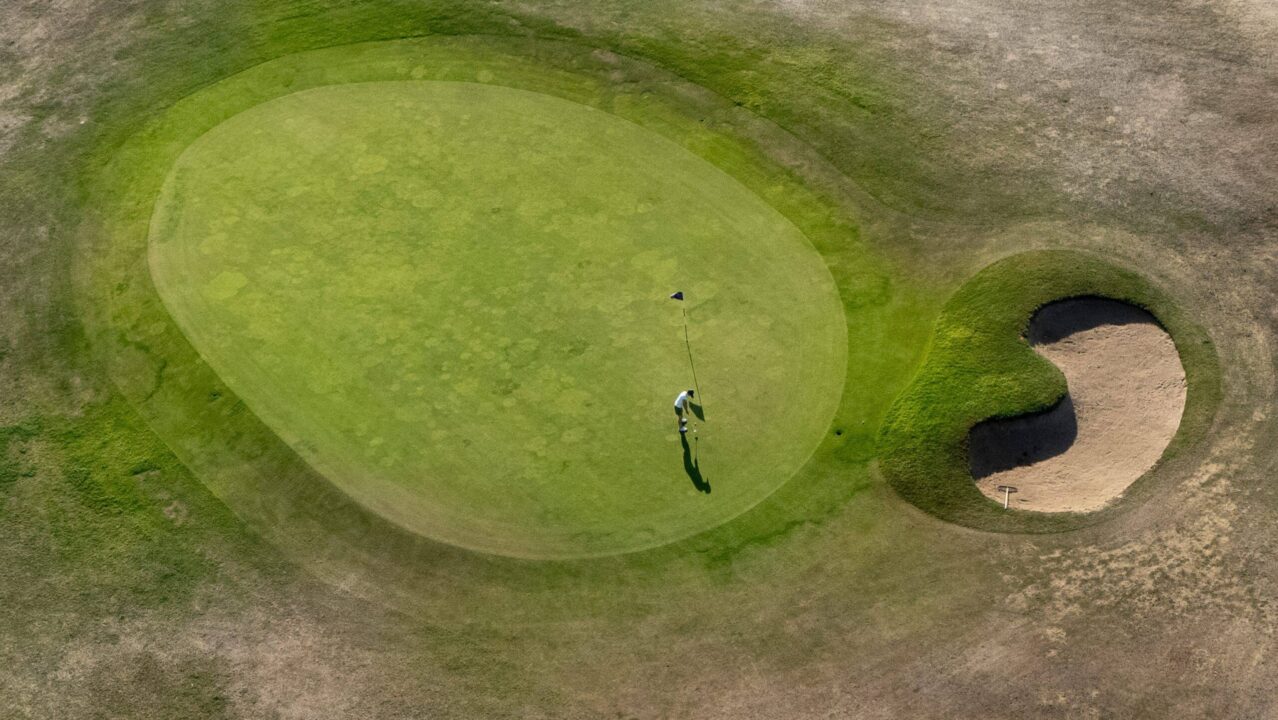
Imago
LUMBRES GOLF COURSE DROUGHT PHOTO BY PASCAL BONNIERE AUGUST 4, 2026 LUMBRES AUGUST 4, 2026 drought at the golf course Photo by Pascal Bonniere La Voix du Nord golf course drought in Lumbres, northern France HAUTS-DE-FRANCE France PUBLICATIONxNOTxINxFRAxBELxSUIxUK Copyright: xPHOTOPQR/VOIXxDUxNORD/MAXPPPxPASCALxBONNIEREx 20260804VDN8700 20260804VDN8700
To read a green, first identify the putt’s high point.
That’s the spot where the ball begins to curve toward the hole. Crouch behind the ball and study the green from a low angle to find the correct starting line. Also consider speed. Faster putts break less, while slower putts break more, so longer or slower putts may need aiming farther from the high point.
Before putting, visualize the ball’s entire path to the hole. Choose a specific spot or line on the green as your target, then commit to it rather than changing your mind over the ball. Padraig Harrington has more extensive tips for green reading.
What equipment do I actually need to bring to the course or range?
This one is easy.
In its simplest form, you need clubs, balls and tees. A glove, towel and suitable golf shoes help, while extras like a rangefinder, umbrella, rain gear, sunscreen and snacks can improve comfort. The rules say you can bring up to 14 clubs. But that does not mean you have to carry 14 clubs. You can start with a practical mix and add or swap clubs as your game grows.
Golf will always have complicated parts. But get those pieces right first.
The more advanced stuff can wait.