
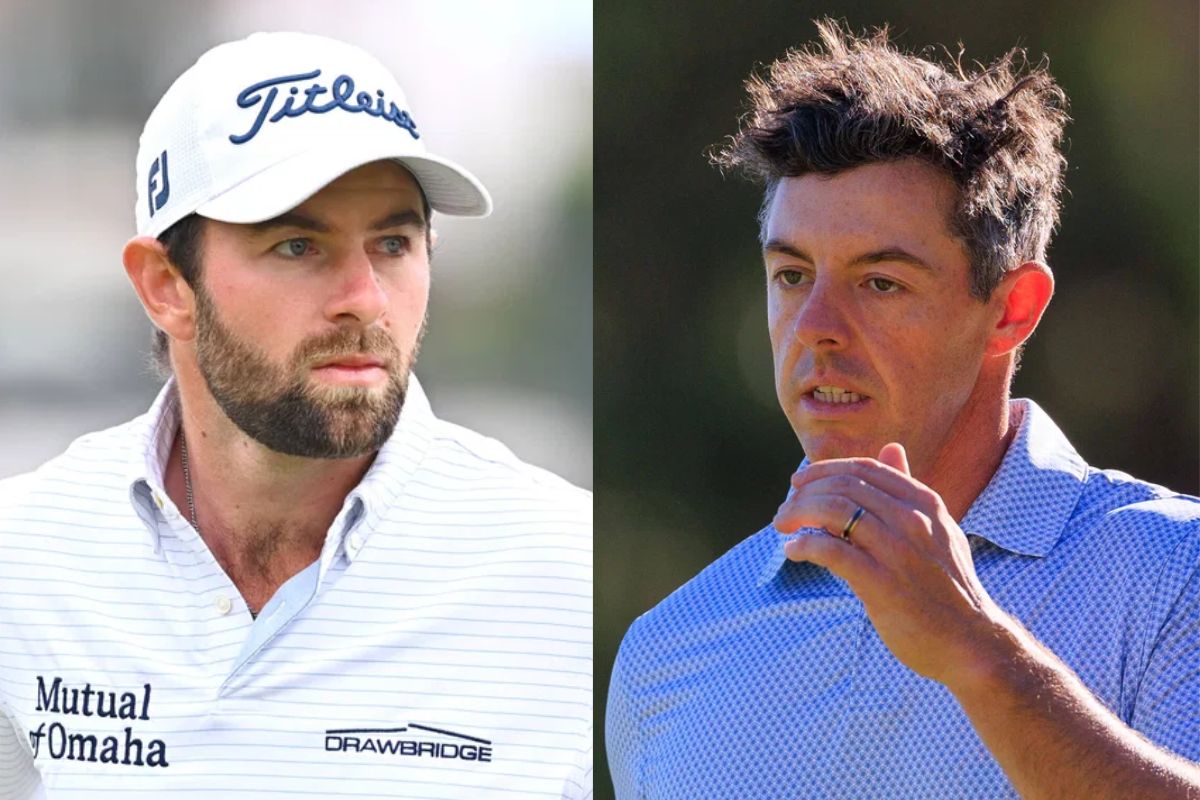
It seems like Rory McIlroy has quietly built a reputation for his frosty, no-nonsense approach when a green jacket is on the line. That focus showed up again as he chased his second Masters title.
Watch What’s Trending Now!
Heading into Sunday, McIlroy and Cameron Young were tied at 11-under par, setting up a final-group pairing with everything still to play for. And a year after Bryson DeChambeau revealed that the Northern Irishman barely spoke to him during their round together, Young appeared to experience much the same dynamic at Augusta.
“There is not much. I mean, I’m not one to talk a ton to begin with, and I don’t think he really wanted to talk to me today,” Young shared when speaking to the media. “Sunday at the Masters in the final group, you know, don’t wish anything poorly on the guy, but we’re playing against each other. Not trying to be best friends out there.”
McIlroy let his golf do the talking, instead.
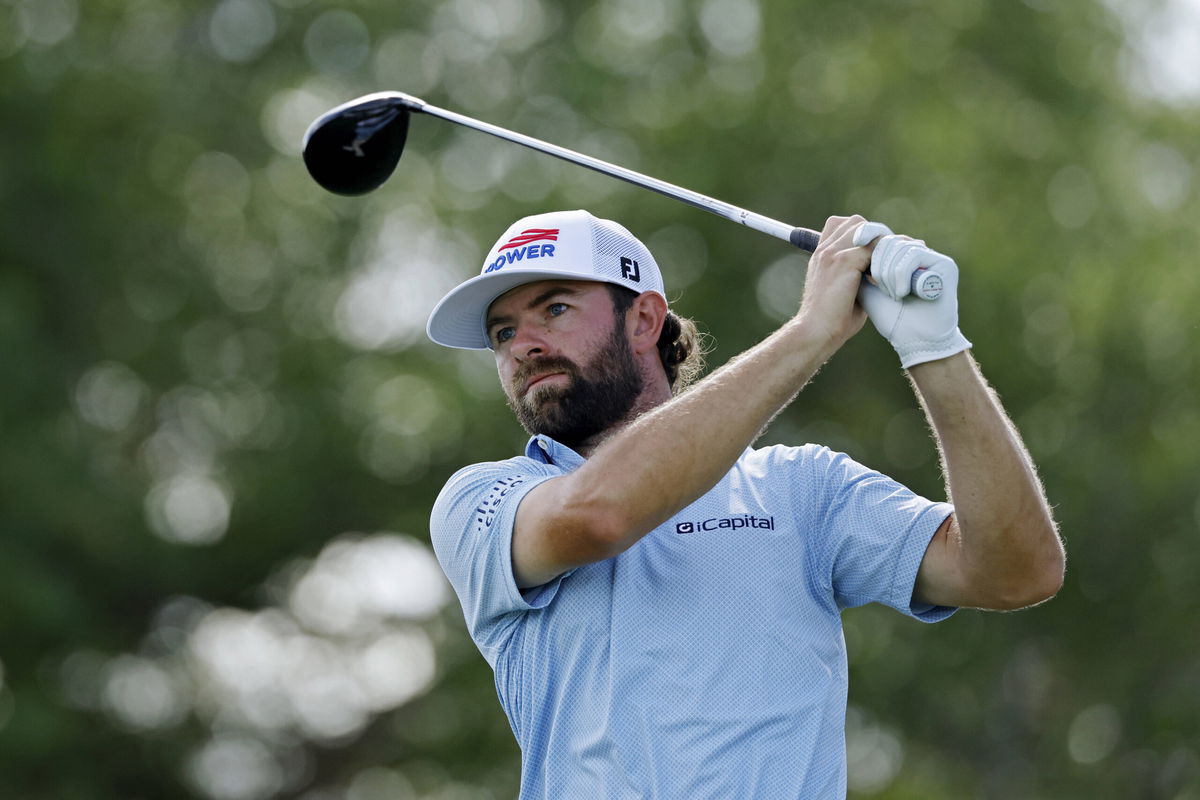
Imago
ORLANDO, FL – MARCH 08: Cameron Young of United States of America hits a drive at the 11th hole during the final round of the Arnold Palmer Invitational presented by Mastercard 2026 at Arnold Palmer Bay Hill Golf Course on March 08, 2026 in Orlando, Florida. Photo by Joe Robbins/Icon Sportswire GOLF: MAR 08 PGA, Golf Herren Arnold Palmer Invitational presented by Mastercard EDITORIAL USE ONLY Icon5732603080504
Birdies on 12 and 13 helped him seize control on Sunday and move toward the title. The silence Young mentioned was not a lack of courtesy but perhaps a deliberate approach. McIlroy had spent years understanding what it takes to win at Augusta on a Sunday, and in 2026, he showed up prepared.
The limited interaction was not accidental. McIlroy’s longtime sports psychologist Bob Rotella had already explained before his breakthrough Augusta win that the Northern Irishman’s “tunnel vision” approach during Masters week was part of a deliberate game plan designed to keep his focus inward when the pressure peaked.
Furthermore, even McIlroy later acknowledged how limited the interaction was during the round. “There wasn’t a ton of talk out there,” he said. “I think we both knew what we needed to do. I just needed to step up and execute.”
He also admitted afterward that he tried to avoid monitoring competitors’ positions too closely during the round. “I’m looking for other people as well to see how they’re doing, but most of the time I know that doesn’t serve me,” McIlroy said. “So these targets are more to just keep me from looking at it too much.”
Young came into the week as the defending Players Championship winner and kept up that strong play on Sunday. He started well, shared the lead through the front nine, and looked as dangerous as his ranking suggested. At one point, Young briefly moved ahead after McIlroy’s double bogey at the fourth, but bogeys on six, seven, and nine stalled that momentum before the turn. He stayed in the hunt through the front nine before McIlroy’s back-nine response turned the final round.
Young recognized McIlroy’s performance but did not attribute the outcome to being outclassed. When asked if there was anything to learn from playing with a six-time major winner, he kept his response factual and direct.
“He’s obviously a great player. I watched him play three rounds this week. I think if you asked him he would admit that he didn’t drive it particularly straight the first two days and did some incredible scoring. Some of that is down to the randomness of golf. Sometimes you hit a bunch wedges close in a row. Sometimes you don’t.”
Young was clear. He pointed out that McIlroy’s performance was not about flawless play, but about finding ways to score even when things were not perfect. McIlroy managed crooked drives, made key pars, and took birdies when they mattered. This ability to get a result, regardless of ball-striking, now defines McIlroy at Augusta. Young is still working toward that. Before the tournament, Young set a realistic goal: to be ready to play late on Sunday, not to win, but to be prepared.
Young’s mental coach described his Players Championship win as a lesson in staying present. That composure remained on Sunday, but the putts did not drop.
“I would like to look back on this week more in the sense of I played great, well enough to win, and it just didn’t quite fall my way this time.”
Young finished T3. He recognized what separated him from McIlroy and was direct about it. McIlroy ultimately closed at 12-under to defend his title, finishing one shot clear of Scottie Scheffler, while Young shared third at 10-under alongside Tyrrell Hatton, Russell Henley and Justin Rose.
Cameron Young’s Masters record echoes Rory McIlroy’s own Augusta journey
By the end of 2026, Young has six top-10 finishes in 17 major tournaments, but still no wins. He missed the cut in 2022, finished tied for seventh in 2023, tied for ninth in 2024, missed the cut again in 2025, and now has a tie for third. His story is familiar: great ball-striking, always in the mix, but just missing out at the end.
McIlroy went through a similar journey for more than ten years before 2025. He led the 2011 Masters by four shots after three rounds but struggled on the last day. Over the years, he finished second in four majors, always close but never winning. Eventually, Augusta gave him the win he had been chasing. The quiet that Young felt on Sunday was shaped by that history—a player who had lost here enough times to know that talking during the final round at Augusta is a rare privilege.
That approach was not new either. After Bryson DeChambeau described a similarly quiet pairing the year before, McIlroy explained his mindset plainly: “We’re trying to win the Masters. I’m not going to try to be his best mate out there.”
The dynamic between McIlroy and Young closely mirrored what DeChambeau experienced in that earlier final-round pairing, reinforcing how consistently McIlroy narrows his focus when a major championship is on the line rather than treating the silence as a one-off moment tied to a specific opponent.
Young understood what McIlroy’s silence meant, maybe better than any TV coverage could show. It wasn’t arrogance or coldness. It was the total focus of someone who had already proven himself at Augusta and was doing it once more.
Even McIlroy’s own explanation of a tense rules-style moment with DeChambeau on the ninth green the previous year reflected the same mindset. “This is the final round of the Masters,” he said later. “This isn’t some like game on a Tuesday afternoon somewhere.”
Young is still searching for his own answers, but after this week, he seems closer than ever.