
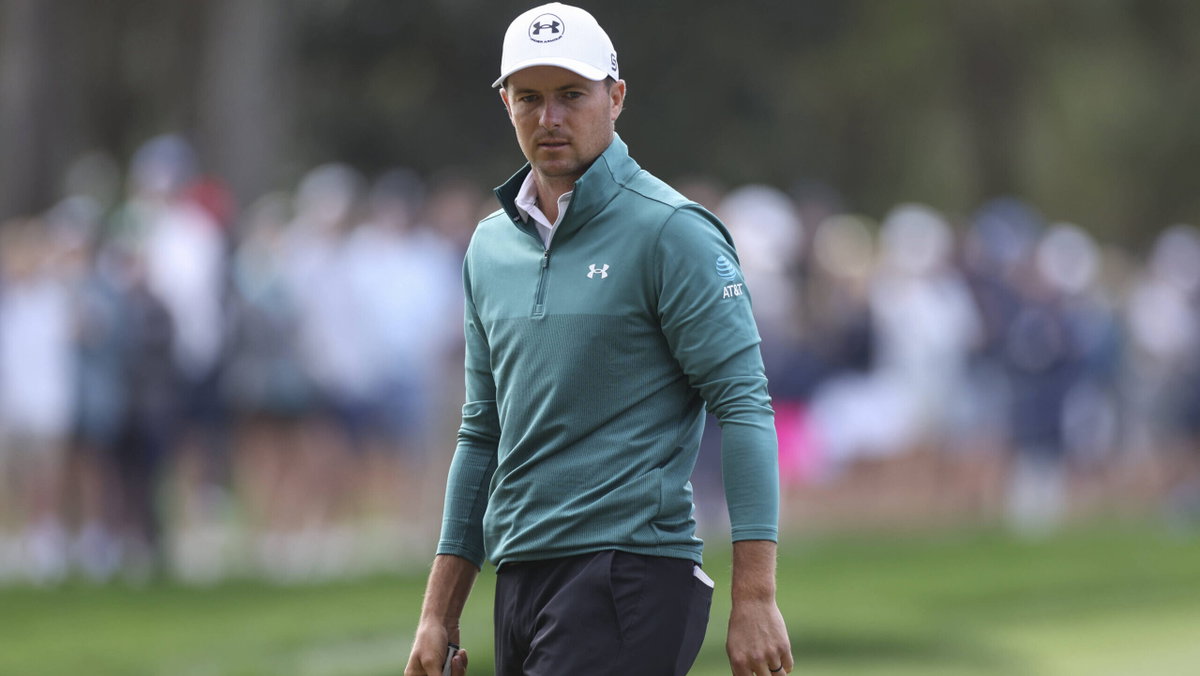
Jordan Spieth’s long stay away from the top of the game has been golf’s most-watched story for a player who once made winning look inevitable. Now, he said, coming into the U.S. Open at Shinnecock Hills, the anxiety of the gap years was real and he was not ready for it.
Watch What’s Trending Now!
“Over the course of time, ups and downs, I mean, I handled them with anxiety, like, pretty poorly when they first started happening. Just because of so many years of my life, I was getting better every single year, and eventually, that just didn’t happen. And so, it was pretty tough to handle.”
“I started to do a lot of work on the mental side that I had never done, just some understanding and realising the path was going to be harder if I was going to be that hard on myself about how things had gone a little downhill,” he said.
In an interview with CBS, Spieth got candid about how he handled struggles that followed his meteoric rise. Before turning 24, he had already won three majors, reached world number one, and had racked up 10 victories between 2015 and 2017. For a long time, his performance on the course looked untouchable. But after that remarkable run, the winds dried up.
After winning the Open Championship in 2017, Spieth held the number two ranking in the world. From there, his slide in performances was gradual but sustained. His ranking fell out of the top ten by late 2018.
2018 began his first winless season since turning pro, as he managed just five top 10 finishes in 23 starts and missed the cut five times. His last win was in 2017 at the Open Championship at Royal Birkdale. The following year became worse. He recorded more finishes outside the top 50 than inside the top 25. In the years to come, the 2020 season was a shortened season. He collected only three top 10s in 11 starts and barely threatened the leaderboard all year.
During that period, Spieth was not silent about the toll it took on him. In a podcast in 2019 with No Laying Up, he described how a technical issue with his putting alignment had bled into his full swing. He shared that he tried to fix the wrong things, sending himself into a spiral of overcorrection. Around the same time, he turned to someone who understood the weight of athletic identity better than most. Through their shared Under Armour sponsorship, Spieth built a friendship with Olympic swimmer Michael Phelps. He’s a 23-time gold medalist who has spoken openly about his own battles with anxiety and depression.
Spieth often credited him directly for helping him through the mental side of the slump.
“He’s getting very involved in mental health, and it’s been something that I’ve actually worked on a lot over these years. I’ve been really fortunate that he has lent an ear and also bounced ideas off me.”
Since then, Spieth has invested in his mental health. He snapped his nearly four-year winless drought in 2021 at the Valero Texas Open. He then followed up with the 2022 RBC Heritage. The win became his 13th and most recent PGA Tour title. During this time, injuries have added another layer of difficulties for him, but he has kept his stance straightforward. He had to undergo wrist surgery in 2024 and spent three months away from swinging the golf club. It is a reset, by his own account, that has forced him to rebuild his game from scratch and confront his old habits.
“I had some injuries with my wrist, which obviously then affected some stuff that led down a bad road for a while. And then now that I’m healthy, it’s like, okay, now that I can do everything again, what exactly was I doing? How do I get there? And I think in the last 12 months, I’ve been on a really nice path. I feel like I’ve been on the up, and I feel like it’s close.”
Jordan Spieth has had ups and downs, sure, but his 2026 resurgence has been encouraging. He ranked 80th in the world at the start of the season, but strong results at the Genesis Invitational, Arnold Palmer Invitational, and Valspar Championship within a single month moved him back inside the top 60 and secured him the US Open field. In fact, he has made 12 of 13 cuts this season, including a tie for 11th at the Masters.
Spieth is also confident about his performance, as he describes in his interview that his ball striking is as good as it has been since 2017.
“The hardest part now is I’m swinging better, and I feel like I’m playing better golf than I’ve played since 2017. And I don’t have a ton to show for that right now, but I know I’m playing and going like that.”
Spieth returns to the Shinnecock Hills after heartbreak.
Shinnecock Hills is extremely important for Spieth. The last time the course hosted the U.S. Open was in 2018, where he missed the cut. He had opened with a 78, but the score included a triple bogey on just the second hole of the day. He rallied with four consecutive birdies on the back nine in round two to move inside the cut line, but a bogey on the final two holes made him miss out by a single shot.
It was a tough break for him, and he was seen by the 18th close to tears. But that was 2018, the first year of what turned out to be a long stretch without a win and the start of what he would later call a period of anxiety.
Now he comes back to Shinnecock a different player in 2026. At least he’s not behind him on the big stage, having finished T23 at last year’s U.S. Open.
The course will take the same precision it always has. But Spieth has made it clear he’s up for the hard work ahead. Whether Shinnecock rewards him for it this time is yet to be seen.