
Imago
PGA’s $500K Pay Check Decision Puts Cantlay in the Spotlight as Scheffler Remains Unscathed
Imago
PGA’s $500K Pay Check Decision Puts Cantlay in the Spotlight as Scheffler Remains Unscathed
The debate over what modern golf courses are becoming just gained another high-profile voice. After Scottie Scheffler lamented that cutting trees from the golf courses is making the game monotonous, Patrick Cantlay has stepped into the conversation.


“I think it definitely makes the golf course easier. There’s no doubt about it. If you just took one golf course with a bunch of trees and you took all the trees out, it would definitely be easier,” Patrick Cantlay said on The Golfer’s Journal podcast.
Watch What’s Trending Now!
Imago
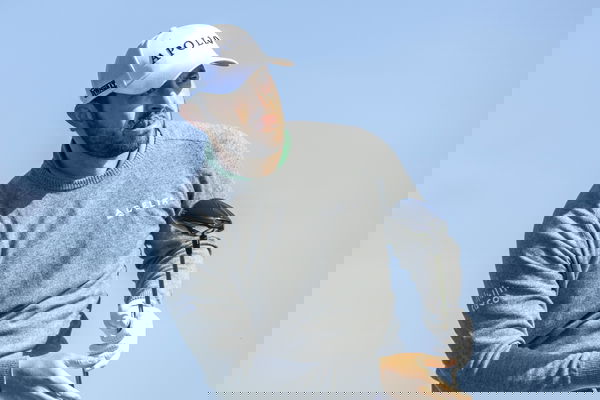
LA JOLLA, CA – FEBRUARY 15: Patrick Cantlay watches his drive from the second tee during the third round of the Genesis Invitational tournament, Saturday, February 15, 2025, at Torrey Pines Golf Course in La Jolla, California. Photo by Tony Ding/Icon Sportswire GOLF: FEB 15 PGA, Golf Herren The Genesis Invitational EDITORIAL USE ONLY Icon46520250215179
His comments point to a growing divide between architectural trends and competitive demands. Tree removal widens corridors and boosts distance. This reduces recovery challenges and shot variety, offering players with huge driving distance an undue advantage.
Cantlay’s comments are similar to what Scheffler said.
“What they are doing to golf courses now I don’t like. They take out all the trees, make the greens bigger and typically make the fairways bigger as well. So the only real barrier to guys trying to hit it as far as they want to or need to is trees,” Scheffler told Grant Horvart when he appeared in his YouTube video.
The 20x PGA Tour winner instead picked strategic venues like Augusta National, TPC Sawgrass, and Harbour Town, which require shot variety. He acknowledged that hitting far is certainly advantageous at these locations as well. However, the fairways are narrower, which punishes golfers who miss their shots.
It’s a very subjective matter because it would differ from golfer to golfer. Some golfers prefer trees because they offer something to focus on when picking and playing a shot. On the other hand, some see removing trees as an easier course, which rewards long hitters. Cantlay also pointed out what might be driving this trend.
“I understand why they do it sometimes for agronomy reasons. If you get air flow and sunlight, it’s easier to grow grass. But I personally like the golf courses that still have a lot of their trees,” the PGA Tour pro said.
Top pros usually prefer challenges because that’s what excites them most. It’s not only about winning an event, but also about conquering a golf course.
Speaking about Oakmont, Cantlay added, “I think it’s a great golf course. It’s hard, I can’t compare because I never played it with the trees, so I’ve only seen it really one way. But to Casey’s point, I’d love to see a newer golf course or a restoration lean into the framing in the trees because it seems like almost everyone does the same thing. Just rips them all out.”
Restorations at Winged Foot, Merion, and Medinah followed Oakmont’s model for openness. However, trees aid visual alignment and targeting on tees and approaches. Thus, Cantlay favors courses like Cypress Point and Seminole, which retain mature trees for depth.
Tree-lined or angled holes force fades, such as at Pebble Beach Golf Links and Riviera. They also demand a more strategic approach. Fades suit precision on small greens, while draws add distance on par-5s but risk hooks.
While Cantlay and Scheffler continue to shape the conversation around course design, their performances on the course keep adding new layers to their growing rivalry and shared place in PGA Tour history.
Scottie Scheffler’s under-70 rounds streak ties Patrick Cantlay’s benchmark
Scottie Scheffler added another chapter to his standout 2025 season at the Procore Championship. However, a single round brought his historic run to an end. On September 12, 2025, at Silverado Resort, Scheffler opened with a 70, finishing two under par. While he went on to win the event, this round snapped his streak of 21 consecutive rounds in the 60s. The mark tied a PGA Tour record previously set by Patrick Cantlay, further connecting the two players both on and off the course.
The streak began in June with a closing-round 65 at the Travelers Championship. It stretched across some of the season’s biggest stages. Scheffler stayed below 70 throughout appearances at the Scottish Open, The Open Championship, FedEx St. Jude Championship, BMW Championship, and the TOUR Championship.
His consistency placed him ahead of many of the game’s modern stars, with Tiger Woods’ longest similar run stopping at 14 rounds, while Viktor Hovland reached 19. “I think it was a pretty frustrating day overall,” Scheffler said after the round. “I felt like I did some things well out there, I just wasn’t quite getting the reward.”
The 20x PGA Tour winner’s round at Silverado showed how close he came to standing alone at the top of the list. He dropped shots on the par-3 fourth and 11th but answered with three birdies, including one at the 16th. A pulled tee shot on the 18th hole took a potential record-breaking birdie out of play.
Patrick Cantlay also posted 21 straight sub-70 rounds from the 2021 St. Jude Invitational through the 2022 American Express. That stretch included key FedEx Cup playoff performances and helped cement his reputation as one of the Tour’s most reliable performers.
Scheffler’s record-tying streak at Silverado underscored the level of consistency he and Cantlay now share. That same connection continues off the scorecard, too. Both golfers are pushing for courses that test creativity and precision rather than simply rewarding distance.
Written by

Edited by

Parnab Bhattacharya