Imago
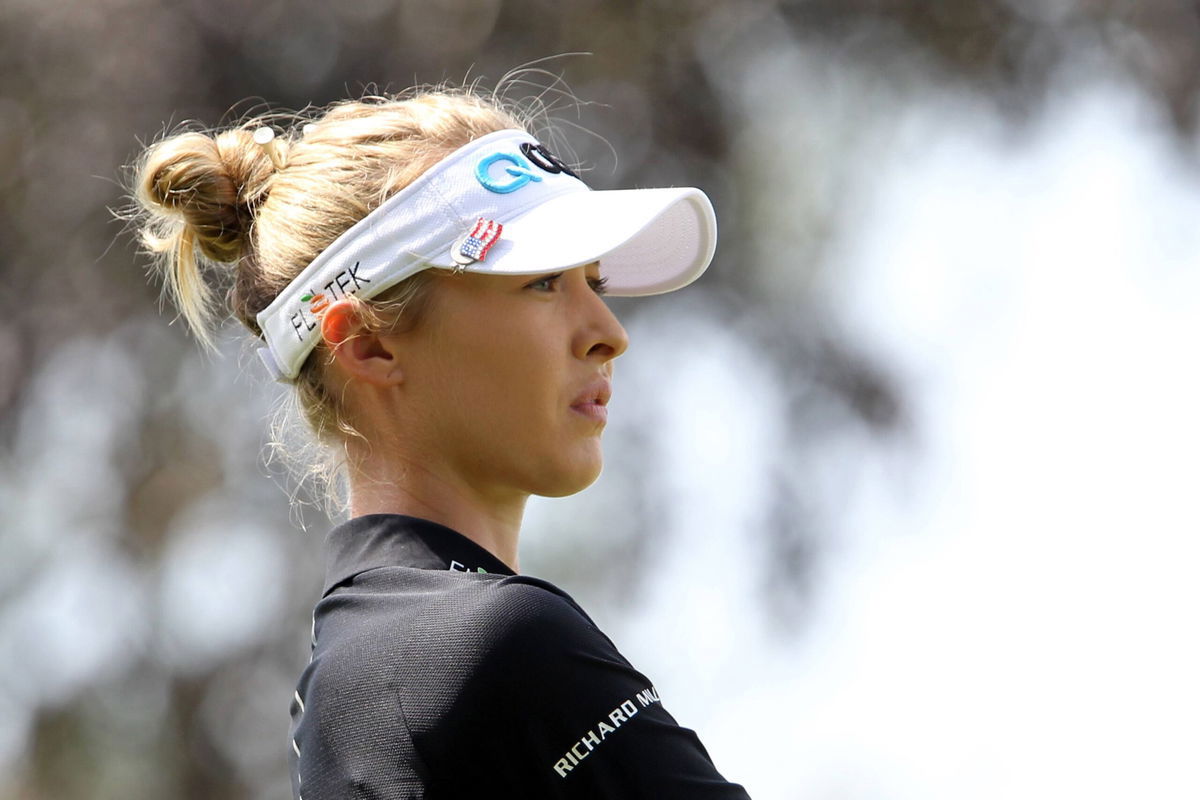
June 15, 2018 – Belmont, Michigan, USA – Nelly Korda of Bradenton, Florida follows her shot from the 12th tee during the second round of the Meijer LPGA Golf Damen Classic golf tournament at Blythefield Country Club in Belmont, MI, USA Friday, June 15, 2018. Meijer LPGA Classic – Round Two PUBLICATIONxINxGERxSUIxAUTxONLY – ZUMAn230 20180615_zaa_n230_1187 Copyright: xAmyxLemusx
Imago
June 15, 2018 – Belmont, Michigan, USA – Nelly Korda of Bradenton, Florida follows her shot from the 12th tee during the second round of the Meijer LPGA Golf Damen Classic golf tournament at Blythefield Country Club in Belmont, MI, USA Friday, June 15, 2018. Meijer LPGA Classic – Round Two PUBLICATIONxINxGERxSUIxAUTxONLY – ZUMAn230 20180615_zaa_n230_1187 Copyright: xAmyxLemusx
At noon on a freezing Orlando Sunday, the LPGA Tour finally decided to cancel the final round of the HGV Tournament of Champions. Nelly Korda was declared the winner of the weather-shortened tournament. Celebrities had been playing for hours, however. And that became the fulcrum of a controversy that forced LPGA Commissioner Craig Kessler to publicly acknowledge what critics already suspected: the tour was not prepared.


“We were not prepared fully for Monday,” Kessler told Golfweek on Tuesday, two days after the Hilton Grand Vacations Tournament of Champions was shortened to 54 holes. “In hindsight, if we can do it over again, there are a number of creative solutions that absolutely could have worked. We should have explored those and been more prepared. We weren’t.”
Watch What’s Trending Now!
The admission arrived after mounting pressure from players, media, and fans who watched an explanation shift between Sunday and Tuesday. On Sunday, when Ricki Lasky—the LPGA’s chief tour business and operations officer—appeared in the NBC booth, she cited ball behavior on hardened ground. Shots were releasing unpredictably. The trajectory was compromised. Injury risk went unmentioned.
By Tuesday, Kessler framed the decision differently: fear of wrist injuries, broken bones, the kind of damage that could derail a season before it started. The concern was real, he insisted. The communication was not. The lack of clarity irked the players, too, as Lydia Ko, Danielle Kang, and others expressed their frustration.
In a memo to the players, Kessler wrote,”I recognize this decision, and others we made in real time, were confusing and disappointing to our fans. And our communication around the decision wasn’t clear or timely enough. Your frustration is valid – I own that, and I’m sorry.”
However, his logic of injury concern invited an obvious question. Beth Ann Nichols of Golfweek posed it publicly on X: “If it was so dangerous, what about Annika Sorenstam’s wrists? Or Blair O’Neal’s? Or any of the other celebrities who bundled up and played on at 10 a.m.?”
The LPGA now says the fear of injury is why tour players weren’t sent out to play before 2p.m.
If it was so dangerous, what about Annika Sorenstam’s wrists? Or Blair O’Neal’s? Or any of the other celebrities who bundled up and played on at 10 a.m.
And why wasn’t that mentioned…
— Beth Ann Nichols (@GolfweekNichols) February 3, 2026
Annika Sorenstam, a 10-time major champion and Lake Nona resident, directly contradicted the tour’s assessment after playing nine holes Sunday morning, as previously reported. “I don’t know why they’re not playing,” she told Golfweek. “There’s pitch marks. I mean, I hit some crispy shots today, and the ball even stopped. I am surprised. It’s difficult, it’s cold, but it’s as fair as anything.”
Lydia Ko, a Lake Nona resident who held the 36-hole lead before struggling on Saturday’s back nine, told Golfweek she was “gutted” that Monday wasn’t an option. The communication failures compounded the frustration. On Sunday, when an LPGA media official was asked directly whether conditions were dangerous, the answer was no. The official explanation cited a lack of “optimal competitive environment” without specifying what that meant.
The gap between what officials said Sunday and what Kessler admitted Tuesday extended beyond messaging into infrastructure.
LPGA’s six-year Monday gap shapes Craig Kessler’s scheduling bind
The LPGA hasn’t finished an event on Monday since 2020. Six years without a contingency that most tours treat as standard operating procedure. When Orlando’s overnight freeze dropped temperatures into the mid-20s and forecasts promised warmer conditions by Monday afternoon—climbing into the 50s—the path seemed clear.
Thirty-nine players in the field. A nearly three-week gap before the next event in Thailand. Every logistical barrier had a workaround. But the tour had no infrastructure for it. No recent precedent. No muscle memory.
Kessler sent a letter to players on Tuesday, apologizing for the confusion and promising structural changes: clearer principles for play decisions, stronger contingency planning, faster and more transparent communication.
View this post on Instagram
“I’m seven months into this job,” Kessler said. “Seven years into this job, when I have pattern recognition, and I understand what’s a little bit of noise versus what’s a very, very grave concern and who the information’s coming from—those are things that take time for a leader to get his or her arms around.”
Trust, as Kessler himself noted in his letter, is fragile. The LPGA’s season opener tested it before the year had barely begun. Pattern recognition takes time. So does rebuilding credibility.
Written by

Edited by

Parnab Bhattacharya