
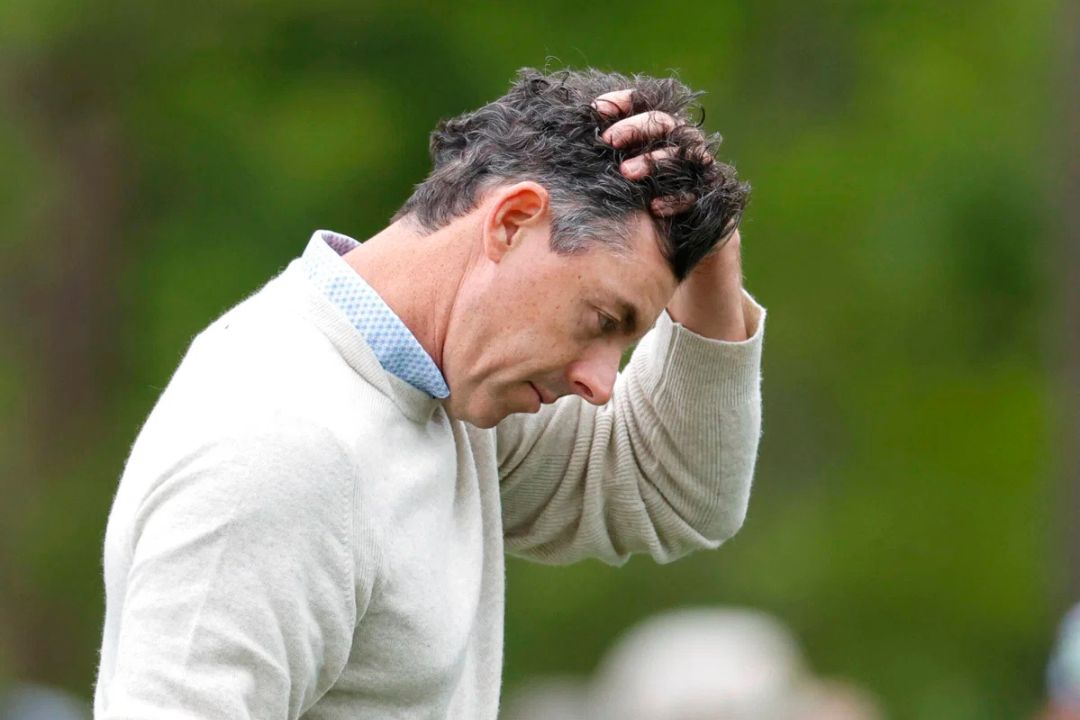
Rory McIlroy has a simple rule these days: when he no longer feels excited to play, he knows it is time to step away. The Ulsterman is in his 20th year as a professional and is playing his third straight week of golf. His comments show how even top players can feel tired and burned out during a long season.
Watch What’s Trending Now!
Speaking to reporters on Saturday at the TOUR Championship, McIlroy didn’t hold back when asked about maintaining stamina across a long season. “I think once you start to lose your enthusiasm to go to the course, it’s time to take a break,” the 37-year-old said. “I’ve turned up to events that I haven’t necessarily wanted to be there because I feel like I should be there, and I’ve never — like I never play my — like if I’m going to show up to a tournament, I want to perform at my best and play my best, and there’s been times when I haven’t done that. It’s frustrating to me, but it’s also at the same time like no one wants to see me just go through the motions and be out there.”
Rory McIlroy made it clear that this week is already testing his limits. He has played three weeks in a row, which he rarely does now, and said he does not think he could manage a fourth straight week. He remembered when the FedExCup Playoffs had four events instead of three. The last time he played four weeks in a row was in 2024. By the final week, he told himself he was done and would never put himself through that again.
Rory said his age and long career have also changed how he feels about the grind. At 37 and around 18 or 19 years into his professional career, he does not have the same patience for that kind of busy schedule anymore.
This Isn’t a New Complaint From Rory McIlroy
This is not new for McIlroy. He has been careful about managing his schedule throughout 2026, and it has sometimes brought criticism.
After winning back-to-back Masters titles in April, he skipped the Zurich Classic and RBC Heritage. He then returned at the Truist Championship and told reporters that his schedule would be “different” from previous years. After the PGA Championship in May, he took another planned break. “I’m going to take a couple of weeks off, and then Memorial will be my next one,” he said.
The same thing happened after The Open Championship this summer. McIlroy took about a month off and did not touch a golf club during that time. When he returned at the FedEx St. Jude Championship, he looked rusty and finished 66th. He later admitted that he “felt lost” at TPC Southwind.
The pattern is clear: when McIlroy plays too many events close together without enough time to rest, his game seems to suffer.
A Schedule That’s Been Fighting McIlroy All Year
None of this happened by chance. The PGA Tour’s 2026 schedule had a very busy period between the Masters and PGA Championship. In just six weeks, players had to deal with two majors and three Signature Events with very little time to rest.
McIlroy actually saw that busy stretch as a positive at the time. But concerns about burnout continued throughout the season. In January, while talking about the Tour’s schedule plans, he warned that there was “a lot of golf in a pretty short period of time.” He also said players could face burnout depending on how many events they choose to play.
That issue has already prompted action from the Tour. The Future Competitions Committee, led by Tiger Woods, unveiled plans back in June 2026 to reduce the top tier of the schedule to somewhere in the range of 20 to 25 equal-status events starting in 2028. That would directly address the workload McIlroy talked about this week. He admits that he does not have the same energy for playing three or four weeks in a row as he once did. That is not a criticism of his game. He is simply being honest about his limits.
He already knows what happens when he pushes himself too far. For younger players trying to earn FedExCup points and bonuses from Signature Events, McIlroy’s experience is a useful warning: he is not saying players should skip tournaments without reason, but that they need to know how much golf they can handle before they reach their limit.
As the PGA Tour continues to change its schedule for 2027, that lesson could become just as important as any trophy McIlroy wins at East Lake this weekend.