
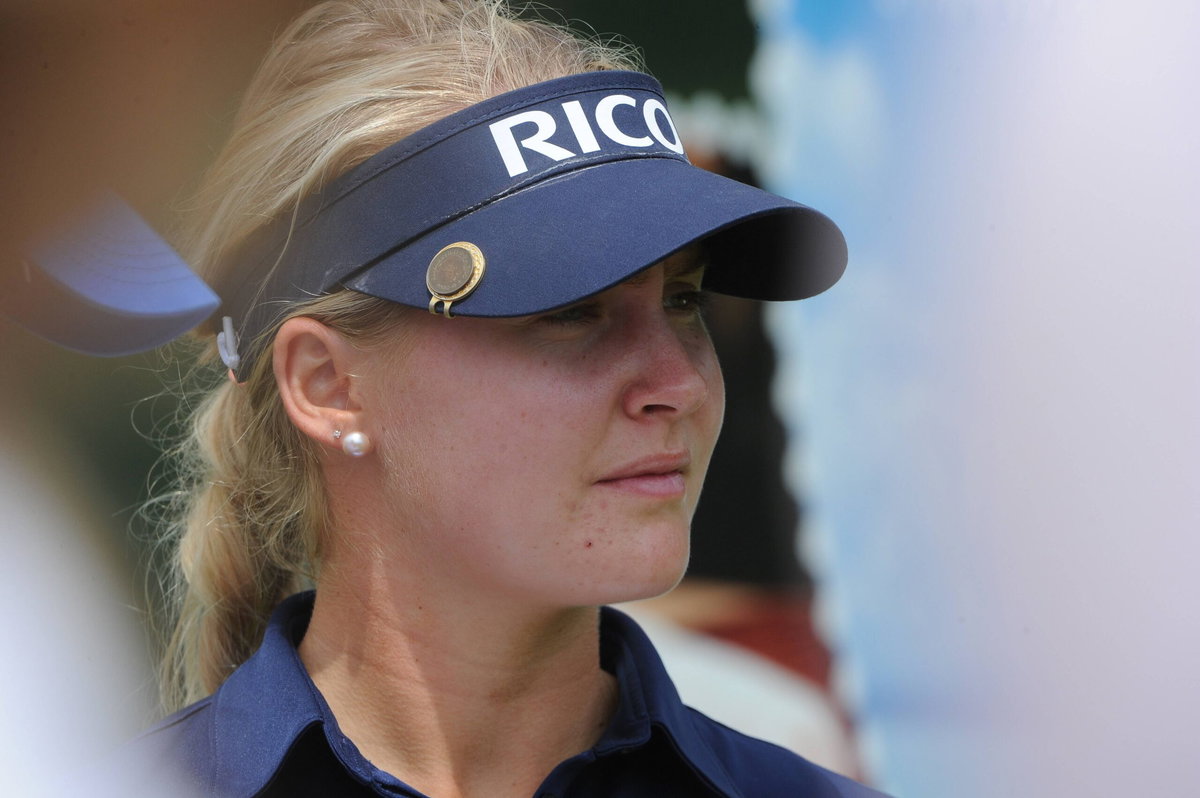
David Hull smoked 40 cigarettes daily for 65 years. His daughter, three-time LPGA Tour winner Charley Hull, knows that all too well. Growing up, she despised cigarettes and repeatedly tried to convince her father to quit. Ironically, she has since developed her own complicated relationship with nicotine, turning to cigarettes before eventually switching to nicotine pouches.
Watch What’s Trending Now!
The world No. 8 opened up about her experiences during the inaugural on!vitational, a two-day virtual golf and entertainment experience sponsored by on! nicotine pouches at TGL’s SoFi Center in Palm Beach Gardens, Florida. While waiting for her food order on Friday, Hull spoke with Golfweek’s Adam Schupak over Zoom, reflecting on her family’s smoking habits, her struggles with stress and the unexpected path that led her to nicotine.
“My dad smoked 40 a day since he was about 10 years old, and he’s 75 now,” Hull recalled. “So, I grew up actually hating smoking and cigarettes.”
She even made a deal with her father, promising that he would quit once she achieved a scratch handicap. But when she finally reached that milestone, her father’s commitment did not last long.
“We used to make bets: if I got down to a scratch handicap, he would stop smoking, and I got down to scratch one day, and then, I think, two days later, I was off like +1. So, he started smoking again, and I was fuming, because, obviously, he said, when I got down to scratch, but not when I got down to plus figures,” she said.
Unfortunately, her father’s smoking habit was hardly an isolated case in the family.
“My whole family are all smokers. My nephew smokes; he’s six years younger than me,” Hull explained, adding that smoking is more commonplace in England.
Despite growing up determined to stay away from cigarettes, Hull eventually struggled with nicotine, with stress playing a significant role in her journey.
A few years ago, around the time she received her ADHD diagnosis, an American doctor prescribed her Xanax to help manage stress. Concerned about becoming dependent on the medication, she threw it away. She subsequently turned to vaping as an alternative coping mechanism.
However, concerns about vaping’s potential health effects, coupled with how frequently she was using it, prompted another change. Hull reached for her vape constantly since she could use it indoors. She eventually switched to cigarettes, believing that having to step outside each time would naturally limit her consumption.
Instead, the habit proved difficult to break.
“I hate smoking. I used to curse at my dad when I was younger for smoking, but I think it has to do a little bit with when I’m stressed,” Hull said during the 2024 U.S. Women’s Open. “When it’s a slow round on the golf course, I smoke quite a few more than I should. But listen, I will stop soon. It’s just when.”
Her more recent move toward nicotine pouches reflects another turn in that ongoing relationship with nicotine, although switching products does not eliminate the health risks associated with nicotine use.
Charley Hull has another solution for golf’s slow-play problem
Smoking isn’t the only subject on which Hull has strong opinions. Known for her brisk pace and straightforward approach on the course, she has also called for tougher measures to tackle slow play on tour.
Rather than relying on warnings or financial penalties, Hull has advocated immediate stroke deductions during a round. In her view, the prospect of losing strokes on the scorecard would provide a far stronger incentive for players to speed things up than a warning or fine.
It is a typically direct stance from a golfer with little patience for unnecessary delays, particularly when slow play disrupts the rhythm of a competitive round.
Tattoos, practice and life beyond golf
Away from the smoking debate and her frustration with slow play, Hull also opened up about the unusual story behind her first tattoo. She discussed the personal experiences that led to the decision, offering another glimpse into the life of a golfer whose personality often attracts as much attention as her performances.
She also reflected on the challenge of balancing professional life with that off the course. Hull admitted she can become “golf-obsessed,” and then it’s hard to take a full day off.
For a player competing at the highest level, that dedication can be a considerable strength. Yet her comments also highlight the difficulty of switching off when the pursuit of improvement becomes all-consuming.
Whether discussing her family’s smoking habits, proposing tougher penalties for slow play, or acknowledging her struggle to step away from golf, Hull remains refreshingly candid. Her willingness to speak openly about her habits and challenges offers a more personal perspective on the golfer behind the world ranking.
And perhaps that is what makes her story so compelling: beneath the fearless competitor and outspoken tour personality is someone still working to reconcile the habits she once resented, the pressures of professional sport, and the need to find balance beyond the fairways.