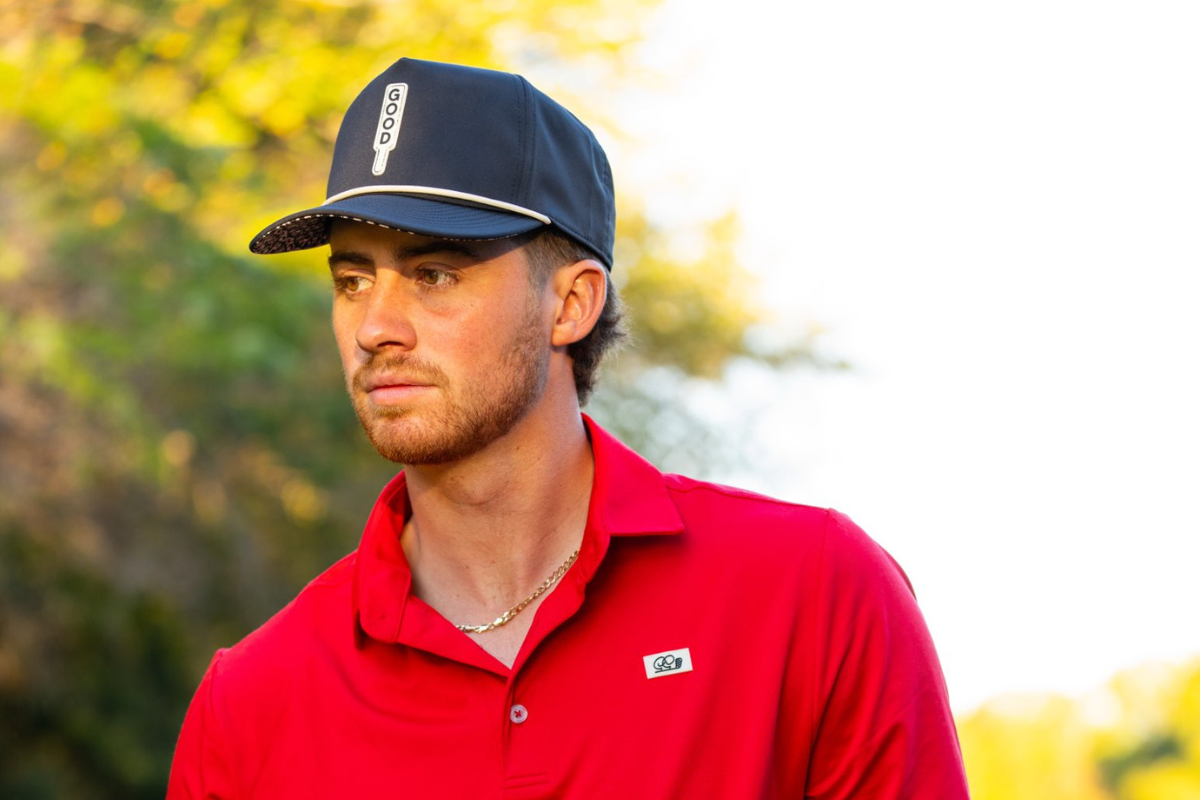
Behind the high-energy videos and fearless presence on the course, golf influencer Garrett Clark was living life with fear and confusion. At one point, he actually prayed, “Lord, if you want to take me, you’ve got me,” unsure of why his heart would suddenly race out of his chest without warning. Multiple doctor visits, anxiety diagnoses, and medications later, the episodes still crept into his everyday life. It got difficult to the extent that getting up from his bed became a struggle, and going to get a Chipotle got him scared. He knew deep down something was really wrong. And turns out his inner voice was right all along.


What initially seemed to be irregular heart rhythms turned into a full-blown health concern. And after the first visit to a cardiologist, who got him no respite, he gave it another go and went to a different doctor, and that’s when he gave him a portable monitor to track his heart activity. This was when all the answers to decades of questions unfolded.
Watch What’s Trending Now!
He and his cardiologists were expecting it to be Supraventricular Tachycardia (SVT). The major difference between the two in terms of health is that SVT is far more easily managed than Ventricular Tachycardia (VT). However, the data from the device showed that he is not only suffering from VT but also had an episode during his time at Breckenridge. And what his doctor told him next made him go, “Whoa, did I hear that right?
“This is one of your strips. You were at 270 beats a minute for 8 and 1/2 minutes straight.” about an episode the doctor mentioned, which he had during his time at Breckenridge. “And I was like, ‘Whoa, did I hear that right? Like 270 beats? What are you talking about? “Did you say 217?” He said, “No, I’m showing you right here. 270 beats a minute.”
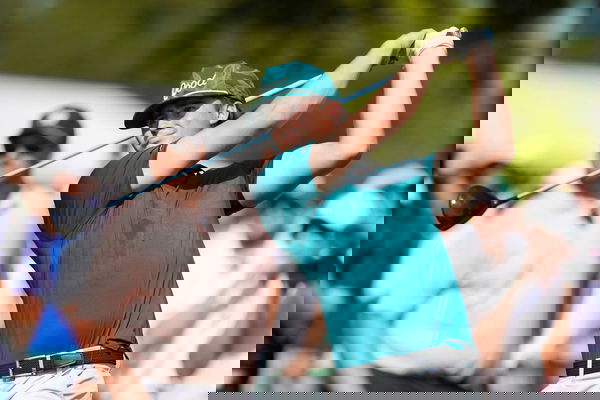
Imago
August 28, 2024, Atlanta, Georgia, USA: Garrett Clark of GoodGood tees off the 10th hole during the inaugural 2024 Creator Classic Tour Championship presented by Blackstone at East Lake Golf Club. Atlanta USA – ZUMAw109 20240828_fap_w109_029 Copyright: xDebbyxWongx
“And so kind of a crazy thing to hear. That was the diagnosis. After all these years, finally figuring out what it is is a beautiful thing. It’s scary, obviously, but talk about the time that you have to, and like now is the time that I seriously have to say a prayer like, “Lord, at any point in time if you want to take me home, I’m here.” That’s the only way to not be anxious about something like that.
VT is a fast rhythm that starts in the lower chambers of the heart. It can be life‑threatening if sustained because it can cause fainting and progress to cardiac arrest if not corrected. According to research done by the National Library of Medicine, a total of 7025 deaths from ventricular tachycardia occurred between 2007 and 2020. It also observed an increase in deaths related to ventricular tachycardia since 2007.
“And from the research that I did, any episode in VT for over 30 seconds is considered life-threatening. So, it’s quite a crazy thing to hear from your doctor, from him essentially, 2 plus 2 equals 4. I looked up the facts, like I could have died there, right? Like if I didn’t snap out of it,” he added.
Now, for Clark, though the diagnosis is just the very first step, he is already in the process of bringing immediate changes to his lifestyle. He made it clear that, at least for now, alcohol is off the table, even though it was never a big part of his life to begin with. Caffeine, too, is something that he would be limiting to just a cup in the morning. He has already started taking his beta blocker regularly and is waiting for further guidance from an electrophysiologist to understand the next steps.
Also, he wants to slow things down a little. Clark plans to stay put in Dallas for the time being, keeping the stressors low and avoiding travel. Garrett Clark is now processing the news emotionally. He framed it as a long-awaited answer to what was happening in his heart. But now that he has the answer, it is also scary. Thus, he is asking fans to pray for him.
That being said, his journey to the diagnosis has been one that’s long and grueling.
Clark’s journey from “It’s Just Anxiety” to knowing the truth
The earliest Clark can remember having an episode was when he was just 11 or 12. He was out playing when suddenly a sprint would end with him dropping to his knees. His heart was doing things that he couldn’t explain. Over the years, several tests were done, and scans were conducted, and every time the report came back clean. Life carried on, and the problem kind of moved to the shadows until it didn’t.
In his early 20s, the problem came back louder and harsher. One time, he was on a treadmill, and what began as a normal workout spiraled into something scary. So scary that he even texted his family that something was seriously wrong with his heart. “It’s beating 140, 150 beats a minute to all of a sudden… over 200 beats a minute… all over the place. I feel like I’m going to faint,” he recalled.
There was even an instance when he recalls struggling through a 45-minute speaking engagement while feeling on the verge of collapsing. This is when he finally decided to take it seriously and seek help. And when he did, the doctor said, “Anxiety.” He tried to trust it, but he knew deep down that his body was not responding to those medications. That there was something seriously wrong, and he pushed for a proper diagnosis, and finally has the answers now. Similar to Garrett Clark, professionals like Rory McIlroy, Jason Bohn, and Nick Faldo also struggled with heart-related issues.
Rory McIlroy, for instance, had a heart irregularity. It was diagnosed after a viral infection in China left him with scar tissue and a thickening of his left ventricle in 2018. The Northern Irishman said it was a “flat T-wave.” Regular echocardiograms and annual MRIs were the answer to keep on top of it.
Besides him, Jason Bohn had a mild heart attack during a PGA Tour event. During the 2016 Honda Classic, he was complaining of chest pains and suffered a heart attack. He was taken to the hospital right away. PGA Tour reporting later said doctors found a 99 percent blockage in his left anterior descending artery.
Nick Faldo also revealed he had undergone planned preventive open-heart surgery in the United States. It was to repair an enlarged aorta. Reports said the surgery was successful. Some media reports also point to Michael Woodard, who had atrial flutter.
Written by

Edited by

Shreya Singh