Imago
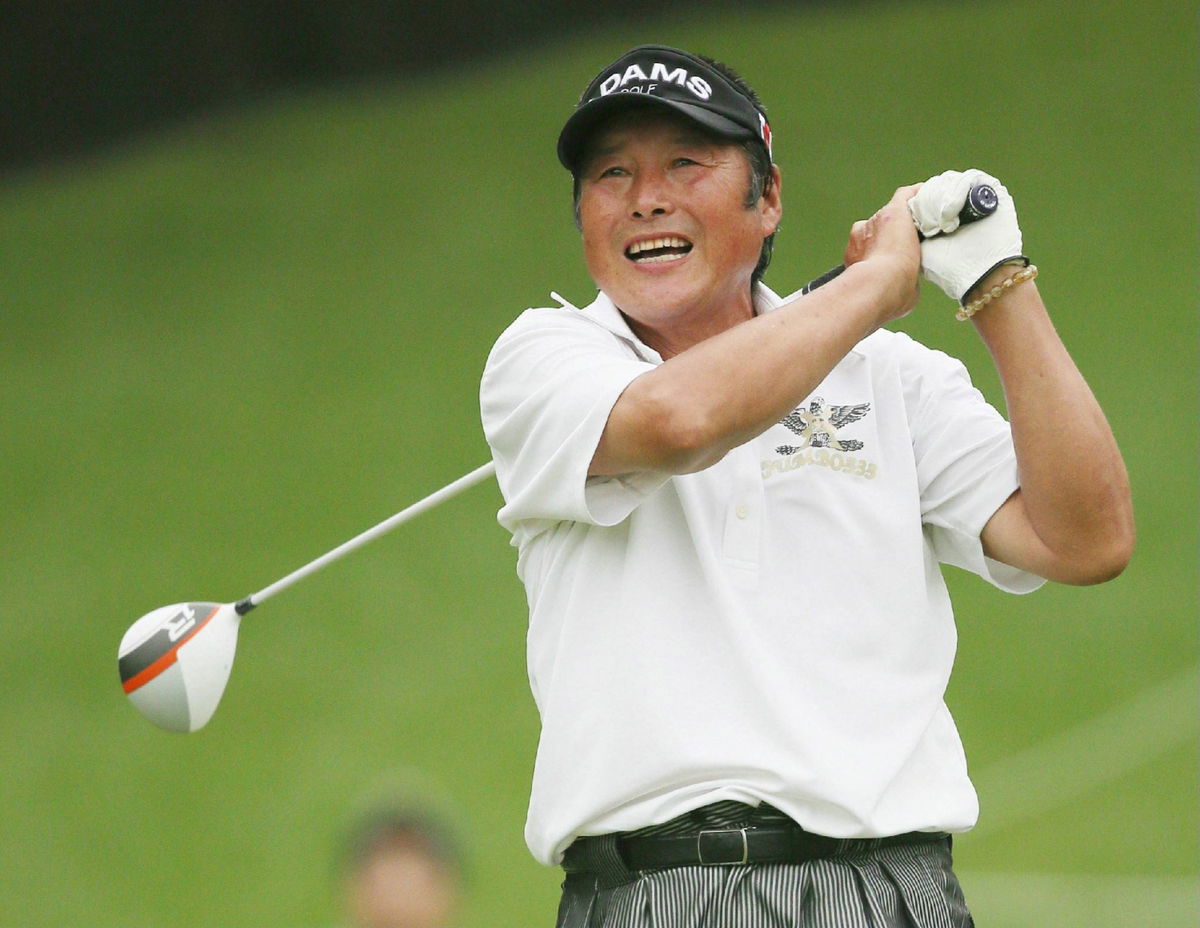
credits: Japan Times (Masashi Ozaki hits a tee shot during a Japan Golf Tour championship in June 2013, in Ibaraki Prefecture. | JIJI)
Imago
credits: Japan Times (Masashi Ozaki hits a tee shot during a Japan Golf Tour championship in June 2013, in Ibaraki Prefecture. | JIJI)
Gary Player took to social media within days of the news, offering a tribute that placed Masashi Ozaki alongside the game’s immortals.


“I was deeply saddened to hear of the passing of Jumbo Ozaki, who meant so much to the people of Japan,” Player wrote. “My heartfelt condolences are with his family, friends, and the entire Japanese golf community, but no doubt his legacy will live on. Not only through his extraordinary achievements, but through the honour and spirit with which he represented his country and the game we all love.”
Watch What’s Trending Now!
Masashi Ozaki died on December 23, 2025, at age 78 after a year-long battle with colon cancer. His son, Tomoharu, confirmed the terminal diagnosis. When a nine-time major champion speaks of legacy living on, it carries weight — and Player’s words frame exactly why American audiences should understand what Japan just lost.
Ninety-four Japan Golf Tour victories. Forty-three more than his closest rival, Isao Aoki. One hundred thirteen professional wins worldwide. Twelve money titles, including five consecutive from 1994 to 1998. For context, Sam Snead and Tiger Woods share the PGA Tour record at 82 wins. Ozaki matched that level of dominance on his home circuit.
View this post on Instagram
Brian Watts, who won 12 times on the Japan Golf Tour, once told Golfweek that Ozaki was bigger than Palmer and Nicklaus combined in Japan. The comparison sounds hyperbolic until you understand what “Jumbo” represented.
He earned the nickname through prodigious power — a 6-foot-1, 220-pound frame that generated drives exceeding 300 yards in an era before modern equipment. But Ozaki arrived at golf through an unlikely door. He pitched professionally for the Nishitetsu Lions from 1965 to 1967, leading his high school to the national championship as the ace in 1964. Baseball’s loss became golf’s gain when he picked up a club at 23.
By 1973, Ozaki had announced himself on the global stage. His T8 finish at the Masters made him the first Japanese player to crack the top 10 at Augusta. He competed there 19 times total. The 1989 U.S. Open brought a T6 finish, three shots behind Curtis Strange at Oak Hill. He peaked at No. 5 in the world rankings in 1996, at age 49.
Yet Ozaki chose to build his empire at home rather than chase validation abroad.
“But I dedicated my life to Japanese golf and am extremely grateful the voters thought I was worthy of this honor,” he said upon his 2011 Hall of Fame induction, receiving 50% of the International ballot vote.
That dedication did more than define one career. It seeded the ground for everything that followed.
Jumbo Ozaki’s influence echoes through modern Japanese golf
Hideki Matsuyama’s 2021 Masters victory marked the first major won by a Japanese male golfer, and it did not emerge from nowhere. Ozaki carved the path.
His dominance during Japan’s golf boom of the 1980s and 1990s elevated the sport’s profile domestically, inspiring a generation that included both Matsuyama and Ryo Ishikawa. Ishikawa, who won his first JGTO title at 15, visited Ozaki roughly 10 times a year for advice.
“Jumbo used to be a baseball player, so he always tried to teach me the link from pitching or hitting to golf,” Ishikawa told the Associated Press in 2010. “Jumbo wanted me to hit the ball far.”
The Japan Golf Tour Organization captured his significance plainly: “He is an indispensable, one-of-a-kind figure in discussing men’s golf, both now and in the future.”
Ozaki was looked upon as the Arnold Palmer of golf in Japan — powerful swing, charisma, silk shirts, baggy pants, and a presence that transcended the scorecard. The “What If?” question lingers. What might he have accomplished with full commitment to the PGA Tour?
Japan mourns its giant. The game he loved mourns him back.
Written by

Edited by

Riya Singhal